
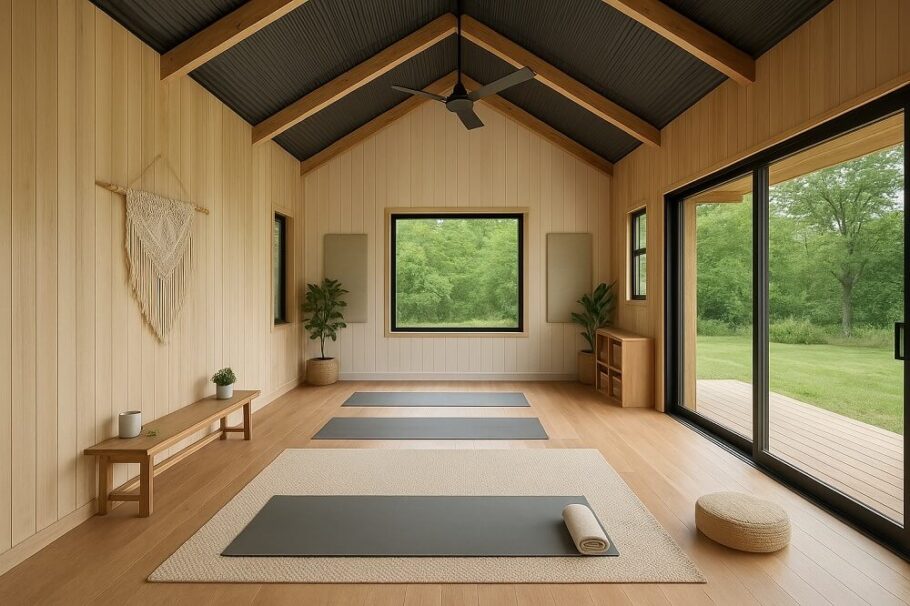
A barndominium has always been admired for its spacious interiors, open layouts, and customizable structures. But in recent years, a new trend has emerged in the world of wellness and residential design: Yoga Studio Barndominiums. These hybrid spaces combine the serenity and functionality of a professional yoga studio with the comfort and durability of a modern barndominium home. For homeowners seeking a deeper connection to wellness, nature, and intentional living, a yoga-focused barndo offers the perfect blend of tranquility and practicality.
In this blog, we’ll explore what makes a Yoga Studio Barndominium so appealing, why more homeowners are choosing this lifestyle, essential design considerations, interior layout strategies, lighting ideas, and tips for creating your own mindful sanctuary. Whether you’re a yoga instructor wanting an at-home studio or simply someone who dreams of living with more balance, this guide will inspire your journey.
Why Yoga Studio Barndominiums Are Gaining Popularity
Barndominiums have grown rapidly in popularity for their cost-effectiveness, structural strength, and flexibility in layout. Add the growing demand for wellness-oriented spaces, and it’s easy to see why homeowners are merging yoga culture with barndo living. But beyond trends, several practical benefits set yoga studio barndominiums apart.
Integrated Wellness Lifestyle
Living in a space that doubles as your wellness sanctuary helps reinforce healthy habits. Instead of traveling to a yoga studio every week, you begin and end your day immersed in a restful, meditative environment. This reduces barriers to self-care and encourages consistent practice.
Versatility for Personal and Professional Use
A built-in yoga studio can serve multiple functions:
- A personal practice area
- A teaching space for small groups
- A meditation or mindfulness room
- A multipurpose wellness space (Pilates, Tai Chi, stretching, breathwork)
Because barndominiums often have wide spans without interior load-bearing walls, the studio can be designed as open and flexible as you want.
A Natural Fit With Barndominium Aesthetics
Yoga thrives in environments that are quiet, open, and connected to nature. Barndominiums, with their tall ceilings, large windows, metal or wood siding, and minimalist shapes, create an ideal architectural foundation for a peaceful yoga space. Adding elements like wood finishes, skylights, and soft lighting only enhances this synergy.
Cost-Effective Construction for Larger Studios
Compared to traditional construction, metal-frame barndominiums offer larger unobstructed spaces at lower cost. For those wanting a full 500–1,200 sq. ft. yoga studio, the affordability of barndominium framing makes expansion much easier.
Designing the Ideal Yoga Studio Barndominium
Whether you’re converting part of your existing barndo or designing a new build, a yoga studio barndominium requires thoughtful planning to achieve the right balance of form and function.
Create a Dedicated Practice Zone
The foundation of any yoga studio barndominium is the practice space itself. Ideally, the studio should be a separate area from living zones to maintain serenity. Some popular layout approaches include:
- Attached Studio: The yoga space is connected to the main home via a hallway or breezeway, offering convenience and privacy.
- Loft Studio: The open upper loft in many barndos can be transformed into a peaceful elevated practice area.
- Standalone Studio Within the Barndo Footprint: A portion of the main structure is enclosed for yoga, with sound-insulated walls and a private entrance.
- Detached Mini-Studio: A small barndominium-style outbuilding provides complete separation from the home.
Each approach affects acoustics, privacy, and natural light flow, so it’s important to think about how you plan to use the space over the years.
Focus on the Flooring
Yoga studio flooring should be supportive, natural, and comfortable. Popular choices include:
- Engineered hardwood for warmth and smooth flow
- Bamboo flooring for sustainability and comfort
- Cork flooring for shock absorption
- Natural rubber underlayment to reduce joint stress
Avoid tile or traditional concrete unless covered with thick mats—they are too hard for most yoga practices and may feel cold and uninviting.
Prioritize Natural Light and Views
One of the biggest advantages of a barndominium is the ability to integrate large windows and doors without worrying about load-bearing limitations. For a yoga studio, natural light is essential.
Consider designing the studio with:
- Floor-to-ceiling glass walls
- Sliding glass doors that open to nature
- Clerestory windows for daylight without distractions
- Skylights positioned above the practice zone
- Transom windows for privacy and illumination
Framing views toward trees, mountains, gardens, or open sky increases the sense of calm and connection during practice.
Create Calming Acoustics
Yoga relies heavily on silence, or at least soft ambient sound. Barndominiums can be echo-prone due to metal siding and tall ceilings, so acoustic planning is crucial.
Effective strategies include:
- Acoustic wall panels covered in fabric
- Large area rugs along walkways
- Hanging natural fiber tapestries
- Wooden slat walls
- Padded insulation behind studio walls
These elements help absorb sound, reduce disruption, and create a warm, peaceful atmosphere.
Interior Design for a Yoga-Centered Lifestyle
Once the structure is in place, interior design transforms a simple room into a mindful, restorative yoga haven.
Neutral and Earthy Color Palette
Soft neutrals and nature-inspired tones help shift the mind into a calmer state. Common palettes include:
- Warm whites and creams
- Gentle browns and beiges
- Muted sage green
- Soft charcoal
- Natural wood accents
Avoid overly bright or stimulating colors that may distract from practice.
Minimalist Layout
A yoga studio must remain uncluttered. Built-ins or hidden storage is extremely valuable. Opt for:
- Wall-mounted shelves
- Cubbies for mats and props
- Hidden storage benches
- Minimalist hooks for towels and straps
Keeping the room open improves movement flow and maintains visual peace.
Natural Materials
Yoga studios feel more grounded when they incorporate organic textures. Try integrating:
- Reclaimed wood
- Woven baskets
- Linen curtains
- Jute rugs
- Stone décor
- Clay pots and handmade ceramics
These materials add richness and sensory warmth without overwhelming the space.
Soft, Layered Lighting
In addition to natural daylight, artificial lighting should mimic evening calm. Consider:
- Dimmer switches
- Warm LEDs (avoid blue-toned light)
- Wall sconces
- Soft uplighting behind furniture
- Salt lamps for ambiance
- Candle shelves for meditation
Layered lighting makes the studio functional for quiet mornings, active flows, or peaceful nighttime meditation.
Temperature and Air Quality
A good yoga studio maintains comfort and clean air. This may include:
- Ceiling fans for gentle airflow
- Mini-split AC units for zoned climate control
- Ventilation windows
- Houseplants that purify air
- Essential oil diffusers for aromatherapy
High ceilings in barndominiums help regulate temperature naturally, making them ideal for hot yoga or warm yoga sessions.
Blending the Yoga Studio With Your Living Space
A yoga studio barndominium isn’t just a home with a studio—it’s a reimagining of the entire living philosophy. Many people design their barndo to support a mindful, health-centered lifestyle.
Add a Wellness Entryway
A small foyer leading into the studio can include:
- Shoe storage
- A hydration station
- A small bench
- Hooks for yoga bags
- A calming welcome mural or mandala
This transitional space sets the tone before stepping into the practice area.
Create Indoor-Outdoor Flow
Sliding doors can open the studio to a patio or garden for sunrise yoga, breathwork sessions, or outdoor meditation. Adding a deck or pergola extends the practice space beyond the walls, allowing connection with fresh air and natural sounds.
Integrate Other Wellness Zones
Depending on your lifestyle, you may include:
- A small sauna
- A cold plunge area
- A meditation loft
- A tea and relaxation corner
- A reading nook with floor cushions
- A home spa bathroom with soaking tub
These additions elevate your barndominium from a residence to a personal wellness retreat.
Building a Yoga Studio Barndominium: Practical Tips
If you’re considering constructing or converting a barndominium into a yoga-centered home, keep these practical steps in mind:
- Check local zoning to ensure home-based studios or group classes are permitted.
- Choose the right orientation of the building for optimal natural light.
- Invest in insulation to improve acoustics and thermal comfort.
- Include plumbing early if you plan to add showers or spa features.
- Ensure proper electrical layout for dimmers, speakers, fans, and lighting layers.
- Customize ventilation systems for hot yoga or high-humidity practice.
- Use moisture-resistant wall finishes if your studio will be heated or humid.
Working with designers familiar with barndominiums ensures a smoother planning process.
The Future of Yoga Studio Barndominiums
As more people embrace holistic living, Yoga Studio Barndominiums are becoming a symbol of balance—a home that supports both shelter and soul. They bring together modern architecture, expansive layouts, and the timeless traditions of yoga.
Instead of separating work, home, and wellness, these spaces harmonize all aspects of life. Whether you’re teaching classes, practicing solo, or simply want a peaceful environment, a Yoga Studio Barndominium offers an incredibly rewarding way to live and breathe wellness every day.
If you dream of a lifestyle rooted in mindfulness, minimalism, nature, and intentional design, building a yoga-centric barndominium could be the perfect next step.