
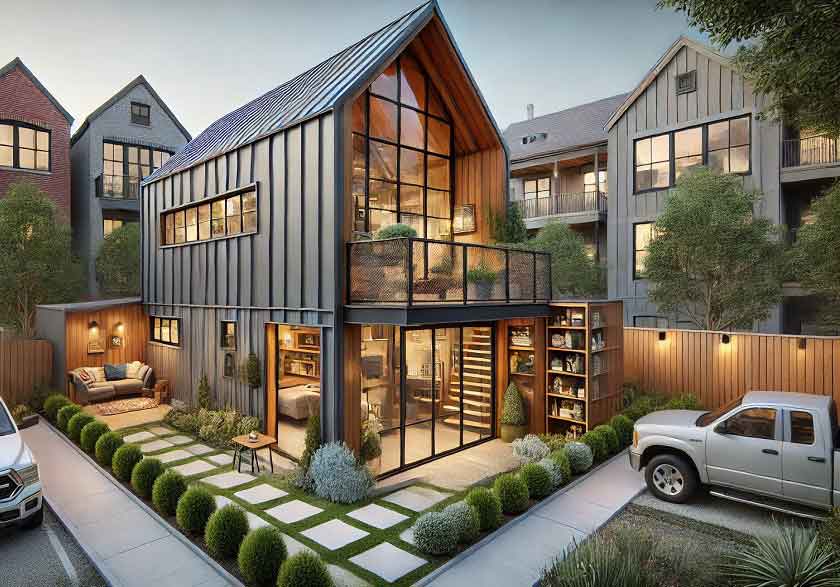
The barndominium movement has always been about challenging convention. Taking the utilitarian bones of agricultural architecture and transforming them into warm, livable spaces requires a certain creative fearlessness. And nowhere is this spirit more visible than in the treatment of interior and exterior walls. While drywall and standard siding have their place, a growing number of owners are turning to a material that feels both honest and endlessly versatile: concrete. But not the flat, gray concrete of parking garages. The concrete making waves today is textured, patterned, and rich with depth, achieved through the clever use of form liners.
Understanding the Form Liner Process
Form liners are essentially the mold for the concrete. These are flexible or rigid mats placed inside the formwork before the concrete is poured. Once the concrete cures and the forms are stripped away, the liner leaves behind a reverse impression of its surface. It is a technique borrowed from civil engineering—used for decades on bridges and retaining walls—that has found a sophisticated second life in residential design.
The genius of this method lies in its permanence. Unlike paint or applied veneers, the texture is integral to the wall itself. It will not peel, fade, or delaminate. The depth of the pattern, whether a subtle wood grain or a dramatic fractured rock face, is physically part of the structure.
The Visual Power of Pattern
Choosing the right pattern is where the design journey truly begins. The market offers an astonishing array of form liner textures. For barndominiums, which often pay homage to rustic and industrial roots, two categories tend to dominate.
The first is the organic or naturalistic pattern. Deep timber textures, mimicking rough-sawn oak or weathered barn boards, create a seamless connection between the building’s exterior aesthetic and its interior soul. Stacked stone patterns and fractured fin designs evoke the solidity of mountain lodges, turning a concrete wall into a feature that feels ancient and grounded.
The second category leans into the modern and geometric. Clean lines, ribbed textures, and repeating abstract patterns offer a contemporary counterpoint to the barndominium’s agricultural silhouette. These designs catch light in striking ways, creating a dynamic interplay of shadow that changes throughout the day. This is not just a wall; it is a living surface.
Depth, Shadow, and the Tactile Experience
One of the most underestimated qualities of a textured concrete wall is its relationship with light. A flat wall reflects light uniformly, often creating a monotonous visual field. A wall treated with a form liner introduces a landscape of micro-shadows. The recesses of the pattern absorb light, while the raised areas reflect it, creating a gradient of contrast that adds visual weight and interest to any room.
This depth also enhances the tactile experience of the space. In an era of digital detachment, surfaces that beg to be touched have a profound psychological impact. The cool, slightly rough texture of a wood-grained concrete wall feels honest and substantial. It grounds the space, offering a sensory richness that cannot be replicated by wallpaper or paint.
Practical Advantages Beyond the Surface
While the aesthetic appeal is the primary driver, the practical benefits of textured concrete cannot be overlooked. In a barndominium, which often features open floor plans and expansive windows, thermal mass is a major asset. Concrete walls help regulate interior temperatures, absorbing heat during the day and releasing it slowly at night. The texture does not diminish this capability.
Furthermore, these walls offer unmatched durability. They resist dents, scratches, and moisture far better than traditional drywall. In high-traffic areas or in homes with pets and children, the resilience of concrete is a massive logistical advantage. It is a finish that is designed to withstand the realities of life without sacrificing beauty.
Navigating the Technical Landscape
Incorporating form liners requires careful planning that goes beyond simple design choices. The conversation must involve the structural engineer and the concrete contractor from the very beginning. Not all form liners are created equal, and the choice of material—whether it is polyurethane, ABS plastic, or elastomeric—affects the cost, the number of reuses, and the final finish.
The pour itself demands a specific mix design. To capture the fine details of the liner, the concrete must have a high slump and contain the right blend of aggregates and admixtures. Vibration is critical; it must be sufficient to consolidate the concrete without causing the liner to shift or distort. This is where the expertise of a seasoned contractor proves invaluable.
A Canvas for Customization
For those seeking a truly bespoke result, form liners offer a pathway to total customization. It is possible to design a custom pattern that echoes a family crest, a specific geometric motif, or an abstract artistic vision. This level of personalization transforms the barndominium from a home into a statement.
The color conversation also plays a vital role. While gray remains a classic, integral pigments can be added to the concrete mix to achieve earthy terra cottas, warm ambers, or cool charcoal hues. Alternatively, after the forms are stripped, surface treatments like acid stains or tinted sealers can be applied to enhance the three-dimensional effect of the texture, highlighting the highs and deepening the shadows in the lows.
The Future of the Barndominium Aesthetic
As the barndominium continues to evolve from a niche trend into a mainstream housing option, the materials chosen will define its legacy. Textured concrete, achieved through form liners, represents a maturation of the concept. It moves beyond mere utility into the realm of high design. It honors the industrial roots of the structure while elevating the interior to a gallery of texture and light. This is not a trend. It is a fundamental shift in how we perceive and utilize one of humanity’s oldest building materials, turning a practical necessity into a profound design asset.