
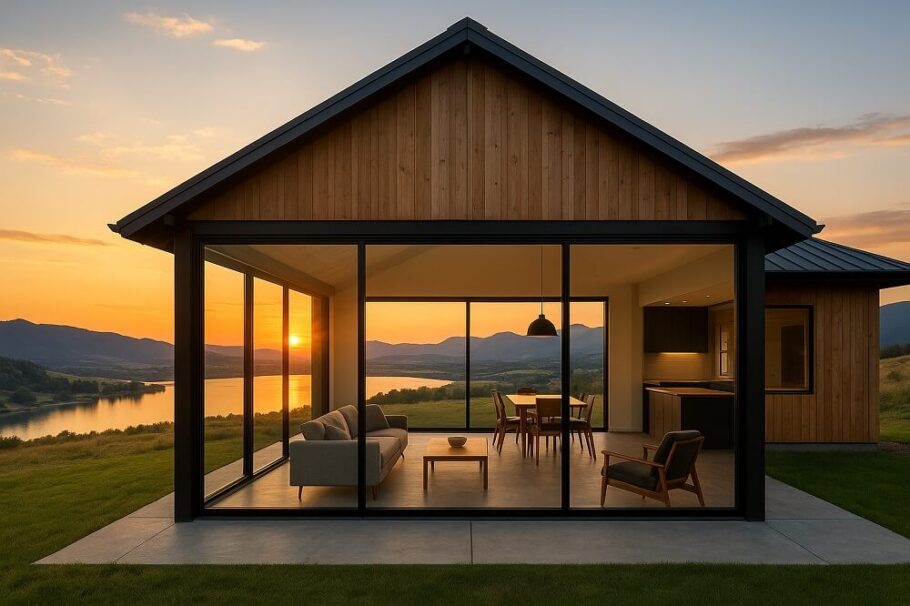
Barndominiums have escaped the predictable. What started as a practical blend of workshop and living space has evolved into something far more interesting. The typical farmhouse aesthetic—sliding barn doors, shiplap walls, and neutral palettes—has been done to death. But walk into a barndominium today, and the rules have changed entirely.
The beauty of these metal-clad structures lies in their blank canvas nature. Exposed beams, soaring ceilings, and concrete floors don’t demand rustic treatment. In fact, some of the most striking barndominium interiors actively rebel against what a barn “should” look like. Here are the styles nobody saw coming.
The Brutalist Barn
Concrete gets a bad reputation. Inside a barndominium, raw concrete transforms into something sculptural rather than cold. Brutalism in a barn setting works because the scale already exists. Those massive walls and high ceilings that make a farmhouse feel cavernous become intentional architectural statements when paired with board-formed concrete, polished aggregate floors, and exposed mechanical systems.
Think poured concrete fireplace surrounds that stretch from floor to ceiling. Think concrete kitchen islands that weigh several tons and look like they were cast in place. The key is texture variation. One wall remains raw and imperfect while adjacent surfaces get a smooth, burnished finish. Lighting becomes critical here—warm, directional fixtures prevent the space from feeling like a parking structure.
Furnishings in a brutalist barndominium lean into the heavy. Thick leather sofas, steel-framed shelving, and monolithic stone tables hold their own against the mass of the building. What makes this unexpected is how livable it becomes. The thermal mass of concrete helps regulate temperature, and the visual weight creates a sense of permanence that drywall and trim simply cannot match.
Dark and Moody Maximalism
The opposite of airy and bright. Dark barndominiums embrace the shadowy potential of large spaces. Deep charcoal walls, almost-black trim, and ceilings painted in matte espresso create a cocooning effect that feels completely at odds with the building’s agricultural origins.
This style demands layering. A single dark wall reads as a mistake. Entire rooms wrapped in deep jewel tones—emerald, burgundy, navy—turn the barn into a dramatic backdrop for collected objects. Vintage rugs pile over concrete floors. Brass fixtures gleam against dark cabinetry. The effect feels more like a Victorian study or an old library than anything resembling a barn.
What makes this work in a barndominium is the inherent contrast. Those large industrial windows let in enough natural light to keep things from feeling like a cave. The dark walls absorb light rather than reflect it, which actually softens the brightness coming through the glass. Clutter disappears against deep colors, so even a space filled with books, art, and collected objects reads as intentional rather than chaotic.
Pattern mixing takes center stage here. Floral wallpapers in dark tones, geometric tile in bathrooms, and heavily patterned textiles all coexist. The barn provides the breathing room that would suffocate in a standard eight-foot ceiling house.
Japanese Wabi-Sabi
Imperfection celebrated. The Japanese aesthetic of wabi-sabi finds a natural home inside a metal barn, of all places. This style rejects perfection in favor of materials that show age, wear, and natural change. Rust on the corrugated exterior becomes a feature rather than something to paint over. Inside, lime-plastered walls replace drywall. Floors get a simple earthen sealer rather than high-gloss epoxy.
Handmade tiles show slight variations in color and size. Wood elements come from reclaimed sources with visible knots, cracks, and saw marks. The furniture sits low to the ground—platform beds, floor cushions, low-slung sofas—which emphasizes the vertical space above. This height differential creates a sense of calm; the room breathes while the furnishings stay grounded.
Natural light filters through shoji-inspired screens rather than traditional curtains. These rice paper panels diffuse harsh sunlight into something gentle and even. The metal building’s existing structure gets left exposed in some areas—a steel beam here, a vent pipe there—but treated as part of the composition rather than hidden away.
What makes this style unexpected is the material clash. Rough-hewn wood and soft plaster against galvanized steel creates a tension that feels entirely deliberate. Nothing gets covered up or made perfect. The barndominium becomes a vessel for appreciating exactly what is, not what could be polished into existence.
Mid-Century Modern Desert
Palm Springs inside a barn. This style transplants the clean lines, bold colors, and indoor-outdoor flow of mid-century modern architecture into the agricultural shell of a barndominium. The result feels like a vacation house that happens to have once housed livestock.
Walls get painted in period-appropriate tones—avocado green, mustard yellow, terracotta. But these colors appear in unexpected places. The sliding barn door gets painted in a vibrant period hue. The concrete floor gets a terrazzo treatment with colorful chips embedded throughout. Furniture follows classic silhouettes: Eames-style lounge chairs, kidney-shaped coffee tables, spindly-legged credenzas.
Lighting makes the style read clearly. Sputnik chandeliers, globe pendants, and floor lamps with perforated metal shades distribute light in that characteristic mid-century way. The high ceilings of the barndominium allow for dramatic pendant drops that would hit your head in a normal house.
What pushes this into unexpected territory is the juxtaposition of organic and industrial. The metal building’s rigid geometry plays off the soft curves of mid-century furniture. Large windows that originally served to let light into a workshop now frame desert landscaping or prairie views like living paintings. The style works because mid-century modern already embraced open floor plans and industrial materials—it just never expected to live inside a barn.
Coastal Grandmother Meets Industrial
Linen and steel. Rattan and concrete. This unlikely pairing takes the soft, beachy aesthetic that dominated social media and drops it into the hardest of industrial spaces. Light blue and cream walls, weathered wood, and billowy white curtains stand against exposed ductwork, metal beams, and concrete floors.
The key is restraint. Too much coastal styling reads as theme restaurant. Too much industrial feels cold. The balance comes from using soft elements as accents against a hard backdrop. A slipcovered sofa in natural linen sits on a jute rug over concrete. Wicker pendant lights hang from steel rafters. Shells and sea glass display on a welded metal console table.
Color stays light and airy. White walls with pale blue trim. Natural oak flooring instead of gray-toned planks. The industrial elements fade into the background, providing structure without dominating the visual field. This works particularly well in barndominiums located nowhere near an ocean. The contrast between the coastal interior and the actual surrounding landscape—cornfields, pine forests, desert scrub—creates a deliberate disconnect that feels playful rather than confusing.
Textiles do heavy lifting here. Gauzy curtains soften the hard lines of windows. Linen slipcovers tame the sharp angles of metal-framed furniture. Chunky knit throws and overstuffed pillows make concrete floors feel less imposing. The overall effect says beach house, but the bones say workshop.
Art Gallery Aesthetic
White walls get taken seriously. In an art gallery barndominium, the building becomes a container for displayed objects rather than a decorated space itself. Walls stay pure white or soft off-white. Floors remain neutral concrete or pale oak. There are no accent walls, no bold paint choices, no competing textures.
Every surface exists to highlight what sits in front of it. Large-scale paintings, sculptures on pedestals, and curated object groupings become the focal points. The furniture serves as seating for viewing the art rather than as decoration itself. Simple sofas in gray or cream, clear acrylic tables that disappear, and track lighting aimed at the walls.
This style feels unexpected because most people assume a barn needs warmth and coziness. Instead, the art gallery approach uses the barn’s volume exactly as intended—as a space for looking at things from a distance. The high ceilings allow for massive works that would never fit in a standard home. The open floor plan lets viewers step back twenty feet to take in a painting.
What makes this livable rather than sterile is the art itself. Personal collections, family photographs printed large, children’s artwork framed seriously, textiles hung as tapestries. The white box becomes a backdrop for what matters to the people living there, not a style imposed from the outside. Changing the art changes the entire feel of the space, which means the barndominium never gets stale.
Psychedelic Pattern Overload
The loudest barndominium in the county. This style rejects every notion of calm, neutral, or restrained. Wall-to-wall pattern in clashing scales and color families turns the barn into an immersive experience. Floral wallpaper fights with geometric tile. Striped upholstery sits next to paisley pillows. Chevron wood floors run under a ceiling painted in a checkerboard.
The trick to making this work without inducing migraines is the barn’s natural scale. Large rooms can handle large patterns and multiple patterns because the eye has room to rest on negative space. A small room packed with pattern feels claustrophobic. A barndominium’s great room with twenty-foot ceilings can support a wallpaper mural, a patterned rug, patterned drapes, and patterned furniture without feeling overstuffed.
Color holds the chaos together. Even the wildest pattern mix works if the colors share a common palette. A red floral, a red stripe, and a red geometric tile all read as cohesive. The pattern changes but the color tells the story. Black and white patterns mix most easily of all—polka dots, houndstooth, zebra, and grid all live happily together.
This style surprises everyone who expects a barn to be simple and rustic. Instead, the building becomes a maximalist playground. The metal exterior gives no hint of the riot happening inside, which makes the reveal that much more delightful.
What Works About Breaking the Rules
The barndominium’s greatest strength is its flexibility. Metal buildings don’t come with historical baggage or architectural expectations. No one walks into a converted barn expecting Victorian details or Craftsman trim. That freedom allows for experimentation that would feel wrong in a more established house type.
Each of these unexpected styles works because it respects the building’s bones while ignoring its agricultural origins. The scale, the light, the open space—those remain and become assets rather than limitations. The style applied on top simply changes how those assets get used.
Consider what happens when a barndominium refuses to look like a barn. The result isn’t confusion. It’s a discovery. A concrete brutalist barn. A moody maximalist barn. A Japanese wabi-sabi barn. These aren’t contradictions. They’re conversations between what the building is and what the people inside want it to become. And that conversation makes for far better living than another sliding barn door ever could.