
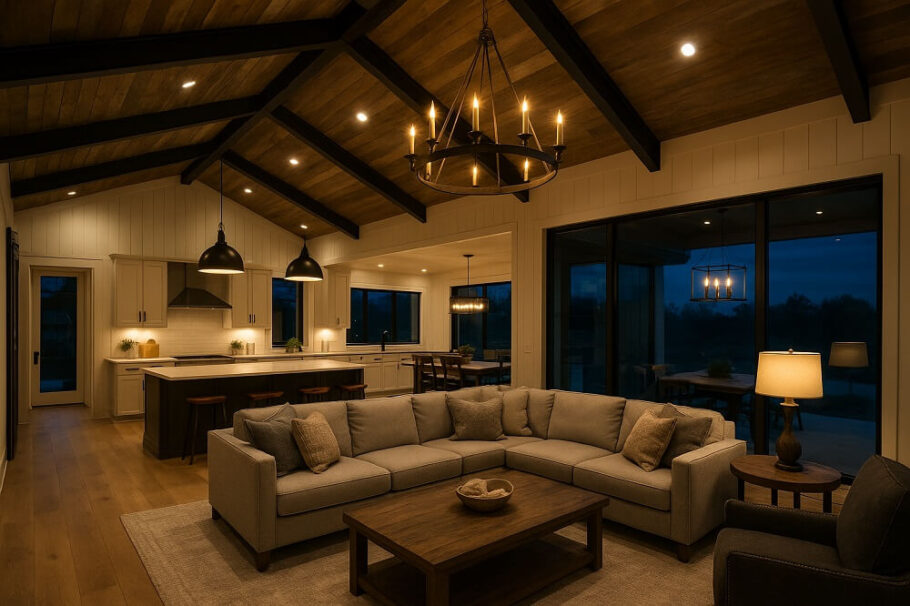
Barndominiums have exploded in popularity over the past few years. That perfect blend of rustic charm and modern industrial design draws in homeowners looking for something different. The appeal is obvious—wide open floor plans, high ceilings, and that distinctive metal building aesthetic. Plus, the initial cost per square foot often looks dramatically lower than traditional home construction.
But here is where things get tricky. That affordable shell is exactly that—a shell. The moment customization enters the conversation, the budget starts shifting in ways most prospective owners never anticipate. And the stories floating around online forums and social media? They conveniently leave out some very expensive details.
The Foundation Reality Check
The standard barndominium package typically includes a basic concrete slab. That slab works perfectly for a shop or agricultural building. But for a living space with custom layouts? Not so much.
Customization almost always demands thicker concrete, additional footings, and reinforced load-bearing points. Interior walls that support upper levels or heavy fixtures require dedicated footings beneath the slab. Running plumbing for a kitchen island or a freestanding tub means cutting into that freshly poured concrete to lay drain lines and supply pipes. Those cuts require patching, and patching properly costs money.
Then there is the radiant floor heating system—a common upgrade in barndominiums. The tubing itself is affordable. The labor to install it correctly before the pour, the manifolds, the circulation pumps, and the specialized boiler system? That adds thousands. And if the slab cracks later because the ground wasn’t compacted properly for a livable structure rather than a barn? Repairing a finished floor with radiant heat running through it becomes a nightmare.
The Insulation Trap
Metal buildings have a notorious reputation for temperature swings. Walk into a standard pole barn on a sunny afternoon, and the heat radiating off those steel panels is overwhelming. Turning that environment into a comfortable home means serious insulation work, and this is where customization costs spiral.
Spray foam insulation is the gold standard for barndominiums. It seals every gap, prevents condensation, and provides structural rigidity. But spray foam on a large metal building with high ceilings and multiple roof pitches is not cheap. Many owners underestimate the amount required by thirty to forty percent.
Batt insulation seems cheaper at first glance. But installing fiberglass batts in a metal building with irregular framing members, curved eaves, and non-standard stud spacing creates gaps. Those gaps lead to moisture problems, which lead to rust, which leads to replacing entire wall sections. The cheap route becomes expensive twice over.
And do not forget the thermal break problem. Metal conducts heat and cold directly through the framing. Without proper thermal breaks between the exterior steel and interior finishes, every stud acts like a highway for outdoor temperatures. Fixing this requires specialized materials and installation methods that most standard insulation contractors do not even offer.
The Electrical and Plumbing Maze
Running wires and pipes through a traditional wood-framed house is straightforward. Studs are predictable. Spaces for conduit are built into the design. Barndominiums are a different beast entirely.
Those beautiful exposed ceilings and open trusses leave nowhere to hide wiring. Surface-mounted conduit becomes a design feature, which works for some aesthetics but looks out of place in others. Hiding wires means building soffits or chases, which adds framing, drywall, and finishing labor.
Plumbing presents an even bigger challenge. Standard residential rough-ins assume a basement or crawl space where drains can slope properly. A barndominium on a slab requires all drain lines to be precisely placed before pouring concrete. Change a bathroom layout after the slab is down? That means jackhammering through six inches of reinforced concrete, rerouting pipes, and repouring. One change order can wipe out a whole month’s construction budget.
Water heater placement also becomes complicated. Tankless units require specialized venting through metal walls. Traditional tanks need floor drains and catch pans. And in a shop-residence hybrid building, the plumbing must meet both residential codes and any agricultural use requirements, which sometimes conflict.
Window and Door Surprises
The standard barndominium kit includes a few basic windows and a man door. But customizing for natural light and views means adding windows. Large windows. Many windows. And those openings in a metal building are not simple.
Cutting a new window opening into a structural steel panel requires reinforcement. The header must be engineered. The flashing details to prevent water infiltration are more complex than in wood construction. And the windows themselves? Custom sizes for non-standard openings cost two to three times what a standard residential window costs.
Sliding glass doors to a back patio sound wonderful. But installing a ten-foot sliding door in a metal wall means reframing that entire section of the building. The weight of the door requires additional structural support. The track system must be perfectly level, which is harder when the concrete slab has normal variations. And any mistakes in installation lead to air leaks, water damage, and doors that refuse to slide smoothly.
The HVAC Headache
Heating and cooling a barndominium defies conventional HVAC wisdom. The open floor plans mean air does not circulate the same way it does in a house with hallways and separate rooms. The high ceilings trap warm air up near the roof. The metal shell absorbs and radiates heat differently than wood and drywall.
Standard residential HVAC contractors often quote jobs based on square footage alone. But a barndominium with twenty-foot ceilings needs a completely different system than a ranch house with eight-foot ceilings. The load calculations must account for the building’s thermal mass, the metal skin’s conductivity, and the air volume.
Mini-split systems are popular in barndominiums, and for good reason. They handle open spaces efficiently. But installing multiple heads to cover a large floor plan adds up fast. And the line sets running through those metal walls must be properly insulated and secured, or they will sweat and cause corrosion.
Ducted systems are even trickier. Running ductwork through an open truss ceiling destroys the clean look many owners want. Hiding ducts in a dropped ceiling reduces the very height that makes the space appealing. There is no good solution, only trade-offs that all cost money.
Permits, Engineering, and the Paperwork Nightmare
Here is the hidden cost that catches almost everyone off guard. A standard barndominium kit comes with engineered drawings for the shell. But those drawings assume agricultural use or simple storage. Convert that building into a residence, and local building departments want to see complete residential plans.
Structural engineering for custom interior layouts adds thousands of dollars. Every non-standard opening, every mezzanine, every point where something heavy attaches to the building requires a stamped drawing. And if the local jurisdiction has never seen a barndominium before, the plan review process drags on for months with requests for additional information.
Then there are the impact fees. Many rural counties waive or reduce impact fees for agricultural buildings. But the moment the permit application says “single family residence,” those fees reappear. Water connection fees, sewer or septic permits, electrical service upgrades—none of these are included in the barndominium package price.
The Finish Line That Keeps Moving
Barndominium customization often includes unique finishes. Reclaimed wood walls. Concrete countertops. Industrial lighting fixtures. These materials look fantastic but carry specialty installation costs. A standard drywall crew charges a certain rate. A crew that installs heavy, rough-sawn planks over metal framing charges something else entirely.
Flooring presents another challenge. The concrete slab that serves as the foundation also wants to be the finished floor. Polishing and staining that slab creates a beautiful, durable surface. But proper polishing requires multiple passes with specialized equipment. Cracks must be filled. Control joints must be addressed. The cost per square foot often matches or exceeds mid-range hardwood.
Adding carpet or luxury vinyl plank means leveling the slab first. Concrete slabs for metal buildings are not poured to residential floor flatness standards. The variations that do not matter in a workshop create noticeable dips and peaks under resilient flooring. Self-leveling compound over a large area adds both material costs and significant labor.
The Utility Connection Black Hole
A barndominium on a rural property sounds idyllic until looking at the cost to bring utilities to the building. The shell package assumes power is available at the building site. But the transformer, the trenching, the conduit, and the main panel? Those are almost never included.
Running electrical service a few hundred feet from the road costs thousands. If the local utility requires a new transformer, add several thousand more. And that is just for power. Water lines need to be trenched and buried below frost depth. Septic systems for a three-bedroom residence require soil testing, engineered drain fields, and permits that can take months to approve.
Internet service is another surprise. Rural properties often lack cable or fiber. Satellite internet works but comes with latency and data caps. Fixed wireless requires line of sight to a tower. Starlink has changed the game, but the equipment costs add up. None of this is part of the barndominium conversation until the building is finished and there is no way to stream a movie.
The Real Number
Adding up all these hidden costs changes the value proposition dramatically. A barndominium shell at fifty dollars per square foot sounds incredible. A fully customized, finished barndominium at two hundred dollars per square foot sounds much more realistic. That is still competitive with traditional construction in many areas, but the gap is far smaller than the marketing suggests.
The smart approach involves getting quotes for everything—and then adding a twenty to thirty percent contingency. Customization always uncovers surprises. The window that arrives damaged. The insulation contractor who finds unexpected obstacles. The building inspector who requires an additional fire rating.
Barndominiums remain a fantastic option for the right owner. The spaciousness, the durability, and the distinctive character cannot be replicated in conventional homes. But going in with eyes open about the real costs of customization makes the difference between a dream home and a financial nightmare. Ask the tough questions early, get everything in writing, and plan for the surprises that no one mentions in those perfect social media posts.