
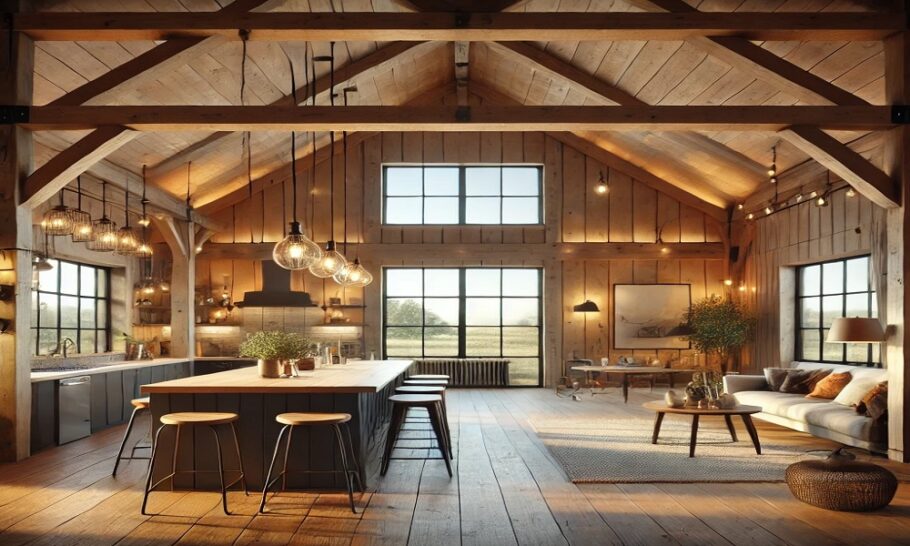
There was a time when the mention of a barndominium conjured images of a rustic metal building out in the middle of nowhere—a place to park a tractor and maybe have a small apartment in the back. Those days are long gone.
Today, the barndominium has evolved into one of the most versatile and sought-after housing trends in the country. It represents a unique blend of form and function, offering wide-open spaces, soaring ceilings, and the durability of post-frame construction, all wrapped in a design that can be as rustic or as modern as you want it to be.
But with that versatility comes a challenge: choosing the right floor plan. The beauty of a barndo is that it isn’t a one-size-fits-all cookie-cutter home. The best floor plan for you depends entirely on how you live. Whether you are an empty nester looking to downsize, a growing family needing elbow room, or a hobbyist who needs a massive workshop, there is a layout designed specifically for your rhythm of life.
I’ve spent years consulting on these projects, and I’ve seen which layouts work and which ones create regret. Here are the top five barndominium floor plans tailored for specific lifestyles, designed to maximize both your space and your happiness.
1. The “Open Range” Layout: For the Entertainer
If your idea of a perfect weekend involves hosting a crowd for Sunday football or a summer barbecue, the “Open Range” layout is your dream come true. This is the floor plan that leverages the barndominium’s greatest structural asset: the clear-span interior.
The Layout
In this design, we throw out the rulebook on compartmentalization. Upon entering, you are greeted by one massive, uninterrupted great room that combines the living room, dining area, and kitchen into a single, cohesive volume. Because there are no load-bearing walls in the center (the steel frame handles the weight), you can have ceilings that soar 16 to 20 feet high.
The kitchen usually features a massive central island that serves as the command center. It’s not just for food prep; it’s a buffet station, a bar, and a gathering spot. I always recommend placing the dining area adjacent to a wall of glass sliding doors that lead to a covered patio or deck.
Why it works for Entertainers
This layout creates a natural flow. Guests aren’t shuffling through narrow hallways or confined to a small living room. They can congregate around the island, lounge on the sofas, and step outside for fresh air without ever feeling disconnected from the party. The high ceilings also prevent the space from feeling stuffy, even when the house is full of people.
Design Considerations
To keep the cavernous space feeling cozy rather than like an airplane hangar, you need to zone it with area rugs and lighting. Think large, low-hanging pendant lights over the island and a bank of windows to bring the outdoors in. The bedrooms in this plan are usually tucked away in a separate “pod” or wing to offer a quiet retreat when the party winds down.
2. The “Agri-Haven” Layout: For the Hobby Farmer and Equestrian
For many, the appeal of a barndominium isn’t just the house; it’s the ability to live where you work and work where you live. If you have horses, livestock, or a serious collection of tractors and tools, you need the “Agri-Haven.” This is the classic “shop-ominium” or “stable-ominium” layout.
The Layout
The defining feature of this plan is the shared wall—or “party wall”—between the living quarters and the workspace. Typically, the structure is divided into two distinct sections. On one side, you have a comfortable, fully finished home (usually a single-story layout to save heat). On the other side, you have a cavernous shop, barn, or stable.
Access between the two is key. A heavy-duty, insulated man-door connects the home’s mudroom or laundry area directly to the shop. This allows you to check on a foal in the middle of the night without putting on your coat and boots, or to grab a tool from the workbench without walking outside in the rain.
Why it works for Hobbyists
It’s all about efficiency and security. You can pull your truck and trailer directly into the shop, unload supplies, and walk into your kitchen. The mess stays in the shop. For equestrians, having a tack room accessible from the house means you can warm up by the fire while keeping an eye on the pasture.
Design Considerations
Ventilation and insulation are critical here. You need to ensure that shop fumes, dust, and smells don’t migrate into the living space. A robust HVAC system with zoned control and positive air pressure in the house is a must. Also, consider a “dirty kitchen” or deep sink in the mudroom—you’ll thank yourself later when you’re not tracking barn muck through the house.
3. The “Ageless Ranch” Layout: For Multi-Generational Living
The economy and family dynamics have changed. More families are choosing to live under one roof—whether to care for aging parents, help with grandkids, or simply combine resources. The “Ageless Ranch” floor plan is designed to provide privacy and togetherness in equal measure.
The Layout
At first glance, this looks like a standard, sprawling ranch-style barndo. But upon closer inspection, you’ll notice the home is split into two distinct suites connected by a central, shared great room and kitchen.
On one end, you have the “main house” with a master suite. On the other end, you have an “in-law suite” or “guest quarters.” This second suite is a mini-apartment. It has its own bedroom, a full bathroom, a small kitchenette or wet bar, and a separate entrance.
Why it works for Multi-Generational Families
It allows for independence. The in-laws can keep their own schedule, watch their own TV, and make their own coffee without disturbing the main household. Yet, the connection through the central living area means you’re never far away. Mealtimes can be shared, and grandparents can be involved in daily family life. The separate entrance also allows for a caregiver to come and go without disrupting the entire house.
Design Considerations
Acoustics are vital here. Since the suites share a wall with the living area, you need to insulate those interior walls with rock wool or dense fiberglass to dampen sound. Also, consider an “aging-in-place” design for the secondary suite: wider doorways for wheelchair access, curbless showers, and lever-style door handles.
4. The “Vertical Village” Layout: For the Growing Family
Families with kids need space, but they also need separation. Kids need room to play and grow, and parents need a sanctuary away from the chaos. The “Vertical Village” takes advantage of the barndominium’s height to create a split-bedroom layout with a bonus loft.
The Layout
This is usually a two-story design, or a “barndo with a loft.” The main floor is dedicated to living and the master suite. The great room soars two stories high, with a wall of windows letting in light. Tucked off to the side of the main floor, you’ll find the master bedroom, a walk-in closet that can double as a storm shelter, and a spa-like bathroom.
Upstairs, a bridge or hallway overlooks the living room below. This leads to the “kid zone”—two or three secondary bedrooms and a shared bathroom. Often, there is a flexible loft space at the top of the stairs that serves as a playroom or a homework station.
Why it works for Families
It creates a natural hierarchy of space. Kids get the upper level—their own territory where they can be as loud as they want. Parents get the main floor retreat. The visual connection from the loft down to the living room means parents can keep an eye on things from above, but the physical separation provides much-needed quiet.
Design Considerations
Safety is paramount with this layout. The loft railing overlooking the living room must be high (at least 42 inches) and have spindles close enough together that a small child can’t squeeze through. Also, consider a laundry chute from the upstairs bathroom down to the main floor laundry room—a small luxury that makes a huge difference in daily life.
5. The “Simple Life” Compact Layout: For the Minimalist or Empty Nester
Not everyone needs 3,000 square feet. For empty nesters who are tired of maintaining a large suburban home, or for a young couple just starting out, the “Simple Life” layout offers efficiency without sacrificing style. It proves that a barndominium can be a cozy cottage, not just a massive barn.
The Layout
This is a “barndominium, Jr.” It typically sits on a smaller concrete slab, ranging from 1,200 to 1,600 square feet. The design is a simple, rectangular open concept. The front door opens into a combined living/dining/kitchen area. A short hallway leads to a well-appointed master suite on one side and a guest room or office on the other.
The magic of this plan is in the “barndo” touches. Even in a small footprint, you can have 12-foot ceilings and a shed roof that slopes up to allow for a row of clerestory windows.
Why it works for Minimalists
It forces you to live intentionally. There is no room for clutter because there is no room for junk. The high ceilings and open layout make the space feel much larger than its square footage suggests. For empty nesters, it offers the single-story living they desire, with all the durability and low maintenance of a metal building. No more painting siding or worrying about roof leaks.
Design Considerations
Storage is the biggest challenge in a compact home. You have to be smart. Use the vertical space with tall kitchen cabinets that go to the ceiling. Incorporate built-in storage under window seats. And if you have the land, consider a small, separate shed for the lawnmower and holiday decorations to keep the barndo pure living space.
Finding Your Foundation
Choosing a floor plan is the most exciting part of the barndominium journey. It’s where you get to dream about your future. Whether you need the massive entertaining space of the Open Range, the practical utility of the Agri-Haven, or the cozy simplicity of a compact design, the beauty of the barndominium is that it adapts to you.
Take your time. Walk through the plans in your mind. Imagine your morning coffee, your evening routine, and your weekend activities. The right layout doesn’t just give you a place to live; it creates a framework for the life you want to lead.