
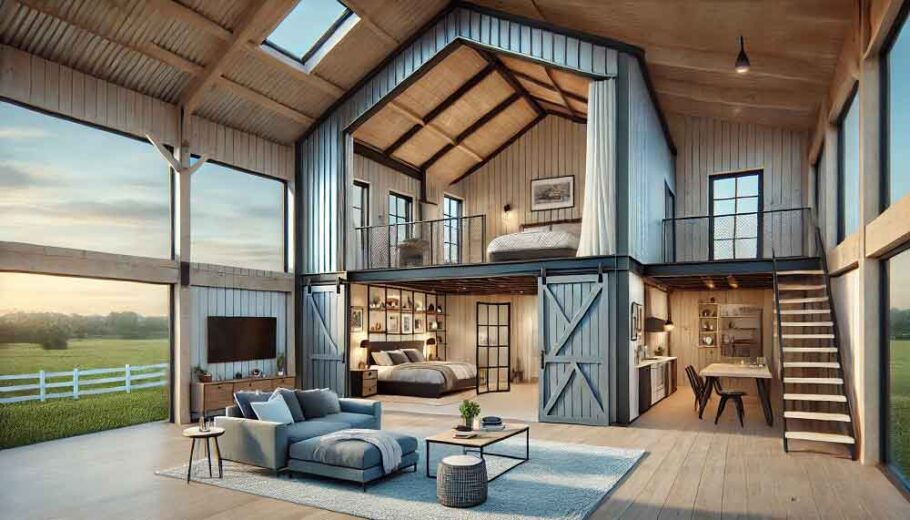
Barndominiums have always been about pushing boundaries. Born from agricultural roots, they have evolved into some of the most innovative residential structures on the market today. Open spans, flexible layouts, and hybrid construction make them ideal for experimentation in ways traditional homes often can’t match. One of the most exciting concepts to emerge from this creative freedom is The Observatory Barndominium—a home that integrates a retractable roof or opening system designed specifically for stargazing, sky observation, and a deeper connection to the cosmos.
As interest in astronomy, wellness-driven design, and experiential architecture grows, the idea of a home that opens itself to the night sky feels both futuristic and deeply human. This article explores how a retractable roof can be integrated into a barndominium, what design and engineering considerations are involved, and why this concept resonates so strongly with modern homeowners seeking something truly extraordinary.
Why Barndominiums Are Ideal for Observatory-Style Design
The barndominium’s structural DNA makes it uniquely suited for unconventional architectural features. Post-frame and steel-frame systems provide wide, unobstructed spans that simplify roof modifications. Unlike conventional stick-built homes, which rely heavily on load-bearing walls, barndominiums distribute loads through columns and trusses, making it easier to isolate a section of roof for movement or removal.
High ceilings are another advantage. Many barndominiums already feature vaulted spaces or double-height living areas, allowing ample vertical clearance for telescopes, skylight shafts, or retractable roof assemblies. Additionally, rural locations—where many barndominiums are built—often come with reduced light pollution, making them ideal for astronomy and night-sky viewing.
The observatory barndominium is not just a novelty; it is a natural evolution of the building type itself.
Understanding Retractable Roof Systems
A retractable roof is not a single technology but a category of systems that allow a portion of the roof to open and close. In residential applications, these systems are typically motorized and weather-sealed, designed to operate smoothly while maintaining the home’s energy efficiency and durability.
Common retractable roof configurations include sliding panels, pivoting sections, roll-off roofs, and telescoping assemblies. In an observatory barndominium, the chosen system often depends on the intended use. Casual stargazing from a bed or lounge may require only a modest opening, while serious amateur astronomers may need a fully open roof segment to eliminate visual obstructions.
Modern retractable roofs can be integrated with smart home systems, allowing homeowners to open or close the roof via smartphone, voice command, or automated weather sensors. This technology transforms stargazing from an occasional activity into a seamless part of daily living.
Designing the Stargazing Space
At the heart of the observatory barndominium is the space beneath the opening roof. This area can take many forms depending on the homeowner’s lifestyle and interests. Some designs incorporate a dedicated observatory room with mounted telescopes and control equipment. Others integrate the opening directly above a bedroom, loft, or living area, creating a dramatic experience where the stars become part of the interior design.
Floor planning is critical. The space below the retractable roof should be visually and functionally intentional, not an afterthought. Designers often use circular or polygonal layouts to echo traditional observatories, but rectangular spaces can work just as well when paired with thoughtful lighting and furniture placement.
Acoustics and privacy also deserve attention. An opening roof changes how sound travels, so designers may incorporate sound-absorbing materials to maintain comfort when the roof is closed. Privacy screens, retractable shades, or electrochromic glass can help balance openness with seclusion.
Structural Engineering Considerations
Integrating a retractable roof into a barndominium requires close collaboration between architects, engineers, and manufacturers. Structural loads must be carefully calculated to account for both the open and closed positions of the roof. Wind uplift, snow loads, and seismic forces all behave differently when part of the roof is movable.
Steel framing is often preferred for observatory barndominiums due to its strength and dimensional stability. Reinforced perimeter beams, custom trusses, and rigid guide rails help ensure smooth operation and long-term durability. Drainage is another key concern. When the roof is open, rainwater must be directed away from interior spaces, often through concealed channels or secondary gutters.
A well-engineered retractable roof should feel effortless to use, but that simplicity is the result of careful planning and precise execution.
Weatherproofing and Climate Control
One of the biggest misconceptions about retractable roofs is that they compromise comfort or energy efficiency. In reality, modern systems are designed with advanced seals, insulated panels, and thermal breaks that rival traditional roofing assemblies.
When closed, the retractable section should perform like any other roof, maintaining interior temperatures and blocking moisture. High-quality gaskets and compression seals prevent air leakage, while insulated metal or composite panels reduce heat transfer.
Climate control strategies often include zoned HVAC systems that account for the unique thermal behavior of the observatory space. Some homeowners also integrate radiant floor heating or passive ventilation to maintain comfort during nighttime use, when temperatures may drop significantly.
Lighting Design for Night Sky Viewing
Lighting is both an enemy and an ally in observatory design. Excessive interior light can ruin night vision and interfere with stargazing, but thoughtful lighting enhances safety and ambiance without detracting from the experience.
Observatory barndominiums often use low-intensity, warm-color LED lighting with dimming controls. Red or amber lights are popular choices because they preserve night vision while providing enough illumination for movement and equipment adjustment.
Exterior lighting should be carefully controlled as well. Shielded fixtures, downward-facing lights, and smart controls help minimize light pollution and maintain dark skies around the home.
Technology Integration and Automation
Technology plays a major role in making the observatory barndominium both practical and magical. Automated roof controls can be linked to weather stations that close the roof automatically if rain, snow, or high winds are detected. Integration with smart home platforms allows homeowners to schedule openings, monitor conditions remotely, and receive maintenance alerts.
For astronomy enthusiasts, the space can be equipped with motorized telescope mounts, tracking systems, and imaging equipment. Power and data connections should be planned early to avoid visible wiring and to support future upgrades.
Even for homeowners who simply enjoy relaxing under the stars, technology enhances convenience and peace of mind, ensuring the roof is always operating safely and efficiently.
Lifestyle Benefits Beyond Stargazing
While stargazing is the primary inspiration, the observatory barndominium offers benefits that extend far beyond astronomy. An opening roof transforms the home’s relationship with nature, allowing fresh air, moonlight, and even gentle rain sounds to become part of everyday life.
Many homeowners report improved sleep quality when sleeping under an open sky, particularly when the design includes natural ventilation and minimal artificial light. The space can also serve as a meditation area, yoga studio, or creative retreat, reinforcing the barndominium’s reputation as a wellness-oriented dwelling.
The observatory feature also adds a powerful emotional and experiential dimension to the home, turning ordinary nights into memorable moments.
Cost Implications and Long-Term Value
There is no denying that a retractable roof adds cost to a barndominium project. Custom engineering, specialized materials, and automation systems represent a significant investment. However, when evaluated in terms of long-term value, the observatory barndominium often justifies its expense.
Unique architectural features increase resale appeal, particularly among buyers seeking distinctive, experience-driven homes. Additionally, the ability to enjoy the night sky without leaving home can reduce the need for separate recreational spaces or travel, offering intangible returns that are difficult to quantify but deeply meaningful.
As technology becomes more accessible, costs are likely to decrease, making observatory features more attainable for a wider range of homeowners.
Zoning, Codes, and Practical Limitations
Before committing to an observatory barndominium, it is essential to understand local zoning regulations and building codes. Some jurisdictions may have restrictions related to roof openings, mechanical systems, or light emissions. Rural areas tend to be more accommodating, but due diligence is still necessary.
Insurance considerations should also be addressed early. Insurers may require documentation of the roof system’s safety features, weather resistance, and maintenance protocols. Working with experienced professionals who understand both barndominium construction and specialty roof systems can help navigate these challenges effectively.
The Observatory Barndominium as a Design Statement
At its core, the observatory barndominium is more than a house with a clever roof. It is a statement about how we choose to live. It reflects a desire to slow down, look up, and reconnect with something larger than ourselves. In an age dominated by screens and artificial environments, opening your home to the stars feels quietly radical.
This concept also demonstrates the versatility of barndominiums as a platform for architectural innovation. Whether used for serious astronomy or simple nighttime wonder, the retractable roof transforms the home into an interactive, living structure.
Looking Toward the Future of Barndominium Design
As barndominiums continue to evolve, features like retractable roofs point toward a future where homes are not just shelters but experiences. Advances in materials, automation, and sustainable design will make observatory-style elements even more seamless and efficient.
The observatory barndominium sits at the intersection of technology, nature, and personal expression. It invites homeowners to design not just for square footage, but for moments—quiet, awe-inspiring moments under a sky full of stars.
For those willing to think beyond conventional boundaries, integrating a retractable roof for stargazing may be the ultimate expression of what a barndominium can be.