
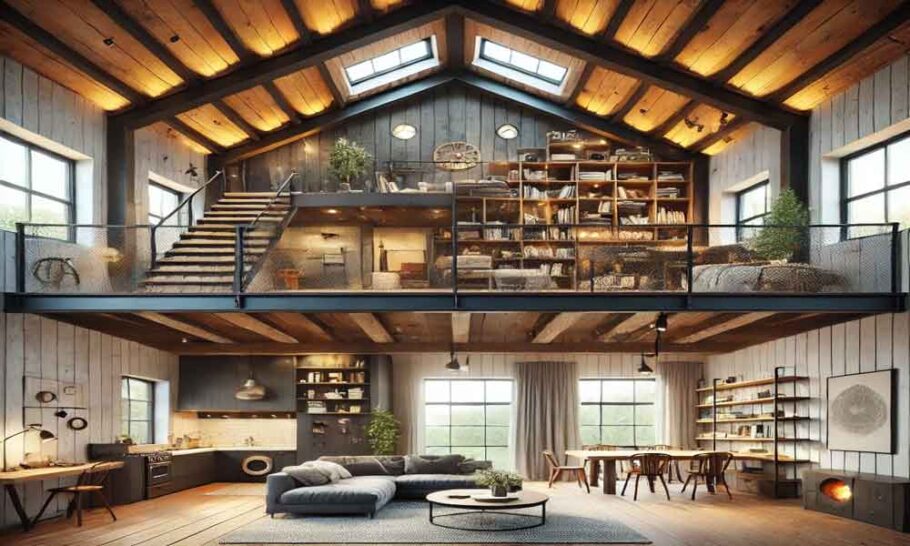
A barndominium looks simple. A steel shell, some insulation, and a whole lot of open space. But that simplicity hides a problem most owners don’t discover until their first winter or second summer. The metal frame acts like a giant thermal bridge, carrying heat straight through the walls and roof as if the insulation wasn’t even there.
Standard construction methods leave gaping holes in the thermal envelope. Not literal holes, but pathways where energy leaks without resistance. An engineered thermal break stops this cold dead. Yet surprisingly few barndominium builders understand what makes a thermal break truly effective versus just a token gesture toward energy efficiency.
Understanding the Thermal Bridge Problem in Post-Frame Construction
Steel conducts heat roughly 1,500 times faster than wood framing. That single fact changes everything about how a barndominium performs. When outdoor temperatures drop, every steel girt, purlin, and column becomes a direct conduit for heat to leave the interior. In summer, the reverse happens, with outdoor heat traveling along the same paths to warm the conditioned space.
Standard insulation placed between steel members does nothing to stop this. The fluffy stuff only fills the cavities. The steel itself remains in direct contact with both the interior cladding and exterior metal panels. Heat travels right past the insulation, not through it.
The math tells a sobering story. A barndominium with conventional steel framing and cavity insulation alone loses thirty to forty percent of its thermal performance through thermal bridging. That means paying for R-20 insulation but getting something closer to R-12 in real-world conditions. Worse yet, the condensation problems that plague poorly designed metal buildings trace back directly to the same thermal bridges.
What Makes a Thermal Break Engineered Rather Than Improvised
An engineered thermal break differs fundamentally from the improvised solutions found on job sites. Some builders think placing a strip of asphalt felt between steel members does the job. Others rely on rubber gaskets meant for vibration isolation rather than thermal separation.
Proper engineered thermal breaks come with structural ratings, compressive strength specifications, and long-term creep resistance data. They maintain their thickness and thermal performance under constant load, year after year. The materials used typically include high-density polyurethane foam, structural phenolic composites, or specialized fiber-reinforced polymers designed specifically for thermal separation.
Compressive strength matters enormously. A thermal break placed between a steel column and its base plate carries the full structural load of the building. If that material crushes over time, the thermal gap closes, and the bridging returns. Cheap materials like standard polyethylene foam or recycled rubber pads compress permanently within months, not years.
Temperature range capability represents another key differentiator. An engineered thermal break maintains its properties from forty below to two hundred degrees Fahrenheit. Many improvised alternatives become brittle in extreme cold or soften when the metal roofing heats under summer sun.
Critical Application Points That Demand Thermal Breaks
The slab edge to wall connection often gets overlooked, yet it represents one of the most damaging thermal bridges in a barndominium. Concrete slabs wick ground heat or cold continuously. Without a thermal break between the slab edge and the wall framing, that energy transfer has no interruption.
An engineered thermal break placed under the bottom track of the wall framing, separating steel from concrete, stops this path entirely. The difference shows up immediately in floor temperatures along the perimeter and in reduced heating demand near exterior walls.
Wall girts and roof purlins create the next major bridge point. Every horizontal steel member that spans between columns touches both the exterior metal panel and interior wall covering. An engineered thermal break placed between the steel girt and interior liner panel stops the bridge before it reaches the conditioned space.
Some manufacturers now produce thermal break clips specifically designed for this application. These clips space the interior liner away from the structural steel, creating a continuous thermal gap. The clip itself has a low-conductivity body and enough surface area to distribute the load without crushing or deforming.
Window and door rough openings present another challenge. Steel framing around openings conducts heat directly, but the fasteners used to attach window frames create additional bridges. Engineered thermal break washers placed under each fastener screw stop these point bridges. Small as they seem, dozens of screws around each window add up to measurable heat loss across the entire building.
The Condensation Connection That Damages Buildings
Condensation follows thermal bridges like a shadow. When warm interior air hits a cold steel surface hidden inside a wall cavity, moisture falls out of suspension. That water collects, runs down inside the wall, and eventually finds wood, drywall, or insulation to damage.
Thermal breaks stop condensation by keeping the interior-facing surfaces above the dew point temperature. No cold steel means no condensation. This benefit alone often justifies the cost of engineered thermal breaks, especially in mixed climates where humidity swings throughout the year.
Buildings without proper thermal breaks develop patterns of rust staining at every girt location, visible on the exterior metal panels as faint vertical lines. Inside, the same pattern appears as water stains or mold growth along the wall where the steel framing sits. These damage patterns trace exactly to the thermal bridge locations, confirming the problem source.
Material Science Behind Effective Thermal Breaks
The best thermal break materials share several properties beyond just low thermal conductivity. Closed-cell foam structures prevent moisture absorption, crucial for applications near concrete slabs or in humid environments. Open-cell foams absorb water readily, turning into a thermal conductor rather than a break once wet.
Creep resistance matters more than most builders realize. Every thermal break under constant compression undergoes some deformation over time. Engineered products have documented creep curves showing performance after ten, twenty, and fifty years. Cheap alternatives have no such data because the manufacturers know the materials won’t last.
Thermal conductivity ratings for engineered breaks typically fall between 0.02 and 0.06 W/m·K. Compare this to steel at 50 W/m·K, and the improvement becomes obvious. Even a half inch thermal break outperforms several feet of steel in thermal resistance.
Some advanced products incorporate load-spreading plates bonded to the foam core. These plates distribute point loads from bolts or fasteners across a wider foam area, preventing localized crushing. The plates themselves have minimal thermal impact because their surface area relative to thickness keeps the heat path small.
Installation Methods That Preserve Performance
A thermal break only works if installed correctly. Gaps, compression, or bypass paths destroy the benefit. The most common installation error involves fasteners that penetrate the thermal break without isolation. A steel screw driven through a thermal break carries heat around the break directly.
Proper installation requires thermal break washers under every fastener head or specialized fasteners with built-in thermal barriers. Another approach uses adhesive mounting systems that eliminate fasteners entirely in some applications. Structural adhesives with low thermal conductivity bond liner panels directly to thermal break clips without creating new bridge paths.
Alignment and coverage matter as well. Any exposed steel that bridges from interior to exterior around the edge of a thermal break defeats the purpose. The break must fully interrupt the steel path, not just reduce it. This means careful detailing at corners, transitions, and penetrations.
Cost Considerations and Payback Periods
Engineered thermal breaks add measurable cost to a barndominium project. The materials themselves cost more than improvised alternatives, and proper installation requires more labor and attention to detail. But the operating cost reductions quickly offset this premium.
A typical barndominium with thermal breaks uses twenty-five to thirty-five percent less energy for heating and cooling than an identical building without them. In cold climates, the savings show up most dramatically in winter heating bills. In hot climates, reduced air conditioning demand provides the payback.
Beyond energy savings, the reduced condensation risk prevents costly repairs. Mold remediation, rust repair, and replacement of water-damaged finishes easily reach thousands of dollars. Proper thermal breaks from the start avoid these expenses entirely.
Many owners also report improved comfort that doesn’t show up on any energy audit. Walls feel warmer in winter. Floors near exterior walls don’t stay cold. The building responds faster to thermostat changes because the thermal mass of the structure stays where it belongs.
The Gap Between Building Codes and Best Practice
Current building codes barely address thermal bridging in metal buildings. Most codes still allow simple cavity insulation without requiring thermal breaks at framing members. This gap between code minimum and actual best practice creates a false economy for builders who stop at code compliance.
Smart builders and owners recognize that codes represent minimum acceptable performance, not optimal performance. Installing engineered thermal breaks voluntarily moves a barndominium from barely acceptable to genuinely high-performance. The additional cost represents a fraction of the total project budget but delivers benefits for the entire life of the building.
Some progressive code jurisdictions have started requiring continuous insulation and thermal break detailing, especially for commercial metal buildings. Residential barndominiums often fall through regulatory cracks because of agricultural building exemptions. Just because a code doesn’t require something doesn’t mean the building won’t benefit from it.
Making the Right Choice for Long-Term Performance
The decision to use engineered thermal breaks comes down to treating a barndominium as a long-term home rather than a temporary structure. Owners planning to live in the building for decades benefit far more than those building a weekend retreat or workshop. The energy savings accumulate year after year, and the condensation protection prevents problems that take years to develop.
Selecting the right thermal break product requires asking specific questions. What is the compressive strength at ten percent deformation? What is the long-term creep rate under sustained load? Is the material compatible with the fasteners and adhesives used in the rest of the build? Does the manufacturer provide documented thermal performance data?
Avoid products that can’t answer these questions with actual test data. Many suppliers sell thermal break materials without any engineering backing. These products might work, or they might fail in five years. A barndominium built to last deserves better than guesswork.
The best approach combines multiple thermal break strategies. Thermal break clips at girts and purlins, thermal separation at the slab edge, isolating washers at every fastener, and careful detailing at all transitions. No single product solves every bridge point. A comprehensive system addresses each path where heat can travel.
Building Something That Actually Performs
A barndominium without proper thermal breaks feels drafty in winter and hot in summer, no matter how much insulation gets stuffed into the walls. The steel frame overpowers the insulation, carrying heat around it like water flowing around a rock in a stream. Engineered thermal breaks change this dynamic completely by interrupting the steel path itself.
The result transforms the building experience. A properly thermal broken barndominium feels solid, comfortable, and consistent. The heating and cooling system runs less often and for shorter cycles. Condensation stays outside where it belongs. Energy bills drop noticeably compared to identical buildings without thermal breaks.
For anyone serious about building a barndominium as a primary residence, engineered thermal breaks aren’t optional. They represent the difference between a metal building masquerading as a home and a genuinely high-performance house that happens to use a steel frame. The cost difference is real, but so is the performance difference. One delivers a building. The other delivers a home that works right from the first day forward.