
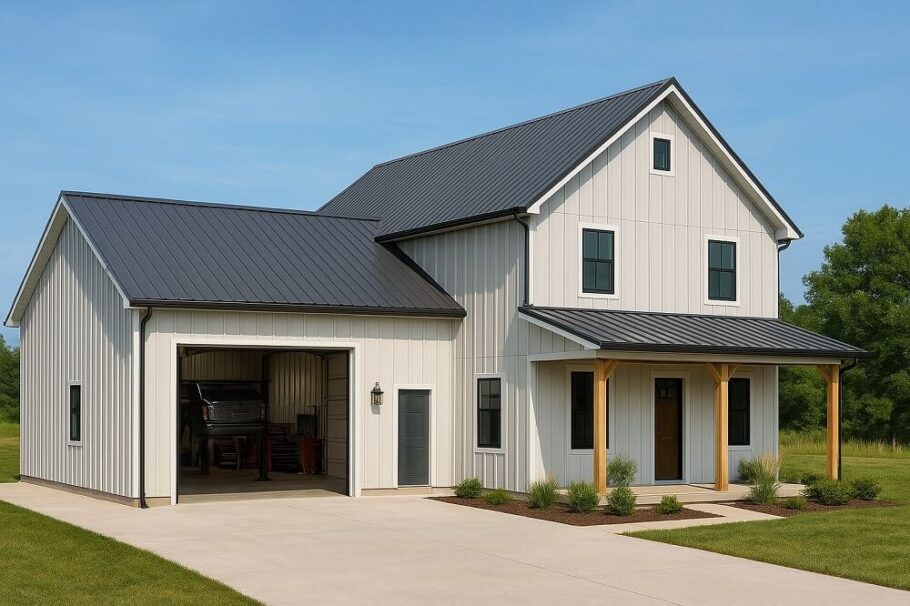
Somewhere between a rustic barn and a suburban loft lies the barndominium. Once a niche idea for farmers looking to save on housing costs, this metal-clad hybrid has exploded into the mainstream. A quick scroll through home design social media feeds shows sprawling shop spaces with polished concrete floors, floor-to-ceiling windows, and living quarters that rival any luxury home. But behind the glossy photos and open-concept dreams lies a more complicated reality.
Before falling for the aesthetic or the promise of cheap square footage, it helps to take a hard look at what barndominium living actually entails. The truth is, these structures come with serious advantages and equally serious drawbacks. Understanding both sides is the only way to decide if a barndo—as fans call it—belongs in your future.
What Exactly Is a Barndominium?
At its core, a barndominium is a metal building that combines workshop or garage space with a residential living area. Think of it as a barn that someone turned into a home, though most modern barndos are built from scratch with living quarters in mind. The exterior is almost always steel, often with vertical ribbed panels in colors ranging from classic red to charcoal gray. Inside, the layout typically features an open floor plan where the kitchen, dining, and living spaces flow together without many interior walls. Bedrooms and bathrooms usually sit off to one side or on a second floor loft.
Some barndominiums are enormous—5,000 square feet or more—with space for RVs, boats, woodworking shops, or home businesses. Others are modest, two-bedroom structures that just happen to be made of metal. The common thread is post-frame construction, which uses large posts or columns set into the ground rather than traditional wood stud framing on a concrete foundation.
The Pros of Barndominium Living
Let’s start with the reasons so many people are jumping on this trend. For the right buyer, a barndominium genuinely solves problems that traditional homes cannot.
Lower Construction Costs Per Square Foot
One of the biggest draws is the price tag. Building a barndominium often costs significantly less per square foot than a stick-built home. The post-frame construction method requires less material and less labor. There is no need for load-bearing interior walls, which means fewer studs, less drywall, and less framing overall. The metal shell goes up quickly, sometimes in a matter of days, slashing labor hours. In many parts of the country, a buyer can expect to pay between 30 and 50 percent less for a barndo shell compared to a traditional house of the same size.
Those savings leave room in the budget for high-end finishes inside. A person could pour that extra money into quartz countertops, commercial-grade appliances, or radiant floor heating—luxuries that might feel out of reach in a conventional build.
Open, Flexible Floor Plans
Without interior load-bearing walls, the interior of a barndominium is a blank canvas. Vaulted ceilings are standard, and the main living area can stretch from one end of the building to the other without a single column interrupting the sightline. This openness works exceptionally well for people who love to entertain, for families with young children who need visual supervision, or for anyone who simply hates feeling boxed in by hallways and small rooms.
Furniture arrangement becomes more creative. A massive sectional, a long dining table, and a kitchen island the size of a small car can all coexist without feeling cramped. And if a buyer’s needs change over time, interior walls can be added or moved with relative ease because they are not structural.
Unmatched Durability and Low Maintenance
Steel does not rot. Termites ignore it. It will not warp or settle like wood framing. A properly constructed barndominium can withstand high winds, heavy snow loads, and even some seismic activity better than many traditional homes. The metal exterior resists fire, which can lower insurance premiums in wildfire-prone areas.
Maintenance is refreshingly minimal. No scraping and repainting wood siding every five to seven years. No worrying about rotting window sills or peeling trim. A pressure washer and some mild detergent keep the exterior looking new for decades. Gutters, downspouts, and roof penetrations still need attention, but the overall upkeep is far less demanding.
Energy Efficiency Potential
This one surprises a lot of people. A barndominium can be incredibly energy efficient—but only if built correctly. Spray foam insulation is the usual solution. Applied directly to the inside of the metal panels and under the roof deck, closed-cell spray foam seals every gap, creates a continuous thermal barrier, and prevents the temperature swings that plague poorly insulated metal buildings.
With proper insulation, a barndominium stays cool in summer and warm in winter while using less energy than many stick-built homes. The open floor plan also helps with passive heating and cooling. Ceiling fans move air through the large space, and operable windows on opposite walls create cross breezes that reduce the need for air conditioning.
Tax Advantages in Some Areas
In certain rural counties, a barndominium may qualify for agricultural or farm building tax rates if part of the structure is used for livestock, equipment storage, or crop processing. That distinction can drop property taxes dramatically. The rules vary wildly by jurisdiction, and local assessors do not always agree on how to classify these hybrid buildings. But for someone willing to navigate the paperwork and maintain a genuine agricultural use, the savings can add up to thousands of dollars per year.
The Cons of Barndominium Living
For every advantage, there is a trade-off. Some of these downsides are minor inconveniences. Others have derailed entire projects and left owners frustrated.
Financing Nightmares
Getting a mortgage for a barndominium is nothing like getting a loan for a conventional house. Most mainstream lenders have no idea what to do with a metal building that includes living quarters. They see a “barn” on the appraisal and get nervous. Even when a lender is willing to consider the property, the terms are rarely favorable. Higher interest rates, larger down payments, and shorter loan terms are common.
Construction loans are even trickier. Traditional construction loans expect a general contractor, a complete set of architectural plans, and draws tied to specific construction milestones. Many barndo builders are owner-builders who act as their own general contractors, which disqualifies them from most construction financing. The workaround is often a portfolio loan from a local credit union or an agricultural lender, but those options are not available everywhere. Some people end up paying cash for the shell and finishing the interior over time with savings or personal loans.
Zoning and Building Code Battles
This is where dreams go to die. Many counties and municipalities have zoning ordinances that prohibit residential use of agricultural buildings. Others require a minimum square footage for single-family homes that a barndo might not meet. Some building codes have not caught up with post-frame residential construction at all, leaving inspectors scratching their heads over things like egress windows, fire separation between living and shop areas, and electrical requirements.
Even in areas where barndominiums are allowed, the permitting process can be grueling. An owner might need a conditional use permit, a variance, and multiple inspections that a standard home builder would never face. Neighbors sometimes object to the appearance of a metal building in a residential zone, leading to public hearings and appeals. It is entirely possible to buy land, design a barndo, and then discover it cannot be built there legally.
Resale Value Uncertainty
The housing market rewards conformity. A traditional three-bedroom, two-bath house on a foundation with a pitched roof and vinyl siding will sell quickly in most neighborhoods. A barndominium is a wild card. Potential buyers either love the concept or hate it. There is very little middle ground.
This polarizing effect means a barndo might sit on the market for months when it comes time to sell. Appraisers struggle to find comparable sales, which leads to lowball valuations. In a hot real estate market, that might not matter—a unique property can still attract multiple offers. But in a cooling market, the buyer pool shrinks dramatically. Anyone building a barndominium should plan to stay there for at least ten years, not just to recoup the investment but to wait for the right buyer to come along.
Noise and Condensation Issues
Living inside a metal building is loud. Rain sounds like a drumline. Hail is terrifying. Wind creates low-frequency hums and rattles that take getting used to. Even with insulation, sounds transfer differently through steel framing than through wood. A workshop or garage attached to the living space amplifies every power tool, air compressor, and garage door opener. Some people find this background noise charming or easily ignorable. Others find it maddening.
Condensation is a more serious problem. When warm, humid interior air meets a cold metal exterior, water forms on the steel surface. That moisture leads to mold, rust, and rot if not managed correctly. Proper vapor barriers, ventilation, and spray foam insulation prevent condensation, but cutting corners during construction invites disaster. Many barndo horror stories start with an owner who saved money on insulation only to discover rust weeping through the interior walls a year later.
Limited Floor Plan Options for Multistory Living
While the main floor can be as open as anyone wants, adding a second floor or a loft comes with compromises. The post-frame construction method does not naturally lend itself to second-story living spaces without significant engineering and additional steel. Loft areas often have sloped ceilings and limited headroom near the exterior walls. Staircases eat up precious square footage on the main floor. For a family that wants a traditional two-story home with distinct rooms and hallways, a barndominium is likely a poor fit.
So, Is a Barndominium Right for You?
After weighing the pros and cons, the answer comes down to three factors: location, lifestyle, and tolerance for uncertainty.
A barndominium works best in rural or exurban areas where zoning is flexible, land is affordable, and neighbors are not close enough to complain about a metal building. The ideal owner has some construction knowledge or a trusted contractor who has built barndos before. They have the cash or the credit union relationship to handle unconventional financing. They plan to stay in the home for a decade or more, and they do not care about resale value as much as they care about having exactly the space they want.
A barndominium is a terrible choice for someone who needs a move-in ready home in a suburban subdivision. It will not work for a first-time buyer relying on FHA or VA financing. It is not for someone who hates DIY projects, unexpected hurdles, or explaining their house to every visitor, inspector, and appraiser who walks through the door.
For the person who loves the industrial-chic aesthetic, who dreams of a massive workshop attached to their living room, who enjoys problem-solving and has the patience to navigate bureaucracy—that person might just find that a barndominium is not a compromise but a perfect fit. The key is going in with eyes wide open, understanding that the glossy photos never show the headaches. Every building has them. A barndominium just wears them on the outside in steel panels.