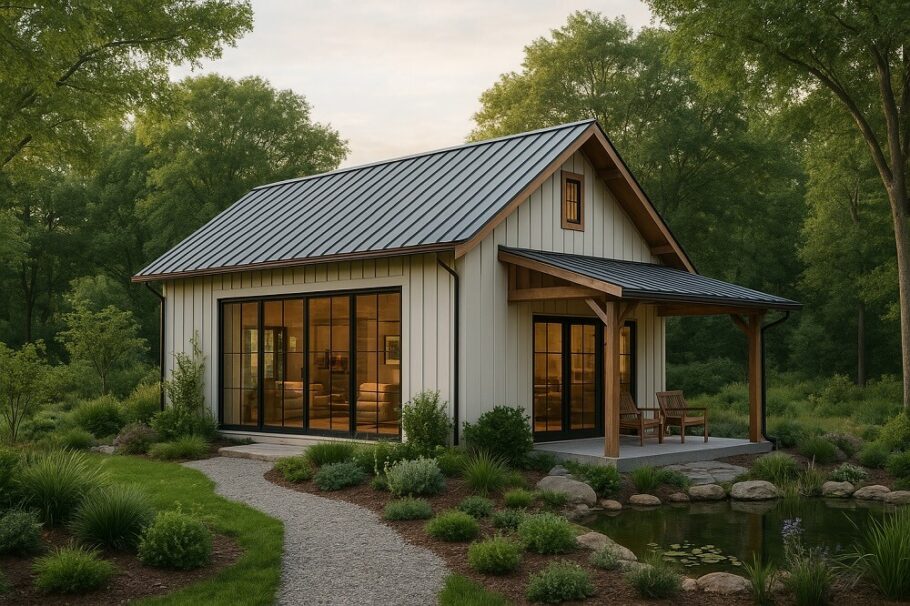
The roof of a barndominium serves as more than just a protective barrier against the elements. It establishes the architectural character, influences energy efficiency, and represents one of the most significant financial investments in the entire building project. With the rising popularity of these versatile metal-and-timber structures, homeowners face an increasingly complex array of roofing choices that extend far beyond the traditional corrugated steel panels.
Metal Roofing: The Industry Standard
Standing seam metal roofing dominates the barndominium market for compelling reasons. This system features interlocking panels with raised seams that rise above the roof’s surface, creating a sleek, contemporary appearance that complements the clean lines of modern barndominium architecture. The concealed fastener system eliminates exposed screw heads, reducing potential leak points and extending the roof’s lifespan considerably.
Exposed fastener metal roofing offers a more budget-friendly alternative while maintaining the durability characteristics that make metal so appealing. The screw-down panels, often referred to as R-panels or PBR panels, feature raised ribs with fasteners driven directly through the metal surface. While this creates more potential maintenance points, proper installation with high-quality neoprene washers can provide reliable protection for decades.
The material choices within metal roofing deserve careful consideration. Galvanized steel, coated with a zinc layer, offers excellent corrosion resistance at a moderate price point. Galvalume, which combines aluminum and zinc coating, provides superior protection against rust and heat reflection. For homeowners seeking maximum longevity, premium painted systems like Kynar 500 or Hylar 5000 offer warranties extending 40 years or more.
Standing Seam Versus Exposed Fastener: The Critical Decision
The choice between these two metal roofing systems affects maintenance requirements, longevity, and budget in meaningful ways. Standing seam systems allow for thermal movement without stressing fasteners, as the panels slide along concealed clips. This expansion and contraction capability proves crucial in regions with significant temperature swings.
Exposed fastener systems cost roughly 30-40% less than standing seam alternatives, making them attractive for budget-conscious builders. However, the exposed screws require periodic inspection and potential replacement of rubber washers over the roof’s lifetime. Standing seam’s clean aesthetic appeals to those prioritizing architectural refinement, while exposed fastener offers a more utilitarian, agricultural appearance that many barndominium owners find charming.
Stone-Coated Steel: A Hybrid Approach
For those desiring the appearance of traditional roofing materials without sacrificing metal’s durability, stone-coated steel presents an intriguing middle ground. Granules embedded in acrylic resin bond to the steel substrate, creating surfaces that mimic wood shake, clay tile, or slate. This material combines the light weight and fire resistance of metal with the aesthetic warmth of conventional roofing.
The textured surface diffuses light differently than smooth metal, reducing glare and creating visual depth that changes throughout the day. Installation costs fall between exposed fastener and standing seam systems, while the material cost runs higher than standard metal panels. The stone coating also provides modest sound-dampening properties, reducing the drumming effect that rain can produce on bare metal roofs.
Colored Options and Energy Considerations
The roofing color selection extends far beyond aesthetic preference, significantly impacting energy costs and building comfort. Light-colored roofs with high solar reflectance reduce cooling loads in warm climates, while darker roofs can assist snow melt in northern regions. The solar reflectance index (SRI) ratings help quantify this performance characteristic, with cool roof options achieving ratings above 75.
Manufacturers now offer extensive color palettes through PVDF and polyester coating systems. Custom colors often require minimum order quantities and extended lead times, while standard colors like galvalume, charcoal, and burnished slate remain readily available. The coating thickness affects both durability and warranty coverage, with higher-mil systems providing better protection against chalking and fading.
Insulation Strategies and Condensation Control
The roof assembly’s thermal performance depends heavily on insulation methods selected alongside the roofing material. Closed-cell spray foam applied directly to the roof deck creates an unvented assembly that controls condensation while providing superior R-values per inch. This approach eliminates thermal bridging through roof framing members and creates an air-tight barrier that dramatically improves energy efficiency.
Vented roof assemblies with fiberglass batts or rigid foam insulation between rafters remain common, requiring proper airflow channels to prevent moisture accumulation. The ventilation gap between insulation and roof deck allows warm, moist interior air to escape, preventing condensation that can lead to corrosion or wood rot. Building codes increasingly require vapor retarders in certain climate zones, making professional consultation essential for code compliance.
The Increasing Popularity of Standing Seam
Modern barndominium construction demonstrates a clear trend toward standing seam roofing, driven by both aesthetic preferences and practical advantages. The clean horizontal lines complement the vertical siding patterns common in barndominium design, creating visual cohesion rarely achieved with exposed fastener systems. The concealed fasteners eliminate the potential for leaking around screw penetrations, reducing long-term maintenance burdens.
Insurance companies often offer premium reductions for standing seam roofs due to their superior wind resistance and fire ratings. The interlocking panels can withstand uplift pressures exceeding 150 mph when properly fastened, making them suitable for hurricane-prone regions. This structural performance, combined with the 50-plus year lifespan, justifies the higher initial investment for many homeowners.
Cost Considerations Across Options
The economic analysis of barndominium roofing involves both initial expenditure and lifetime costs. Exposed fastener metal roofing typically ranges from $4.50 to $7.50 per square foot installed, while standing seam systems span $8.00 to $14.00 per square foot. Stone-coated steel falls between these ranges at approximately $6.00 to $10.00 per square foot.
These figures exclude critical components like underlayment, flashings, and insulation, which can add significantly to the total project cost. The roof’s complexity, including features like dormers, skylights, or valleys, increases both material waste and labor time. Geographic location influences pricing through local material availability and labor market conditions, with rural areas sometimes commanding premium rates due to limited contractor competition.
Climate-Specific Recommendations
The optimal roofing choice varies dramatically based on climate conditions. Homes in coastal regions demand materials with exceptional corrosion resistance, making galvalume and coated systems preferable to bare galvanized steel. Heavy snow regions benefit from smooth metal surfaces that allow snow to slide off, reducing structural loads and preventing ice dam formation.
Hot climates call for cool roof strategies, including light colors and reflective coatings that reduce heat absorption. The thermal expansion characteristics of metal prove advantageous in extreme temperature variations, as the material expands and contracts without cracking or warping. Humid environments require careful attention to ventilation and condensation control to prevent moisture-related deterioration.
The Assembly Beyond the Panels
The roofing system’s performance relies heavily on the components beneath the visible surface. Quality underlayment protects against moisture infiltration during high winds or ice damming, with synthetic products offering superior tear resistance compared to traditional felt. The choice of fasteners, flashings, and sealing materials affects the system’s longevity, with stainless steel or coated fasteners providing better corrosion resistance.
Proper installation techniques prove equally important to material quality. The expansion clips, seam sealers, and closure strips must be installed with precision to ensure water-shedding capability. Professional contractors with specific metal roofing experience, rather than general roofing specialists, typically achieve superior results due to their familiarity with metal-specific installation requirements.
Long-Term Value and Resale Considerations
The roofing investment directly influences the property’s future marketability and value. Metal roofs typically recover 85-90% of their cost in home value, according to national remodeling surveys, compared to lower recovery rates for asphalt shingles. The longevity and low maintenance requirements of quality metal roofing appeal to future buyers, potentially accelerating sale timelines.
The roof’s appearance significantly impacts curb appeal, making color and profile choices that complement the overall design essential. A well-executed metal roof can transform an ordinary barndominium into a distinctive property that stands out in the real estate market. Documentation of the roof’s specifications, including coating warranties and installation details, provides valuable information for future buyers and supports property valuation.
Making the Final Decision
Selecting the appropriate barndominium roofing requires balancing multiple factors including budget, climate, aesthetic preferences, and long-term goals. Standing seam offers the highest performance and longest lifespan with the greatest initial investment. Exposed fastener provides reliable protection at a more accessible price point. Stone-coated steel delivers unique aesthetic possibilities at a moderate cost premium.
The decision should involve consultations with experienced metal roofing contractors who understand local building codes and climate challenges. Obtaining multiple quotes with detailed specifications allows for meaningful comparisons beyond simple price considerations. The right roofing choice protects the investment for decades while contributing to the home’s comfort, efficiency, and beauty.