
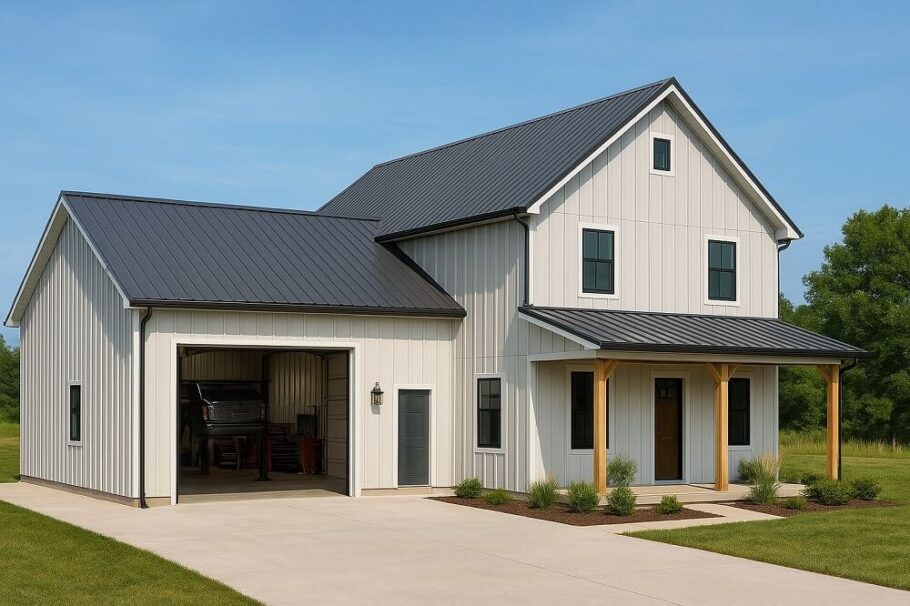
Barndominiums are known for flexibility, efficiency, and long-term value. But what happens when a once-perfect layout no longer fits your lifestyle? Maybe the family has grown, a home business needs more space, or you want to add a more traditional living area to balance the industrial feel of a metal building. This is where the barndominium addition comes into play.
Connecting a new traditional structure—often wood-framed and residential in style—to an existing metal barndominium is one of the most strategic upgrades you can make. Done correctly, it preserves the durability of the original building while introducing comfort, curb appeal, and functionality that feels more like a conventional home.
This guide walks through the planning, structural, aesthetic, and construction considerations involved in successfully tying a traditional addition into an existing metal building.
Why Homeowners Choose to Add Onto an Existing Barndominium
Barndominium additions are rarely about impulse. They usually stem from long-term use and evolving needs.
Common Reasons for a Barndominium Addition
One of the most common reasons is space expansion. Many barndominiums start with a shop-heavy layout and minimal living quarters. Over time, homeowners realize they want more bedrooms, a larger kitchen, or a dedicated family room.
Another reason is aesthetic balance. While metal buildings are efficient and strong, some owners want a more traditional residential look—pitched roofs, porches, siding, or architectural details that soften the industrial appearance.
Additions are also popular for multi-generational living, such as adding an in-law suite, guest wing, or private living quarters for adult children.
Finally, some additions are driven by functional separation, like attaching a home office, studio, or rental unit that feels distinct from the main barndominium.
Understanding the Two Building Types You’re Connecting
Before planning begins, it’s critical to understand how different a metal building and a traditional structure really are.
Characteristics of a Metal Barndominium
Metal barndominiums are typically built using steel columns, rigid frames, or red-iron systems. Loads are transferred differently than in wood framing, and exterior walls are often non-load-bearing.
Metal buildings also expand and contract more with temperature changes, which plays a major role when connecting new structures.
Characteristics of Traditional Additions
Traditional additions are usually wood-framed, built on continuous footings or stem walls, and designed to meet residential codes for comfort, insulation, and interior finishes.
These structures are more forgiving when it comes to architectural detailing but less tolerant of structural movement.
The challenge—and opportunity—is designing a connection that respects both systems.
Planning the Addition the Right Way
A successful barndominium addition starts long before concrete is poured or walls are framed.
Evaluating the Existing Structure
The first step is assessing the original metal building. This includes:
- Foundation type and depth
- Column spacing and load paths
- Roof pitch and eave heights
- Exterior wall condition
- Drainage and grading around the structure
Not all metal buildings were designed to accept future additions, so this evaluation determines what is feasible without major retrofitting.
Zoning, Permits, and Code Compliance
Local zoning regulations often dictate setbacks, building height, and total square footage. When adding a traditional structure, residential codes may apply more strictly than they did for the original barndominium.
Fire separation, energy efficiency requirements, and structural load calculations all need to be reviewed early in the design phase.
Designing the Connection Between Old and New
The connection point is the most critical aspect of the entire project.
Foundation Transitions
One of the biggest mistakes in barndominium additions is rigidly tying two foundations together when they are likely to move differently.
Best practice often involves:
- Separate foundations with a controlled expansion joint
- Proper flashing and waterproofing at the joint
- Matching finished floor elevations carefully
This approach allows each structure to settle or shift independently without cracking finishes or causing structural stress.
Wall and Roof Tie-Ins
When connecting walls, designers must consider how loads transfer and how materials react to movement.
Roofs require special attention. Tying a traditional truss system into a metal roof can create drainage problems if slopes or heights are mismatched. Many successful additions use a hybrid roofline, where the new roof intersects cleanly without forcing alignment that doesn’t make sense structurally.
Matching or Intentionally Contrasting Architectural Styles
A major decision in any barndominium addition is whether the new structure should blend in or stand apart.
Blending the Addition Seamlessly
Some homeowners want the addition to feel like it was always part of the original plan. This can be achieved by:
- Matching roof pitch and overhang depth
- Using complementary siding colors and materials
- Aligning window proportions and trim styles
With careful detailing, even a wood-framed addition can visually merge with a metal building.
Creating a Deliberate Contrast
Others prefer a clear visual distinction. A traditional addition with lap siding, stone accents, or a covered porch can add character and warmth without pretending to be metal.
This approach often enhances curb appeal by breaking up large metal facades and giving the home a more residential presence.
Interior Flow and Functional Layout
An addition should feel intentional from the inside, not like an afterthought.
Transition Spaces Matter
The area where the old structure meets the new one should act as a transition zone. Mudrooms, hallways, utility corridors, or laundry rooms work well here because they buffer changes in ceiling height, wall thickness, or flooring.
Mechanical and Utility Integration
HVAC, plumbing, and electrical systems must be planned carefully. Sometimes it makes sense to extend existing systems, while in other cases the addition benefits from independent mechanical equipment.
Energy efficiency improves when systems are sized specifically for the new space rather than overloading older equipment.
Moisture Control and Weatherproofing
Metal buildings and traditional structures handle moisture differently, which makes weatherproofing critical.
Managing Water at the Connection Point
The joint between buildings is vulnerable to leaks if not detailed correctly. This includes:
- Step flashing and counter-flashing
- Proper roof drainage away from the joint
- Continuous air and vapor barriers
Ignoring these details can lead to hidden moisture damage that shows up years later.
Condensation Considerations
Metal buildings are more prone to condensation issues. When attaching a traditional structure, insulation and vapor control strategies must be compatible to prevent moisture from being trapped between systems.
Cost Factors Unique to Barndominium Additions
While additions are often cheaper than building a new structure from scratch, there are cost variables unique to this type of project.
Structural Modifications
Reinforcing an existing metal frame, cutting into exterior panels, or modifying roof systems can add cost compared to a standalone addition.
Design and Engineering
Because this is a hybrid structure, professional design and engineering are not optional. However, the upfront cost often saves money by avoiding construction errors and future repairs.
Long-Term Value
A well-designed traditional addition often increases resale appeal by making the barndominium feel more like a conventional home, which can broaden the pool of future buyers.
Common Mistakes to Avoid
Many barndominium additions fail not because of bad intentions, but because of poor planning.
Some of the most common mistakes include:
- Rigidly tying structures together without accounting for movement
- Ignoring roof drainage at the connection point
- Forcing mismatched ceiling heights without transition spaces
- Underestimating permitting and inspection requirements
- Treating the addition as “just another room” instead of a structural integration
Avoiding these pitfalls requires a holistic approach, not piecemeal decisions.
Is a Barndominium Addition Right for You?
Not every barndominium needs an addition, but for many owners, it’s the perfect evolution of their home.
If you love your location, appreciate the durability of your metal building, and want more comfort or space, adding a traditional structure can deliver the best of both worlds. The key is respecting the differences between building systems while designing a connection that feels intentional, durable, and visually cohesive.
Final Thoughts
The barndominium addition is more than just extra square footage. It’s a chance to redefine how your space works and how it feels to live in it. By thoughtfully connecting a new traditional structure to an existing metal building, you can combine strength and style, efficiency and comfort, industry and home.
With proper planning, professional design, and attention to detail, a barndominium addition doesn’t just expand your building—it elevates it.