
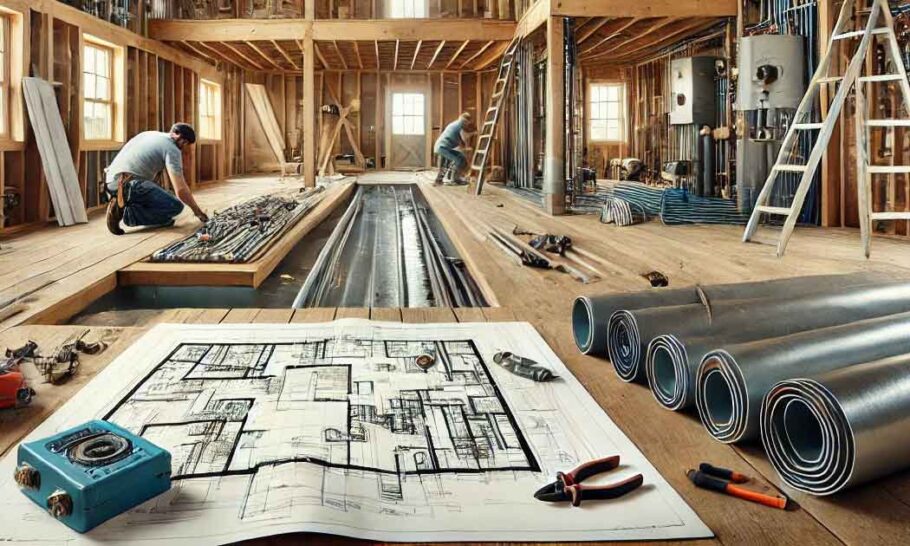
The barndominium trend shows no signs of slowing down. These spacious metal buildings converted into living spaces offer wide-open floor plans and that modern rustic aesthetic so many homeowners crave. But beneath that beautiful exterior and those exposed beams lies a network of pipes that presents unique challenges not found in traditional stick-frame construction.
Running plumbing in a metal building requires thinking differently about three major threats: freezing temperatures, annoying noise transmission, and the slow creep of corrosion. Each one can turn that dream home into a maintenance nightmare if not addressed during the planning and installation phases.
The Freezing Problem in Metal Envelopes
Metal buildings are notorious for temperature swings. The steel shell conducts heat and cold far more efficiently than wood framing with traditional siding. During winter months, the interior of exterior walls can drop to near-ambient temperatures, especially in uninsulated areas or where insulation has settled or been improperly installed.
Water lines running through exterior walls in a barndominium face a genuine freeze risk that demands serious attention. The conventional wisdom of running pipes through interior walls whenever possible holds even more weight here. Keeping plumbing lines within the conditioned space of the building provides the first line of defense against freezing.
For lines that must traverse exterior walls or unheated spaces, insulation becomes critical. Closed-cell spray foam offers superior protection in metal buildings, adhering directly to the steel and creating an airtight seal that prevents cold air from reaching the pipes. This approach outperforms traditional fiberglass batt insulation in metal construction, where air infiltration around framing members can create cold spots.
Heat tape and pipe heating cables provide additional security for vulnerable runs. Modern self-regulating cables adjust their heat output based on ambient temperature, reducing energy consumption while providing freeze protection. Installing these systems during the rough-in phase rather than as a retrofit saves considerable headache and expense.
The layout itself matters tremendously. Consolidating plumbing runs in a central chase or mechanical core reduces the exterior wall exposure. In open floor plans common to barndominiums, this might mean designing the kitchen and bathrooms in closer proximity than one might initially plan.
The Noise Factor in Metal Buildings
Metal buildings are essentially giant sounding boards. The steel framing and metal roofing transmit vibration and sound with remarkable efficiency. Plumbing noise that might go unnoticed in a wood-framed house becomes a constant companion in a barndominium.
Water hammer presents a particular nuisance. When valves close suddenly, the moving water slams against the pipe walls and fittings, sending shock waves through the system. In metal buildings, this translates to loud banging sounds that echo through the structure. Installing water hammer arrestors at strategic points throughout the system, particularly near quick-closing valves on washing machines and dishwashers, makes a noticeable difference.
Pipe supports deserve careful consideration. Rigid mounting directly to steel framing transfers vibration throughout the structure. Rubber or neoprene isolation mounts between the pipe and the building frame absorb much of this vibration before it can travel through the metal skeleton.
The choice of pipe material affects noise transmission significantly. Copper pipes tend to transmit sound more readily than modern PEX tubing. PEX’s flexibility and lower density naturally dampen water noise and reduce the sound of expansion and contraction as water temperature changes.
Running pipes through insulated chases rather than directly against steel framing adds another layer of sound mitigation. The insulation absorbs some of the noise, while the separation from the metal structure prevents direct sound transmission paths.
Corrosion Concerns in Metal Construction
The chemistry between copper pipes and steel framing creates a galvanic reaction that slowly eats away at the plumbing system. When dissimilar metals come into contact in the presence of moisture, electrolysis occurs, and the less noble metal corrodes. Copper and steel, unfortunately, do not play well together.
Dielectric unions provide the solution at connection points where copper must meet steel. These fittings separate the metals with a non-conductive barrier, preventing the electrochemical reaction. Failing to install these at every transition point invites corrosion that eventually leads to pinhole leaks and pipe failure.
The metal building itself can create an environment conducive to corrosion. Condensation forms on the interior surfaces of steel framing and roofing during temperature changes. This moisture can drip onto pipes or create a humid environment that accelerates corrosion, particularly with copper lines.
PEX tubing eliminates the galvanic corrosion issue entirely. This plastic piping contains no metal to react with the steel structure. For barndominium construction, many plumbing professionals now recommend PEX for the entire system, reserving copper only for specific applications where heat transfer or UV resistance demands it.
Proper grounding deserves attention as well. Metal plumbing systems require bonding to the electrical grounding system. In a metal building, this becomes even more critical due to the conductive nature of the structure itself. Professional electrical grounding prevents stray currents from accelerating corrosion in metal pipes.
Strategic Layout for Longevity
The most successful barndominium plumbing installations start with smart design decisions. Keeping all plumbing off exterior walls provides the foundation for a reliable system. In buildings where open floor plans dominate, this might mean creating a dedicated plumbing chase that runs through the interior, with branch lines extending to fixtures in a controlled manner.
Accessibility matters in metal construction. Future repairs and modifications in a metal building often prove more challenging than in wood framing. Installing access panels and designing systems with serviceability in mind saves considerable trouble when issues inevitably arise.
Insulation strategies need to address both temperature and condensation. A vapor barrier on the warm side of the insulation prevents moisture from reaching cold metal surfaces where condensation would form. This protects both the pipes and the building structure itself.
Material Selection Makes the Difference
PEX has emerged as the preferred choice for barndominium plumbing for good reason. Its flexibility allows installation through tight spaces and around obstacles common in metal framing. The ability to create long runs without joints reduces potential leak points. And the material’s resistance to freezing damage provides an extra margin of safety.
For those who prefer copper for its antimicrobial properties or heat transfer capabilities, Type L or Type K copper provides the durability needed. These heavier wall thicknesses resist corrosion better than the thinner Type M commonly found in residential construction.
Modern manifold systems offer another advantage. By running individual home-run lines from a central manifold to each fixture, these systems eliminate joints and connections hidden in walls. The manifold itself can be placed in a conditioned, accessible location, and the PEX runs can be routed through interior chases where they stay protected.
The Bottom Line on Barndominium Plumbing
Metal buildings present real plumbing challenges, but none are insurmountable with proper planning. The key lies in understanding how the building’s characteristics affect the plumbing system and designing accordingly. Freeze protection requires thoughtful insulation and pipe placement. Noise mitigation demands isolation and careful material selection. Corrosion prevention calls for proper material compatibility and installation details.
Attention to these details during the construction phase separates a barndominium with reliable, trouble-free plumbing from one that generates constant headaches. The extra effort invested in proper design and installation pays dividends for decades through lower maintenance costs and fewer emergency repairs.
For those embarking on a barndominium project, spending time on the plumbing plan before breaking ground ranks among the most important decisions. Consulting with professionals who understand metal building construction and plumbing system design ensures that the result delivers on the promise of these unique homes.