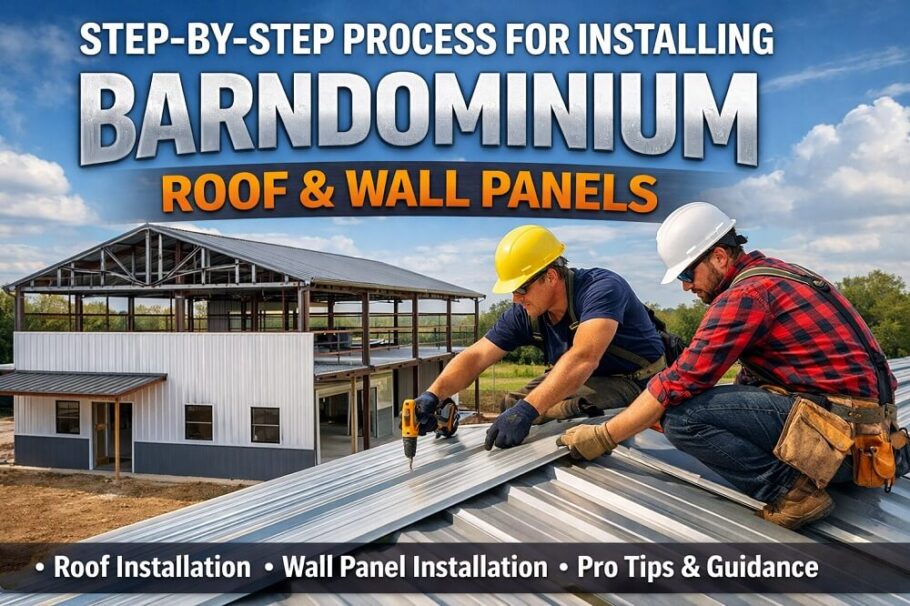
Barndominiums have become a popular choice for homeowners who want durability, speed of construction, and modern aesthetics wrapped into one efficient structure. One of the most critical phases of any barndominium build is installing the roof and wall panels. These metal panels do far more than define the building’s appearance—they create the primary weather barrier, influence energy efficiency, and protect the structural frame for decades.
A poorly installed panel system can lead to leaks, corrosion, insulation problems, and costly repairs. A properly installed system, on the other hand, delivers strength, longevity, and low maintenance. This guide walks you through the complete, step-by-step process of installing barndominium roof and wall panels, from preparation to final inspection, in a practical and builder-friendly way.
Whether you are acting as your own general contractor or simply want to understand what your crew is doing, this process will help you avoid the most common mistakes and achieve professional-level results.
Understanding the Panel System Before You Start
Before installation begins, it is essential to understand what type of panels you are working with. Most barndominiums use steel panels with a ribbed profile. These may be:
- Exposed fastener panels (screwed through the face)
- Standing seam panels (concealed fasteners, higher cost)
- Insulated metal panels (IMP systems with foam cores)
Each system has specific installation requirements. Always follow the manufacturer’s instructions first. The steps below focus on standard exposed-fastener steel panels, which are the most common for barndominiums.
You should also confirm:
- Panel length, width, and rib spacing
- Coating type (Galvalume, painted steel, etc.)
- Recommended fastener type and spacing
- Expansion and contraction allowances
Ignoring these details is one of the main causes of early panel failure.
Step 1: Inspect the Structural Frame
Your roof and wall panels are only as good as the frame beneath them.
Before any panels are installed:
- Verify that columns, girts, and purlins are straight and square.
- Check spacing against your engineered drawings.
- Confirm that the frame is level and plumb.
- Tighten all bolts and connections.
Even a small misalignment can cause panels to ripple, overlap poorly, or leak at seams. Fixing these issues after panels are installed is extremely difficult.
This is also the time to confirm that all openings for doors, windows, and vents are framed correctly.
Step 2: Install Secondary Framing and Bracing
Secondary framing includes wall girts and roof purlins. These members support the panels and distribute loads.
Make sure:
- Spacing matches panel load ratings.
- Edges are smooth with no sharp burrs that could damage panels.
- All members are aligned in the same plane.
On roof areas, check that purlins create a straight line from ridge to eave. Any dips or humps will show through the panels and trap water.
Step 3: Apply Weather Barriers and Insulation
Before metal panels go on, install your chosen insulation and moisture control system.
Common options include:
- Vapor barrier with fiberglass blanket insulation
- Rigid foam boards
- Spray foam insulation
- Condensation control felt under panels
Your climate will determine the best method. In humid or coastal areas, moisture control is critical to prevent condensation from forming under the metal.
Install all layers cleanly and tightly. Wrinkles, gaps, or tears can reduce performance and create future problems.
Step 4: Install Eave Trim, Base Trim, and Starter Components
Trim pieces must be installed before panels.
At this stage, install:
- Base trim at the bottom of walls
- Eave trim along roof edges
- Rake trim on gable ends
- Drip edge where required
These pieces guide water away from the building and provide clean panel terminations. Align them carefully and fasten according to spacing guidelines.
Skipping or rushing this step leads to water intrusion and messy visual lines.
Step 5: Start with Wall Panels
Most installers begin with wall panels before roof panels.
Panel Alignment
Choose a corner of the building as your starting point. The first panel must be perfectly plumb and square. Every panel after it depends on this alignment.
Use a level and chalk line to confirm positioning.
Fastener Placement
Fasteners should be:
- Installed in the flat area of the panel (for exposed fastener systems)
- Tight enough to compress the washer but not over-tightened
- Placed according to manufacturer spacing guidelines
Over-tightening can damage washers and cause leaks later.
Overlap Method
Each panel overlaps the previous one along the rib. Maintain consistent overlap spacing. If overlap is uneven, water can be forced into seams by wind.
Continue installing panels across the wall, checking alignment every few panels.
Step 6: Cut Openings After Panel Installation
It is best to install panels fully across openings and then cut out doors and windows afterward.
This ensures:
- Clean, aligned openings
- Better weather sealing
- Stronger panel edges
Use metal cutting tools designed for steel panels. Avoid abrasive saws that burn protective coatings.
After cutting, install opening trim immediately to protect exposed edges.
Step 7: Install Corner and Transition Trim
Once wall panels are in place, install:
- Inside corner trim
- Outside corner trim
- J-trim around openings
- Transition trim between different panel directions
These trims not only improve appearance but also seal vulnerable joints from wind-driven rain.
Apply sealant tape or butyl tape where required before fastening trim pieces.
Step 8: Prepare for Roof Panel Installation
Before placing roof panels:
- Confirm ridge line is straight
- Check purlin spacing and alignment
- Install ridge cap closure strips or foam closures
Roof safety is critical. Use harnesses, roof jacks, and proper footwear to avoid accidents.
Never step directly on panel edges or unsupported spans.
Step 9: Install Roof Panels from Eave to Ridge
Always install roof panels starting at the eave and working upward toward the ridge.
Alignment
The first roof panel must be square to the building. Use a chalk line from eave to ridge as a guide.
Fastening Pattern
Fasteners are typically installed:
- Along each purlin line
- At rib valleys or flats depending on system
- With consistent spacing
Follow the recommended pattern strictly. Incorrect fastening is a leading cause of roof leaks.
Overlaps
Side laps should be tight and consistent. Some systems require sealant tape at side laps for extra protection.
Continue panel installation across the roof surface, checking alignment frequently.
Step 10: Install Ridge Cap and Roof Trim
Once both sides of the roof are covered, install:
- Ridge cap
- Foam closures or vented closures
- Gable trim
- Roof-to-wall transition trim
The ridge area is one of the most leak-prone zones of any metal roof. Use closure strips correctly and ensure fasteners are sealed.
Step 11: Seal All Critical Joints
After panels and trim are installed, inspect all joints and penetrations.
Seal around:
- Pipe boots and vents
- Skylights
- Roof-to-wall intersections
- Panel terminations
Use manufacturer-approved sealants. Cheap or incompatible sealants often fail within a few years.
Step 12: Final Inspection and Adjustment
Walk the entire building and check:
- Fastener tightness and alignment
- Missing or damaged washers
- Scratches in panel coatings
- Trim alignment
- Sealant continuity
Touch up scratches with approved paint to prevent corrosion.
This inspection step protects your investment and prevents small issues from becoming major repairs.
Common Mistakes to Avoid
Many barndominium panel problems come from a few repeated mistakes:
- Starting with a crooked first panel
- Over-tightening fasteners
- Skipping closure strips
- Using the wrong sealant
- Cutting panels with abrasive tools
- Ignoring manufacturer instructions
Avoiding these mistakes can easily double the life of your panel system.
How Panel Installation Affects Long-Term Performance
Correct installation impacts:
- Energy efficiency
- Leak resistance
- Wind uplift resistance
- Appearance
- Maintenance costs
In storm-prone regions, proper fastening patterns and trim installation can mean the difference between a roof that survives and one that fails.
For barndominium owners planning for decades of use, panel installation quality is just as important as the steel frame itself.
DIY or Professional Installation?
Some owners choose to install panels themselves to save money. This can work well if:
- You follow instructions carefully
- You have proper safety equipment
- You work slowly and precisely
However, for large or complex roof designs, professional installation often saves time, reduces risk, and improves long-term results.
If you plan to act as your own general contractor, understanding this process helps you supervise crews effectively and spot problems early.
Final Thoughts
Installing barndominium roof and wall panels is not just about attaching metal sheets to a frame. It is a carefully sequenced process that determines your building’s durability, efficiency, and appearance for decades.
By preparing the frame properly, installing panels with precision, sealing every critical joint, and performing a thorough final inspection, you create a weather-tight, structurally sound, and visually clean barndominium shell.
Whether your barndominium is a home, workshop, or mixed-use structure, mastering this installation process gives you confidence that your investment is protected from the top down and from the outside in.