
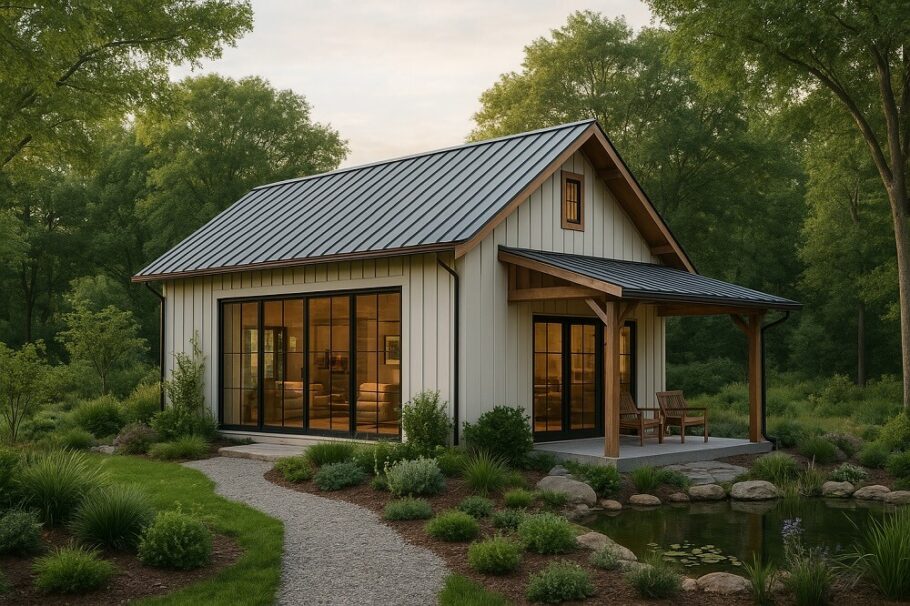
A barndominium stands apart from traditional housing. Its metal walls, clean lines, and practical silhouette make a bold statement all on their own. But without thoughtful landscaping, even the most beautifully designed barndo can feel stark, unfinished, or disconnected from its surroundings. Creating curb appeal for a metal home requires a different mindset than dressing up a brick colonial or a vinyl-sided ranch. The goal is to soften without hiding, to contrast without clashing, and to honor the building’s agricultural roots while elevating its overall presence.
Landscaping for a barndominium isn’t about smothering the structure in flowers or hiding its industrial character. Instead, it is about building a visual conversation between the home and the land around it. The right plants, hardscaping, lighting, and outdoor features can transform a lonely metal building into a warm, inviting homestead that turns heads for all the right reasons.
Embracing the Industrial-Rustic Contrast
The most successful barndominium landscapes lean into the tension between rough and refined, natural and manufactured. Metal buildings often feature corrugated siding, exposed fasteners, and sharp angles. To create balance, introduce organic shapes, textured foliage, and materials that feel earthy and weathered.
Think about using reclaimed wood for raised beds or pergolas. The aged grain and silvery patina of old barn wood pair beautifully with new metal siding. Stone, too, works wonders. A dry-stacked stone retaining wall or a fieldstone pathway echoes the rustic side of the barndo aesthetic without competing with the home’s sleek surfaces.
Color plays a huge role here. Many barndominiums come in neutral tones like charcoal, barn red, sage green, or classic white. Look at the metal panels and pull out an accent color for landscaping elements. For a charcoal gray barndo, warm-toned gravel, amber uplighting, and golden ornamental grasses create a stunning contrast. For a red metal building, deep green shrubs and purple flowering perennials provide a complementary palette that feels intentional and refined.
Native Grasses and Prairie-Style Plantings
Forget the manicured suburban lawn. A barndominium cries out for something bolder, something that moves with the wind and changes with the seasons. Native grasses are the unsung heroes of barndo landscaping. Switchgrass, little bluestem, prairie dropseed, and muhly grass offer height, texture, and motion without demanding constant watering or mowing.
These grasses develop rich colors throughout the year—blue-green in summer, copper and gold in autumn, tawny beige in winter. When backlit by morning or evening sun, their seed heads glow like tiny lanterns. Plant them in sweeping drifts rather than straight rows to mimic natural meadows. A curve of switchgrass leading toward the front door softens the barndo’s angular facade and guides the eye naturally.
Pair grasses with native wildflowers for a low-maintenance, pollinator-friendly landscape. Purple coneflower, black-eyed Susan, butterfly weed, and blazing star thrive in the same sunny, well-drained conditions that grasses love. These plants don’t ask for fertilizer or daily attention. They simply grow, bloom, and feed local bees and butterflies. The result is a living landscape that feels connected to the surrounding countryside rather than imposed upon it.
Hardscaping That Anchors the Metal Structure
Plants alone cannot carry the full weight of curb appeal. Hardscaping provides structure, permanence, and year-round interest. For a barndominium, the best hardscape materials echo the building’s utilitarian honesty. Concrete pavers, crushed gravel, flagstone, and decomposed granite all fit the aesthetic.
A generous front porch or patio area extends the living space outward and gives the home a welcoming face. Pour a concrete slab stained to match the metal roof or lay oversized pavers in a simple running bond pattern. Keep the design clean and uncluttered. Too many different materials or fussy patterns will fight the barndo’s straightforward character.
Driveways and walkways deserve special attention. A long gravel driveway leading to a metal home feels authentic, but consider upgrading to stabilized gravel or permeable pavers to reduce dust and maintenance. Flank the driveway with linear planting strips or low boulder walls. For the walkway from the drive to the front door, use large stepping stones set flush with mowed grass or groundcover. This creates a casual, farmhouse feel that says “welcome” without formality.
Strategic Lighting to Highlight Architectural Lines
A barndominium after dark offers a blank canvas for lighting design. Good exterior lighting transforms the metal home from a dark box into a glowing landmark. The key is to illuminate the structure’s best features while creating safe, inviting pathways.
Uplighting is a favorite technique for metal buildings. Place well-hidden fixtures at the base of corner posts or along the foundation to wash light up the corrugated walls. This emphasizes vertical lines and gives the home a dramatic, grounded presence. For a softer effect, mount gooseneck lights on the exterior walls near entry points. Their vintage farmstead look complements metal siding perfectly.
Path lighting should be subtle and low to the ground. Avoid the glaring “runway lights” effect. Instead, use small fixtures with warm color temperatures (2700K to 3000K) that cast pools of light onto gravel or stone surfaces. Solar options work well in sunny locations, but hardwired lights offer greater reliability. For trees and large shrubs, position a spotlight at the base to throw shadows up through the branches—this adds depth and mystery to the nighttime landscape.
Do not forget the driveway entrance. A pair of simple metal or wooden posts with lantern-style lights marks the property boundary and signals arrival. This small touch adds immense curb appeal for anyone driving up after dusk.
Creating Defined Entryways and Focal Points
The front door of a barndominium can get lost among vast metal walls if landscaping doesn’t guide the eye. A strong entryway design solves this problem. Think of the door as the destination, and every path, plant, and light fixture as a signpost pointing toward it.
Frame the entry with a pair of substantial planters or urns. Galvanized metal buckets, whiskey barrels, or concrete troughs all fit the barndo style. Fill them with something tall and dramatic—a small evergreen, ornamental grass, or a thriller combination of annuals. Flanking the door with identical containers creates symmetry and signals importance.
A trellis or arbor over the walkway near the entrance adds vertical interest and a sense of passage. Train a climbing rose, clematis, or trumpet vine over the structure. The wood of the arbor warms up the metal facade, and the flowers soften the transition from outdoors to indoors. For a more modern take, use a powder-coated steel arbor in a contrasting color.
Beyond the entry, create secondary focal points that draw the eye across the property. A freestanding fire pit area with Adirondack chairs, a small vegetable garden enclosed by a split-rail fence, or a standalone shed or workshop with its own landscaping all add layers of interest. These features make the property feel lived-in and intentional rather than like a metal box dropped in a field.
Water Features and Vertical Interest
Water and metal have a natural affinity. The reflective quality of a pond, fountain, or birdbath plays beautifully against corrugated siding and galvanized roofs. A stock tank pool has become a popular barndo addition—it is practical, affordable, and visually cohesive. Surrounded by gravel and a few potted plants, a stock tank becomes a stunning landscape feature that also offers relief on hot days.
For those without space for a pool, a simple recirculating fountain made from a galvanized tub or ceramic crock provides soothing sound and attracts wildlife. Position it near a seating area or under a bedroom window. The gentle splash masks road noise and creates a microclimate that feels cooler and more humid.
Vertical interest matters just as much as ground-level planting. Barndominiums often have high ceilings and tall walls, so landscape elements need enough scale to hold their own next to the building. Small shrubs get swallowed up. Instead, plant a specimen tree at a strategic corner of the home. An oak, maple, or service tree planted twenty to thirty feet from the foundation will eventually grow tall enough to break up the roofline and provide shade. For a faster impact, consider a multi-stemmed birch or a columnar hornbeam.
Espaliered trees trained flat against a wall add greenery without taking up much ground space. This technique works well on large, blank metal walls that face south or west. Choose a fruit tree like apple or pear for blossoms and harvest, or use evergreen magnolia for year-round coverage.
Low-Maintenance Solutions for Busy Owners
One of the biggest draws of barndominium living is the reduced upkeep compared to traditional homes. That philosophy should extend to the landscape. No one who chose a metal home for its durability and low maintenance wants to spend weekends weeding, watering, and pruning.
The first rule of low-maintenance barndo landscaping is to minimize lawn. Turf grass requires constant mowing, fertilizing, and watering. Replace large swaths of lawn with gravel beds, groundcover plants, or native meadows that only need cutting once or twice a year. Creeping thyme, sedum, and clover make excellent lawn alternatives that stay low, bloom prettily, and tolerate foot traffic.
Use landscape fabric beneath all mulched or gravel areas to suppress weeds. Choose a crushed rock or river stone that complements the home’s metal color. Dark gray basalt chips or warm-toned gravel hide dust and blend naturally with most barndo exteriors. Apply a three-inch layer over the fabric, and expect years of weed-free performance.
Irrigation should be simple and efficient. Drip irrigation lines buried under mulch deliver water directly to plant roots without wasting a drop. Connect them to a rain sensor or smart timer that adjusts for recent rainfall. For potted plants and small beds, self-watering containers reduce the frequency of manual watering.
Choose plants that thrive without coddling. Native species, drought-tolerant ornamentals, and hardy shrubs like ninebark, spirea, and juniper ask for little beyond occasional pruning. Avoid anything known for pests, diseases, or finicky water needs. A landscape that practically takes care of itself leaves more time to enjoy the barndominium lifestyle.
Tying It All Together
Curb appeal for a barndominium is not about imitation. It is not about forcing a metal home to look like a log cabin or a Victorian cottage. The most successful barndo landscapes celebrate the building for what it is—a strong, honest, functional structure—and surround it with elements that complement rather than compete.
Think in terms of layers. Start with hardscaping that defines spaces and guides movement. Add foundation plantings that soften edges without hiding them. Layer in native grasses and perennials for color and movement. Finish with lighting that makes the home shine after dark. Each layer does its job without overwhelming the next.
Scale matters more than detail. A tiny flower border against a forty-foot metal wall will look like a mistake. Go big with swaths of plantings, oversized containers, and substantial hardscape features. Repeat colors and materials throughout the property to create a cohesive look that feels designed, not accidental.
The best barndominium landscapes also respect the surrounding environment. If the home sits on a working farm or ranch, let the landscape blend into pastures and crop fields. If it is in a suburban or exurban setting, use fencing or hedges to create privacy while still nodding to rural roots. Authenticity resonates. A landscape that looks like it belongs will always have more curb appeal than one that fights its context.
With thoughtful planning and a clear vision, any barndominium can go from a utilitarian metal building to a home with genuine warmth and welcome. The landscape does the heavy lifting of making that transformation possible. And once the plants are in the ground and the lights are installed, the barndo finally feels like what it was always meant to be—not just a place to live, but a place to love coming home to.