
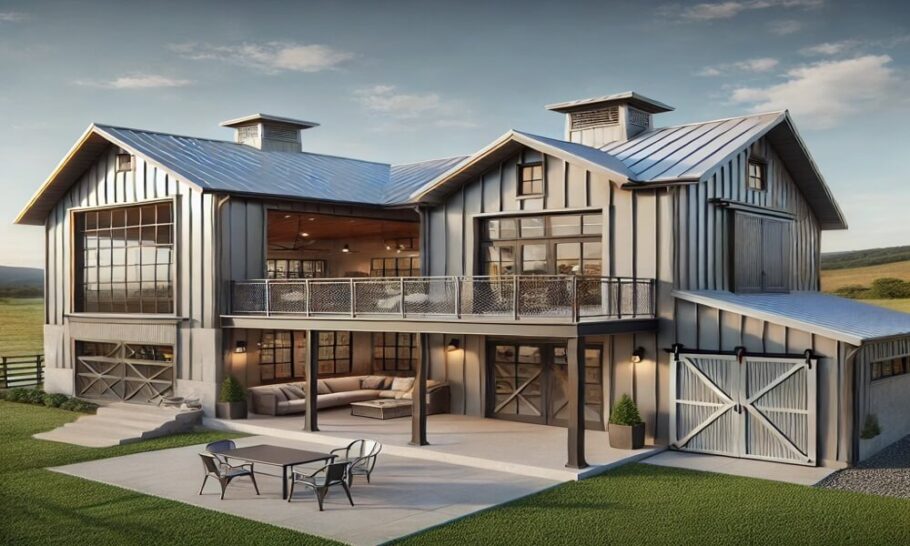
Ask ten different barndominium builders which foundation works best, and the answer will likely depend on where they dig their dirt. The slab-on-grade versus stem wall debate has been simmering for years, but the truth is that neither option holds a universal advantage. Each foundation type brings distinct structural characteristics that either solve or create problems depending on soil conditions, climate, and building design. Understanding these differences from an engineering standpoint separates a foundation that lasts fifty years from one that cracks within five.
What Makes Barndominium Foundations Different
Standard homes distribute weight fairly evenly across their footprint. Barndominiums do not. The typical barndo design combines a heavy post-frame or steel structure with large open interior spaces, concentrated loads at column points, and often significant point loads where heavy equipment or second-story loft areas come into play. This load distribution pattern changes the game entirely when evaluating foundation options.
The foundation must handle not just the dead load of the structure itself, but also live loads from occupancy, wind uplift forces that can be substantial on large metal buildings, and in colder regions, frost heave pressures that exert tremendous force against any buried concrete element. A slab designed for a standard ranch home would fail quickly under these combined demands.
Understanding Slab-on-Grade Foundations
A true slab-on-grade consists of a single concrete pour that creates both the floor and the foundation simultaneously. The slab typically sits directly on prepared subgrade material, with thickened edges or interior grade beams where additional support is needed. Reinforcement usually comes in the form of rebar grids or fiber mesh, though the pattern and spacing depend entirely on anticipated loads.
The Mechanical Simplicity Argument
From a construction standpoint, the slab-on-grade offers undeniable efficiency. One concrete pour, one curing period, and the floor is ready for framing. No backfilling against stem walls, no separate footing excavation, and no additional forming for interior foundation elements beyond what the design requires. This simplicity translates directly into lower labor costs and faster schedule progression.
Thermal Performance Considerations
Slabs hold thermal mass exceptionally well. In a barndominium with radiant floor heating, which many owners prefer for large open spaces, a slab-on-grade becomes nearly impossible to beat for heat distribution and retention. The concrete absorbs heat from hydronic tubing and releases it slowly and evenly across the entire floor surface. Radiant systems in slabs also run at lower water temperatures than forced air systems require for equivalent comfort, which keeps heating bills reasonable even in drafty metal buildings.
The Frost Problem Nobody Wants to Discuss
Here is where engineers start drawing hard lines in the sand. In any region where the ground freezes deeper than about six inches, a standard slab-on-grade faces real trouble. Frost heave occurs when moisture in the soil freezes and expands, lifting anything sitting above it. A slab without frost protection will rise unevenly, crack, and eventually fail. The only way to make slab-on-grade work in cold climates involves either placing the entire slab below the frost line, which becomes absurdly expensive, or installing rigid foam insulation vertically around the slab perimeter and horizontally outward from the foundation to keep the soil beneath from freezing. This frost-protected shallow foundation method works, but the engineering and material costs add up quickly.
Where Slabs Excel
Warm climates with stable, well-draining soils present the ideal slab-on-grade scenario. Coastal plains, the desert Southwest, and much of the Southeast allow slabs to perform beautifully without the complexity of frost mitigation. Soils with high sand content drain quickly and resist the expansion-contraction cycles that destroy slabs on clay-heavy sites. For barndominiums in these regions, the slab offers the most economical and structurally sound foundation option available.
Understanding Stem Wall Foundations
The stem wall foundation separates the floor slab from the ground. A reinforced concrete footing sits below frost depth, with concrete masonry or poured concrete walls extending upward from the footing to form a perimeter wall. The interior slab then pours separately, either at grade level or partially raised depending on design requirements.
Why Stem Walls Handle Difficult Sites
Stem walls shine exactly where slabs struggle. The deep footing bypasses frost-susceptible soil entirely, placing bearing pressure on stable earth below the frost line. Sloping sites become manageable because the stem wall can step down the slope while maintaining a level interior slab. Expansive clay soils that would crack a monolithic slab allow stem walls to accommodate movement through proper reinforcement and void space beneath the slab.
The Crawlspace Question
Many barndominiums with stem walls end up with crawl spaces, though not necessarily by default. The space between the ground and the bottom of the slab can range from a few inches to several feet. Even a shallow crawl space provides access to plumbing lines, electrical runs, and mechanical systems, which matters tremendously when something fails under a finished concrete floor. Replacing a leaking pipe under a slab-on-grade requires jackhammering through the floor. The same repair under a stem wall requires crawling underneath and fixing the pipe directly.
Termite Protection That Actually Works
Termites travel through soil and enter structures where wood meets ground. A slab-on-grade puts wood framing in direct contact with concrete, but termites build mud tubes up the slab edge and find their way into wall cavities. Stem walls with adequate clearance between the finished grade and the bottom of the wood framing create a visible inspection zone. Termite shields and treated lumber still matter, but the physical separation makes a meaningful difference in prevention.
The Cost Reality Check
Stem wall foundations cost more. The additional excavation, separate footing pour, wall construction, backfill, and interior slab pour all add labor and material expenses. Depending on local conditions, a stem wall can run thirty to fifty percent higher than a comparable slab-on-grade. That premium buys capability, not luxury. If the site does not demand frost depth or expansive soil mitigation, paying for a stem wall wastes money.
The Post-Frame Complication
Barndominiums often use post-frame construction, where large treated wooden posts embed directly into the ground or mount to concrete piers. This method changes foundation discussions entirely because the posts themselves provide much of the vertical support. A post-frame barndominium can theoretically sit on a simple floating slab that handles only floor loads, with the posts carrying roof and wall loads independently.
Embedding treated posts directly into soil introduces long-term durability questions. Modern pressure treatments resist decay far better than older methods, but no treatment lasts forever in continuously damp conditions. Setting posts on concrete piers above grade eliminates that moisture exposure, but then the floor system must either hang between posts or pour as a separate slab. Mixing foundation systems complicates construction and requires careful attention to differential movement.
Making the Right Choice for Specific Conditions
High Water Tables
Slab-on-grade floats on top of the water table if the slab sits high enough, but consistently saturated soils undermine bearing capacity. Stem walls allow the floor slab to sit above the water table while footings extend deeper into stable material. In areas with seasonal high water, the stem wall wins almost every time.
Expansive Clay Soils
Clays that swell when wet and shrink when dry destroy monolithic slabs. The movement creates tenting, cracking, and differential settlement that no amount of reinforcement can fully prevent. Stem walls with drilled pier foundations extending below the active zone bypass the expanding soil entirely. The interior slab then either ties into the stem wall with slip joints or floats independently on a void form that allows vertical movement without transferring stress to the structure.
Rocky or Shallow Bedrock Sites
Blasting through rock to reach frost depth makes stem walls prohibitively expensive. Slab-on-grade with frost protection becomes far more economical when solid rock sits just below the surface. The insulation approach to frost mitigation works regardless of underlying material, and the slab can bear directly on competent rock without concern for settlement.
Barn Use Patterns
Horses and livestock create different demands than woodworking tools or home gyms. Heavy concentrated loads from tractors or equipment need thicker slabs regardless of foundation type. Chemical spills from barn operations require impermeable concrete surfaces with proper sealing. Wash bays need drainage slopes that work with either foundation system. The intended use of the space should influence the foundation decision as much as the soil conditions.
Common Engineering Mistakes to Avoid
Reinforcement That Does Nothing
Wire mesh sitting on the ground during a concrete pour ends up at the bottom of the slab where it provides almost no structural benefit. Mesh needs chairs or supports to hold it in the middle third of the slab thickness. Rebar needs proper coverage from the concrete surface. Skipping these details turns expensive reinforcement into decorative scrap metal.
Missing Control Joints
Every concrete slab cracks. Control joints determine where those cracks happen. Many barndominium slabs lack sufficient jointing because owners want seamless floors. The result looks great for six months and then develops random cracks that run wherever they please. Proper joint spacing follows the slab thickness times twenty-four in feet, which for a four-inch slab means joints every eight feet in both directions.
Drainage Assumptions
Grading and gutters matter more than foundation type. Water pooling against any foundation eventually finds a way inside or causes settlement problems. Stem walls without drainage at the footing level trap water against the wall. Slabs without positive drainage away from the perimeter sit in puddles after every rain. Neither foundation performs well when basic water management gets ignored.
The Verdict from the Engineer’s Desk
Slab-on-grade works exceptionally well for barndominiums in warm climates with stable, well-draining soils and where access to under-floor utilities does not matter significantly. The cost savings and thermal benefits for radiant heat make it the default choice for many owner-builders. Frost-protected slab designs extend this range into colder regions, though at increased cost.
Stem wall foundations justify their higher price tag on sloping sites, in frost-prone areas, on expansive clay soils, and wherever future access to plumbing and electrical systems matters. The added cost buys resilience and repairability that slabs simply cannot match.
The best choice depends entirely on local conditions. Copying what worked for a barndominium three states away ignores the realities of soil mechanics, frost depth, and drainage patterns that vary dramatically across short distances. A proper geotechnical investigation costs a few thousand dollars and provides the data needed to make an informed decision. Skipping that step and guessing on foundation type saves money today and risks spending ten times as much on repairs later.