
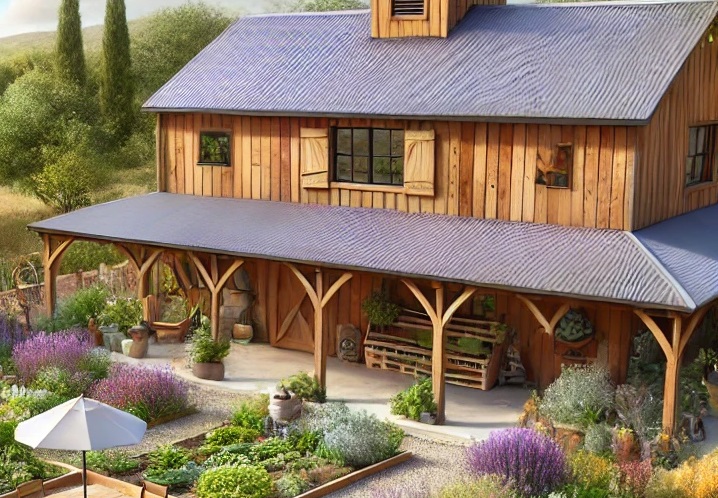
There’s a reason the barndominium trend hasn’t just stuck around—it’s exploded. The allure of soaring ceilings, open-concept living, and the rustic-meets-modern aesthetic is hard to beat. But lately, I’ve been talking to a new breed of owner. They aren’t just looking for a primary residence with a big shop; they’re looking for an asset.
They want the “Barndo Hustle.”
The idea is simple: design a home so smart, so flexible, and so durable that it can generate income when you don’t need it. Whether it’s a short-term rental for hunters and leaf-peepers, a long-term lease for a traveling nurse, or a guest quarters for family, designing a barndominium with “rentability” in mind from Day One is a game-changer.
However, designing a rental-friendly barndominium isn’t the same as designing a private family home. You have to balance the raw, industrial charm people love with the durability required for strangers sleeping in your beds. You have to create privacy in a structure known for its vast, open spaces.
If you’re ready to build a space that pays you back, here is your blueprint for designing a rental-friendly barndominium.
The “Reverse” Floor Plan: Privacy is Profit
The biggest design challenge in a barndominium is usually the lack of interior walls. While a 40×60 foot wide-open space is great for a party, it’s terrible for a rental. Renters—whether they are there for one night or one year—need a sense of separation.
Here is the trick: forget the traditional “house” layout. Think like a hotel designer.
If you are building a two-story barndo, put the primary living spaces (kitchen, living room) upstairs. I know this sounds counterintuitive, but hear me out. By placing the common areas on the second floor, you can carve the ground floor into a series of private, sound-insulated bedrooms. This allows you to capitalize on the “view” from the upper level (where the big barn doors often are) while keeping the sleeping quarters cool, dark, and quiet.
For a single-story design, avoid placing bedrooms in a row off the living room. Instead, create a “split floor plan” on steroids. Put the primary suite on one end of the structure, and then cluster the secondary bedrooms on the opposite end, separated by the kitchen and living core. This allows two couples or a family with older kids to coexist without stepping on each other’s toes.
The “Lock-Off” Suite Strategy
If you want maximum flexibility, you need to design for segmentation. This is the single highest-ROI decision you can make in a rental barndo.
Design a portion of the barndominium as a completely self-contained living unit. This usually means a studio or one-bedroom apartment with its own small kitchenette (or kitchen), bathroom, and—crucially—its own exterior entrance.
Why go through the trouble? Because it gives you options.
- Live-In Income: You live in the main house; you rent the “lock-off” to a long-term tenant.
- Dual STR Listings: You list the main house as a large family rental and the suite as a private, cheaper studio. You can rent them together to large groups or separately to maximize occupancy.
- The Owner’s Retreat: When you visit the barndo yourself (if it’s a vacation home), you stay in the private suite and leave the main house locked up, saving on cleaning and maintenance.
To do this right, you need to plan for separate utility zones. Even if you don’t install a second water heater or HVAC mini-split immediately, stub out the plumbing and run the electrical. A future-proofed wall is cheap; jackhammering a slab later is not.
Material Selection: Designing for the “Stupid Factor”
Let’s be honest: renters are not owners. They will drag suitcases across the floor, hang wet towels on antique dressers, and put hot pans on the quartz. When designing a rental barndominium, you must select finishes based on the “Stupid Factor”—what happens when someone isn’t thinking.
Flooring is the battleground. Do not install engineered hardwood or luxury vinyl plank (LVP) that requires an absolutely perfect subfloor if you can help it. Instead, lean into the barn aesthetic. Polished concrete is your best friend. It’s durable, it’s authentic to the building type, and it can be heated from below for comfort. If you want a softer look, use large-format porcelain tile that looks like wood. It’s virtually indestructible and waterproof.
The Kitchen Backsplash. Skip the trendy white subway tile with white grout. It will look grey and grimy within three turnovers. Go for a larger format tile or a slab backsplash that minimizes grout lines. Or, use a metal backsplash (like tin or stainless steel) that fits the industrial vibe and can be wiped down with harsh cleaners.
Countertops. Butcher block looks beautiful in photos, but it stains, burns, and scars. Marble is out of the question. Quartz is a good middle ground, but it can be damaged by high heat. For a rental, I often recommend a “live-edge” wood slab sealed with marine-grade epoxy or a dark soapstone if the budget allows. If the budget is tight, a high-pressure laminate that mimics concrete can be replaced easily in a few years when it wears out.
The Kitchen: The “Cooking Trio”
In a private home, we design kitchens for the gourmet chef. In a rental, we design kitchens for people who mostly eat out but need to reheat leftovers.
You do not need a six-burner range. You need a solid, reliable induction cooktop (easier to clean than gas, safer than electric coil) and a microwave.
However, do not skimp on the dishwasher or the refrigerator. The dishwasher needs to be commercial-grade or have a stainless steel tub to handle the constant cycle of running half-empty loads. The fridge needs to be large, and ideally, it should have an ice maker in the door. Nothing annoys renters more than having to wrestle with ice trays.
The Bathroom: The “Wet Room” Concept
Bathrooms in a barndominium often have the same industrial charm as the rest of the house, but moisture is the enemy of rentals. The constant humidity from multiple showers a day can destroy drywall and caulking quickly.
Consider the “wet room” approach. Instead of a standard tub and shower, tile the entire bathroom floor and walls with a zero-threshold shower. The whole room becomes the shower zone. It’s a luxury hotel look that is incredibly easy to clean. You just squeegee the water to a central drain. It also future-proofs the home for aging family members or guests with mobility issues who can’t step over a high tub wall.
Also, invest in an exhaust fan with a humidistat. It turns on automatically when the humidity rises and runs until the room is dry. This prevents the mold and mildew that ruin reviews.
The “Shop” Space: Don’t Waste the Square Footage
In a traditional barndominium, the shop is for the owner’s toys. In a rental barndo, the shop can be the moneymaker.
If you are building a shop area attached to the living space, design it with a rental mindset.
- The “Toy” Garage: If you are in a lake or mountain area, convert part of the shop into a secure storage area for renters to store their kayaks, fishing rods, or skis. Install a utility sink for cleaning gear. This is a massive booking incentive.
- The Event Space: With the right zoning, a large shop can become a gathering space for family reunions or small weddings. If you go this route, you need to plan for separate entrances, separate restroom facilities, and a whole lot of parking.
- The Hobbyist Rental: If the unit is a long-term rental, having a clean, well-lit workshop space attached to the apartment (with a man-door, not just through the garage) is a huge draw for woodworkers or mechanics.
The Mechanicals: Serviceability
This is the boring stuff, but it keeps the five-star reviews coming. In a rental, things will break. The goal is to make it easy to fix.
Design a mechanical room, not a mechanical closet. You need space for a plumber or HVAC tech to move around. Put the water heater on a stand or a drain pan with a hose bib so it can be flushed easily.
Consider a tankless water heater. In a rental where occupancy fluctuates wildly, you don’t want to be heating 40 gallons of water for one person, nor do you want four people to run out of hot water. Tankless solves this.
Also, install a water shut-off system like Moen Flo. If a renter leaves a sink running or a pipe bursts, you can shut the water off from your phone, saving you from a catastrophic insurance claim.
The Exterior: Curb Appeal and Maintenance
You want the barndominium to photograph well, but you don’t want to be painting it every two years. Steel and metal siding are the obvious choices—they last forever. But you can soften the look with small accents.
Use stone or brick only in small, strategic doses. It’s expensive and permanent. Instead, use colored steel or board and batten siding that matches the barn aesthetic but requires less maintenance.
Landscaping should be xeriscaped or fortress-like. No delicate flowers that renters’ dogs will trample. Use large boulders, river rock, and native grasses that look intentional even when neglected for two weeks.
The Sound Issue
Finally, let’s talk about noise. Barndominiums are often built with steel framing or pole barn construction, which can act like a drum skin. Sound travels.
If you are doing the lock-off suite or have bedrooms near the living room, you must insulate the interior walls. Use rock wool insulation (like Roxul) instead of fiberglass. It is denser, fire-resistant, and does a much better job of deadening sound between rooms. Also, stagger the studs in shared walls to prevent vibration transfer.
The Bottom Line
Designing a rental-friendly barndominium is about anticipating the future. You are building a structure that needs to withstand the chaos of public use while maintaining the cozy, rustic charm that made you fall in love with the idea in the first place.
By prioritizing durable materials, smart segmentation, and easy maintenance from the very first blueprint, you aren’t just building a home—you’re building a business. And the best part? When the books are closed at the end of the year, you’ll have a property that has paid for its own mortgage, leaving you to enjoy the peace and quiet of your steel-and-stone sanctuary.