
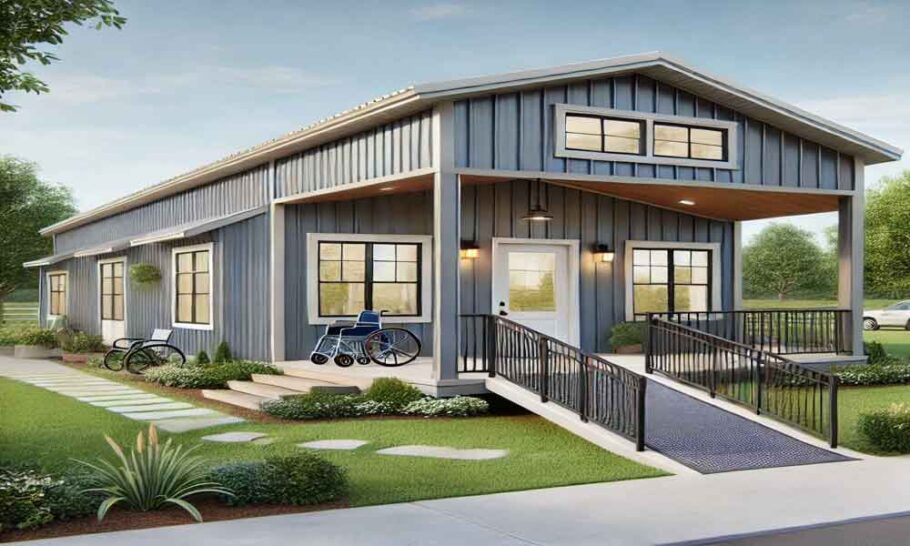
Walk into any barndominium open house, and the conversation naturally drifts toward vaulted ceilings, reclaimed wood accents, and sprawling kitchen islands. But step back for a moment. What holds all of that together? What keeps those lofted sleeping quarters from sagging into the living room below? The answer lives behind the walls, underneath the slab, and within the steel frame that most visitors never think to examine.
Pre-fabricated barndominium engineering represents one of the most significant shifts in residential construction over the past decade. Yet it remains largely misunderstood by the very people investing hundreds of thousands of dollars into these structures. Understanding the engineering decisions baked into a pre-fabricated barndominium separates a building that lasts fifty years from one that starts showing stress fractures before the mortgage settles.
Breaking Down the Pre-Fabrication Advantage
Traditional stick-built barndominiums rely on on-site framing crews cutting and assembling every component from raw lumber. This approach introduces endless variables. Humidity warps boards. Measurements get misread. Fasteners end up in the wrong gauge. A pre-fabricated system flips this model entirely by moving the majority of structural assembly into a controlled manufacturing environment.
The engineering behind pre-fabricated systems starts with precision that site-built construction simply cannot match. Computer numerical control (CNC) equipment cuts every structural member to exact specifications. Steel tubes get welded in jigs that ensure perfect alignment. Trusses arrive with pre-drilled fastener locations that eliminate guesswork. This level of precision translates directly into structural performance because loads transfer exactly as the engineer intended with no surprises hidden inside crooked walls.
Another overlooked advantage involves material optimization. Pre-fabrication engineering calculates exactly how much steel or engineered lumber each structure requires. Scrap gets minimized. Over-engineering gets eliminated. The result is a structure that meets every load requirement without wasting materials on unnecessary bulk.
The Structural Core of Pre-Fab Barndominiums
Most pre-fabricated barndominiums utilize either cold-formed steel framing or red iron (structural steel) mainframes. Each choice carries distinct engineering implications that affect everything from foundation design to interior finish possibilities.
Cold-formed steel sections, commonly called C-channel or stud track, work exceptionally well for single-story and low-rise designs. The engineering here focuses on buckling resistance and web crippling at support points. Because cold-formed steel has a high strength-to-weight ratio, these structures often require less substantial foundations than their red iron counterparts. However, the engineering becomes more complex when openings like garage doors or large windows interrupt the wall bracing. Pre-fabricated panels for these systems arrive with integrated diagonal bracing or shear panels already installed, eliminating the field labor of adding strap bracing.
Red iron structural frames handle much larger loads and longer clear spans. A properly engineered red iron barndominium can span sixty feet or more without interior support columns, which explains why these systems dominate the market for combination shop-living spaces. The engineering behind these frames accounts for moment connections at the columns, base plate anchorage into the foundation, and thermal expansion across long spans. Pre-fabrication allows these complex connections to get welded in a shop setting where quality control exceeds what any field crew could achieve.
Thermal Bridging and Condensation Engineering
Here lies the most misunderstood aspect of barndominium engineering. Steel conducts heat and cold with remarkable efficiency. Without proper thermal break detailing, a steel-framed barndominium turns into a giant thermal bridge where interior conditioned air meets exterior temperatures directly through the framing members.
Pre-fabricated systems address this problem through engineered thermal break details that site-built projects often ignore. Some manufacturers embed rigid insulation between the exterior cladding and the structural frame. Others specify thermal spacer blocks at every fastener penetration. The most sophisticated systems use composite framing members that sandwich a low-conductivity material between two steel flanges.
Condensation control follows the same engineering principles. When warm, humid interior air contacts a cold steel surface, water droplets form. Over time, this moisture rots wood finishes, degrades insulation, and supports mold growth. Pre-fabricated engineering prevents this through continuous air barriers and vapor retarders integrated into the panel design. Every seam gets engineered with gaskets or sealants specified by the manufacturer. Every penetration for utilities includes a factory-designed boot or seal.
Foundation Engineering Connections
The interface between a pre-fabricated barndominium and its foundation represents a common failure point when engineering gets overlooked. Steel frames need to anchor to concrete with specific embedment depths, edge distances, and bolt grades. Pre-fabricated systems ship with anchor bolt templates that match the base plate hole patterns exactly. These templates allow concrete crews to set bolts with perfect accuracy before the foundation pour, eliminating the field-drilling headaches that plague poorly planned barndominium projects.
Foundation engineering for pre-fabricated steel buildings also accounts for something called column uplift. Wind loads on large doors and wide sidewalls create literal suction forces that try to pull the frame out of the ground. Anchor bolts and their embedment into the concrete must resist these uplift forces. Pre-fabricated engineering packages include these calculations and specify exactly how deep bolts need to go, what concrete strength to use, and what type of nut and washer combination secures the base.
Roof and Panel Engineering
The roof system in a pre-fabricated barndominium gets engineered as a complete diaphragm rather than a collection of individual rafters. This diaphragm action transfers horizontal wind and seismic loads down to the shear walls and ultimately to the foundation. Pre-fabricated roof panels come with engineered fastener schedules that specify spacing, edge distance, and fastener type for every connection.
Standing seam metal roofs have become standard on quality pre-fabricated barndominiums. The engineering behind these roofs goes far beyond aesthetics. Hidden clip fasteners allow thermal movement of the metal panels while maintaining wind uplift resistance. A properly engineered standing seam system on a pre-fabricated frame handles wind speeds exceeding 150 miles per hour when the structure gets designed for high-wind regions.
Insulated metal panels (IMPs) represent the premium option in pre-fabricated engineering. These panels combine structural sheathing, insulation, and interior finish into a single engineered component. The polyurethane foam core bonds to both metal faces, creating a composite action that dramatically increases panel stiffness. IMPs eliminate thermal bridging almost entirely because the foam interrupts heat flow across the entire panel surface. The engineering trade-off involves weight and attachment complexity, but for owners prioritizing energy efficiency, no other system compares.
Load Path Continuity
Ask any structural engineer what keeps buildings standing, and the answer comes back the same: load path. Every gravity load needs an uninterrupted path to the ground. Every lateral load needs a continuous path through the diaphragm, to the shear walls, down to the foundation. Pre-fabricated barndominium engineering documents every connection in this load path with specific hardware requirements.
The most common engineering failure in poorly designed barndominiums involves load path interruptions at transitions. The connection between a pre-fabricated wall panel and the roof panel needs engineered brackets or strapping. The connection between a second-floor loft frame and the main wall columns needs positive attachment that cannot pull apart. Quality pre-fabricated systems ship with these connection details clearly identified and with hardware packaged for each specific joint.
Engineering for Open Floor Plans
The appeal of barndominiums often centers on wide-open living spaces without interior columns. Achieving this requires engineering that site-built construction struggles to match. Pre-fabricated systems excel here because the manufacturing process allows for long-span trusses and rigid frames that ship in manageable sections.
Long-span steel trusses get engineered with camber, a slight upward curvature built into the truss before loading. When the roof dead loads and any live loads apply, the truss deflects downward to a level position. Without proper camber engineering, a long-span roof appears visibly sagged from the day of installation. Pre-fabrication allows precise camber calculation and fabrication that field-built trusses rarely achieve.
Wind and Seismic Engineering
Regional engineering requirements vary dramatically across the country. A pre-fabricated barndominium engineered for the low-seismic Midwest looks nothing like one designed for coastal high-wind zones or California seismic areas. Responsible manufacturers provide engineering stamped for specific locations rather than relying on one-size-fits-all designs.
High-wind engineering focuses on continuous load paths, hurricane ties at every rafter-to-wall connection, and enhanced anchorage at the foundation. Seismic engineering introduces different priorities, including ductile connection details that bend without breaking during ground motion, cross-braced wall panels, and base isolation details that allow the structure to move independently of the foundation.
The Role of Third-Party Engineering Review
Any reputable pre-fabricated barndominium package includes engineering stamps from licensed structural engineers. But savvy buyers go one step further and commission independent third-party reviews of those engineering documents. A fresh set of eyes catches oversights that the original engineer might have missed, especially regarding local building code amendments that vary by jurisdiction.
Third-party reviews also examine the connection between the pre-fabricated system and site-built components. Stairs, decks, and attached garages often get added by local contractors after the pre-fabricated shell arrives. These additions need engineered connections back to the main structure, connections that the original engineering package may not have considered.
Quality Control and Certification
Manufacturing certifications tell a buyer whether a pre-fabrication facility follows documented quality control procedures. The most relevant certification for barndominium engineering comes from the International Accreditation Service (IAS) or the American Institute of Steel Construction (AISC). These certifications require regular audits of welding procedures, material traceability, and dimensional tolerances.
Certified facilities produce engineering documentation that includes material test reports, weld inspection records, and dimensional verification logs. This paper trail matters when a building department requests proof that the structure meets code, and it becomes essential if any structural issues arise years after construction.
Future-Proofing Through Engineering
The best pre-fabricated engineering anticipates future changes. Roof structures get designed with spare capacity for solar panel arrays. Wall framing includes blocking for future cabinets and shelving loads. Floor systems handle specified live loads that exceed basic residential requirements, allowing workshops and garage spaces to serve heavier equipment without reinforcement.
Load tables included in the engineering package specify exactly what each structural component can support. These tables let owners confidently add ceiling-mounted storage racks, overhead cranes, or mezzanine floors without guessing whether the frame can handle the weight. No similar documentation exists for typical stick-built construction, leaving owners to hire engineers for any significant addition.
Reading Engineering Drawings
Every pre-fabricated barndominium ships with a set of engineered drawings and specifications. These documents contain critical information that contractors must follow to maintain structural integrity. The drawings show fastener types, spacing patterns, attachment details at every connection, and hold-down requirements at openings.
Reviewing these documents before ordering prevents mismatches between engineering assumptions and site realities. Soil bearing capacity needs to match foundation design assumptions. Snow load requirements from local codes need to align with the roof engineering. Wind exposure category needs proper classification based on surrounding terrain and nearby structures.
The Cost of Cutting Corners
Shortcuts in pre-fabricated engineering show up eventually. Using thinner steel than specified saves money at delivery but leads to oil-canning distortions in walls and roofs. Reducing fastener spacing saves installation time but creates diaphragm weakness that allows racking and leaning under wind loads. Omitting thermal break details saves upfront cost but guarantees condensation problems when warm interior air meets cold exterior steel.
Proper engineering adds cost to a pre-fabricated barndominium package, typically ten to fifteen percent above basic structural design. That premium buys decades of reliable performance, insurability, resale value, and peace of mind. The alternative of under-engineered construction leads to cracked drywall, sticking doors, roof leaks at fastener penetrations, and condensation damage that ruins interior finishes.
Pre-fabricated barndominium engineering represents the invisible skeleton that supports every beautiful interior finish and every expansive view. Understanding that engineering transforms a building project from guesswork into precision. The pre-fabricated buildings that stand proudly for generations get engineered that way from the start, not through luck or through on-site adjustments to poorly designed components. Every dollar spent on proper engineering returns tenfold in durability, comfort, and long-term satisfaction.