
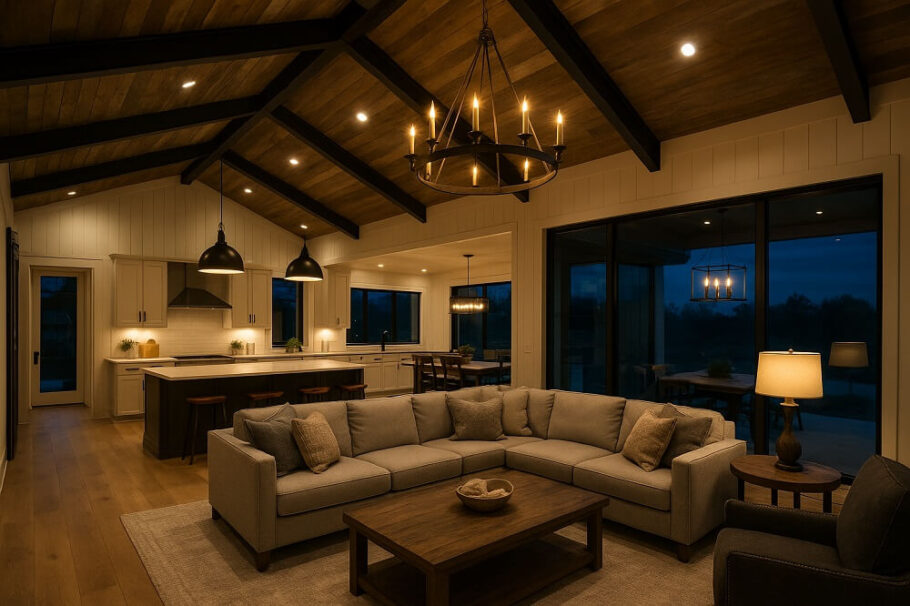
The barndominium has exploded from a rural secret into a full-blown design movement. Walk through any social media feed, and there they are: soaring ceilings, streams of natural light, industrial bones softened by warm wood and stone. The look screams custom money. But here is the quiet truth that separates dreamers from builders. That luxury aesthetic does not have to cost a fortune. The trick lies in knowing exactly where to splurge with intention and where to save with clever substitutes that no guest will ever spot.
Barndominiums start with an advantage that traditional homes lack. The structure itself—wide open spaces, high ceilings, metal roofing, and exposed framing—provides built-in architectural interest. Most standard houses pay extra for vaulted ceilings and steel beams. A barndominium comes with those features as the baseline. The challenge then becomes finishing those cavernous shells into warm, livable luxury without letting the budget balloon into mansion territory.
The Flooring Foundation: Cheap Can Look Expensive
Flooring sets the entire tone. Many assume luxury means wide-plank white oak or hand-scraped hickory. Those materials run thirty to fifty dollars per square foot installed. In a two-thousand-square-foot barndominium, that eats forty to one hundred thousand dollars before a single cabinet goes in. Not sustainable on a budget.
Enter luxury vinyl plank flooring. The good stuff—twelve mils or thicker, rigid core, with a realistic embossed grain—looks disturbingly like real wood. Run it continuously through the main living areas without transition strips. That uninterrupted flow mimics the way high-end modern farms handle their floors. Stick to matte finishes in shades like natural oak, weathered grey, or warm taupe. Glossy vinyl screams cheap instantly. Matte whispers quiet quality.
Polished concrete offers another budget-friendly power move. Existing concrete slabs just need grinding, patching, and a penetrating sealer. For under five dollars per square foot, polished concrete delivers an industrial-luxe foundation that pairs perfectly with leather sofas and wool rugs. Throw down a few jute or cowhide rugs to break up the expanse, and the look lands somewhere between art gallery and mountain retreat.
For those who want real wood without the real price, engineered hardwood with a thin wear layer works. Look for closeout deals on species like hickory or maple. Install it yourself over a soundproof underlayment. The key is keeping the color natural—heavy stains and red tones date fast, whereas lighter, soap-finished looks stay fresh for years.
Countertops That Fool the Eye
Kitchen and bathroom countertops present another huge potential budget trap. Marble and quartzite are gorgeous but fragile and expensive. Granite has fallen out of favor but can sometimes be found cheap on remnant lots. The real budget luxury hero, however, is quartz. Not the fancy branded stuff. Mid-range quartz from regional manufacturers runs forty to seventy dollars per square foot installed. That is a fraction of natural stone.
Better yet, consider butcher block. Maple or walnut butcher block planks cost around fifteen to thirty dollars per square foot. Seal them with a hard wax oil like Osmo or Rubio Monocoat. The finish feels silky, resists water rings, and develops a gorgeous patina. In a barndominium, the warmth of wood counters balances the cold steel and concrete elsewhere. Run butcher block on a large island with a contrasting quartz or concrete perimeter for a collected, intentional look.
Concrete counters are also surprisingly DIY-friendly. Bagged concrete mix, melamine forms, and a few weekends produce custom slabs that mimic high-end cast concrete for under twenty dollars per square foot. Tint the mix charcoal or warm grey, then seal with a food-safe product. The slightly imperfect, hand-troweled finish reads as artisanal rather than amateur.
Lighting: The Jewelry of the Room
Lighting makes or breaks luxury perception. Nothing drags a room down faster than a boob light from the hardware store. But high-end fixtures from restoration brands cost hundreds or thousands each. The solution involves hunting elsewhere.
Commercial lighting suppliers sell the exact same LED linear pendants and gooseneck barn lights that rustic luxury catalogs mark up three hundred percent. Sites like Barn Light Electric have affordable clones, but even cheaper are architectural salvage yards. Old factory pendants, schoolhouse lights, and even vintage streetlights get rewired for interior use. A forty-dollar salvage find with a fresh coat of matte black paint and a new cloth cord looks like a bespoke piece.
For general ambient lighting, wafer-thin LED recessed lights cost almost nothing. Space them evenly for a clean, modern ceiling. Then add one or two statement fixtures—a massive drum shade over the dining table, a sputnik chandelier in the living room, or a row of mini pendants along a kitchen island. Splurge only on the pieces at eye level. Everything else can be basic.
Dimmers belong on every single light switch. That one addition, costing maybe fifteen dollars per dimmer, transforms harsh light into warm, layered ambiance. Luxury interiors always have dimmers. Budget builds often skip them. Do not skip them.
Walls Without the Wallet
Drywall is cheap. Flat, smooth drywall walls look fine but not luxurious. Adding texture, depth, or architectural detail on a budget changes everything. Shiplap became a cliché for a reason. It works, and it is inexpensive. MDF shiplap planks from the home center run about a dollar per linear foot. Paint them the same color as the wall for subtle texture, or go contrasting white against a dark accent wall.
Board and batten offers even more drama. Vertical battens spaced twelve to sixteen inches apart over a painted MDF base create instant farmhouse elegance. The material cost for an accent wall might run one hundred dollars. Do it in a dining room or behind a bed for a custom built-in look.
Exposed corrugated metal on one wall brings the barn back into the barndominium in a sophisticated way. Use it sparingly—behind a range hood, as a wainscot in a mudroom, or on a fireplace surround. Pair with warm wood tones so the space does not feel like a machine shed. The metal itself costs very little, often under two dollars per square foot for new sheets, and almost nothing for salvaged.
Paint remains the cheapest luxury tool money can buy. But not just any paint. High-quality matte or eggshell finish from a reputable brand covers better and looks richer. Dark, moody colors like charcoal, deep olive, or espresso brown make high ceilings feel intimate and expensive. White walls in a barndominium can feel cold and cavernous. Warm off-whites like Swiss Coffee or Simply White keep things bright without the sterile hospital vibe.
Cabinetry and Storage Tricks
Custom cabinetry is a budget killer. Stock cabinets from big box stores look exactly like what they are. But stock cabinets with modifications tell a different story. Buy unfinished stock cabinets, then add taller feet to make them look built-in. Replace the standard handles with leather pulls or unlacquered brass. Add crown molding to the tops to bridge the gap to the ceiling. A few hours of work transforms five hundred dollars of stock cabinets into something that resembles a twenty-thousand-dollar kitchen.
Open shelving offers another cost-saver. Floating shelves made from pipe and reclaimed wood cost almost nothing. Use them for daily dishes and glassware. The key is restraint. Only put beautiful things on open shelves. Mismatched plastic cups and cereal boxes belong behind closed doors. But a row of white ceramic plates, clear glass jars filled with coffee beans, and a few trailing plants—that looks like a deliberate design choice, not a shortage of upper cabinets.
In bathrooms, a simple painted vanity with a stone or wood top beats a fancy prefab unit every time. Find a vintage dresser at a thrift store, cut a hole for the sink, seal the surface, and mount it to the wall. The piece will have character that no catalog vanity can match, usually for under one hundred dollars.
Plumbing Fixtures: Small Details, Big Impact
A cheap faucet feels cheap the first time the handle wobbles. This is one area where spending a little more makes sense, but luxury brands like Waterworks and Kallista are not necessary. Mid-tier brands like Delta, Moen, and Kohler offer matte black, brushed brass, and polished nickel finishes that look expensive. Stick to one finish throughout the open living spaces. Mixing metals works, but only intentionally—like black faucets with brass cabinet pulls. Random mixing looks like a mistake.
Matte black fixtures have become a barndominium staple. They disappear against dark walls or pop against white shiplap. Brushed brass (not shiny gold) warms up grey and concrete spaces. Either way, buy from the same collection so handles and spouts share the same design language.
Consider investing in one statement piece—a huge rainfall shower head, a pot filler over the stove, or a wall-mounted faucet for the kitchen. Those unusual pieces signal luxury. The rest of the faucets can be the builder-grade option from the same finish family.
Windows and Natural Light
Barndominiums typically feature large windows by necessity. Those windows are already a luxury feature that would cost tens of thousands to add to a traditional home. Do not block them with heavy drapes. Instead, use simple roller shades in natural linen or bamboo. The soft texture adds warmth without fighting the architecture. For privacy, frosted window film costs pennies and looks like etched glass.
If window views face something ugly—a neighbor, a workshop, a highway—frame the view instead. Hang a sheer curtain panel on a simple rod, but keep it open. The fabric softens the hard edges of the steel frame without hiding the light.
Trim around windows makes a surprising difference. Flat drywall returns save money but look modern and clean. If going for a more traditional farmhouse feel, wide pine boards as window casings add heft and substance. Paint them the same color as the walls for a subtle, expensive-looking monochromatic scheme.
Ceilings: The Fifth Wall
Most people forget ceilings. High-end interiors never do. In a barndominium, the ceiling offers a huge opportunity. Leave the steel roof purlins exposed in part of the space. Paint them matte black or dark charcoal. The industrial bones become a design feature. In adjacent areas, install a wood plank ceiling using inexpensive pine or even plywood strips ripped to size. Stained warm or painted white, a wood ceiling creates instant coziness in a cavernous room.
Faux wood beams made from hollow polyurethane or inexpensive dimensional lumber fool almost everyone. A few well-placed faux beams crossing a vaulted ceiling break up the expanse and add architectural weight. The material cost runs a few hundred dollars, and they install in a weekend with basic tools.
Drop ceilings are forbidden. Luxury and dropped ceiling tiles do not belong in the same sentence. If acoustic dampening is needed, hang fabric-wrapped panels or felt tiles directly on the drywall in a pattern.
Accessories and Textiles
The final layer of luxury comes from soft goods. A barndominium with great bones and cheap furniture still looks unfinished. But luxury textiles do not have to come from a designer showroom. Linen-look curtains from discount home stores, plush cotton rugs from warehouse clubs, and throw pillows from anywhere with good reviews—these items add warmth and softness.
Layering is the secret. A jute rug under a wool kilim. A faux shearling throw draped over a leather chair. Linen napkins on a rustic table. None of these items cost much individually, but together they create the collected, lived-in look that expensive hotels try to replicate.
Avoid matching furniture sets. Nothing says “budget” like a sofa, loveseat, and chair all in the same fabric from the same collection. Mix leather with velvet, wood with metal, old with new. Thrift stores, estate sales, and Facebook Marketplace provide high-quality pieces for pennies on the dollar. A solid wood dining table from the 1970s with a fresh sand and stain looks better than any new fast-furniture option.
Where to Actually Splurge
For all the clever savings, a few things deserve real money. The sofa where everyone sits every day should have good springs and dense foam. The mattress needs to offer proper support. The kitchen faucet and shower valve should come from a brand that stocks replacement cartridges. And the primer and paint on the walls should be high-quality because repainting a cavernous barndominium is miserable.
Everything else—the countertops, the light fixtures, the floors, the cabinet hardware—can be faked, found, or fabricated for a fraction of the expected cost. The freedom of the barndominium lies in its rawness. Luxury finishes shine brightest when they contrast with something honest and industrial. A marble slab in a sterile subdivision house looks like a status symbol. A marble slab in a steel-framed barn with exposed purlins and concrete floors looks like a conversation piece.
The barndominium does not need to pretend to be a traditional home. Its beauty comes from the tension between rough and refined. Spend money on comfort and function. Save money on flash. And never forget that the most luxurious thing in any room is good light, clean lines, and the confidence that comes from making deliberate choices—regardless of the price tag attached to them.