
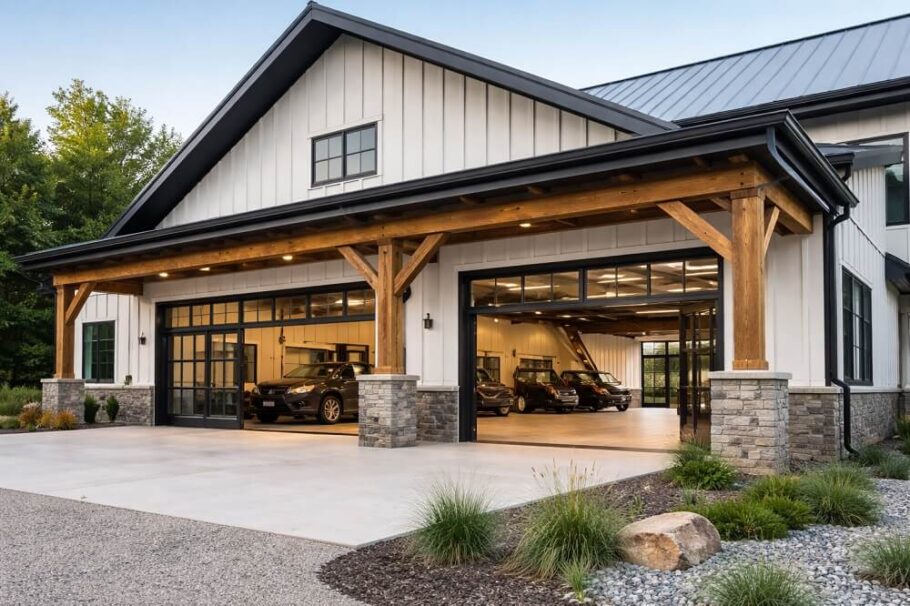
Barndominiums are known for their flexibility, open spans, and industrial-meets-residential appeal. One feature that perfectly matches this design philosophy is the oversized garage door. Whether you’re housing RVs, boats, farm equipment, classic cars, or creating a multi-purpose workshop-living hybrid, oversized garage doors are often a defining element of a barndominium.
But installing them is not as simple as choosing a larger version of a standard door. Oversized garage doors affect structural design, insulation, energy efficiency, automation, and long-term durability. When done right, they add incredible functionality and resale value. When done wrong, they become one of the most common sources of air leaks, mechanical failures, and costly retrofits.
This guide walks you through everything you need to know about installing oversized garage doors on a barndominium, from planning and design to materials, costs, and maintenance.
What Qualifies as an Oversized Garage Door?
An oversized garage door is typically any door wider than 10 feet or taller than 8 feet. In barndominium construction, common oversized dimensions include:
- 12′ x 12′
- 14′ x 12′
- 16′ x 14′
- 18′ x 14′
- 20′ wide or more for equipment bays
These sizes are often used for RV storage, agricultural machinery, aircraft hangars, or multi-bay shop spaces. The larger the door, the more engineering and planning it requires.
Why Oversized Garage Doors Are So Popular in Barndominiums
Oversized doors fit naturally into barndominium design for several reasons:
- They support the open-span steel framing used in metal buildings.
- They allow flexible interior use for workshops, storage, and conversions.
- They create a strong visual statement on the exterior.
- They improve accessibility for large vehicles and equipment.
- They future-proof the building for changing needs.
For many owners, the oversized garage door is the heart of the barndominium’s functionality.
Structural Considerations Before Installation
Header and Load Distribution
Oversized doors require substantial headers to carry roof and wall loads. In steel-frame barndominiums, this usually means engineered steel beams or reinforced truss systems. In hybrid or wood-framed designs, laminated beams or steel lintels are often required.
Never assume a standard header will work. The larger the opening, the more critical proper load transfer becomes.
Wind Load and Bracing
Large door openings weaken wall rigidity if not properly braced. This is especially important in high-wind, hurricane, or tornado-prone regions. Structural engineers often specify:
- Portal frames
- Steel moment frames
- Additional wall girts
- Reinforced jamb columns
Skipping these elements can cause wall movement, door binding, or even structural failure during storms.
Foundation Alignment
Oversized doors demand precise slab leveling. Even small variations can cause roller misalignment, track binding, or uneven sealing.
For heated barndominiums, the slab should also include thermal breaks and insulation to prevent condensation around the door opening.
Types of Oversized Garage Doors for Barndominiums
Sectional Overhead Doors
These are the most common choice. They open vertically and track along the ceiling.
Pros:
- Good insulation options
- Compatible with openers
- Clean appearance
- Easy sealing
Cons:
- Require headroom
- Tracks can interfere with ceiling design
Roll-Up Steel Doors
Often used in commercial buildings.
Pros:
- Minimal headroom
- Extremely durable
- Lower maintenance
Cons:
- Limited insulation
- Industrial appearance
- Louder operation
Hydraulic One-Piece Doors
These swing outward and upward as a single panel.
Pros:
- No ceiling tracks
- Clean interior space
- Excellent for tall openings
Cons:
- Higher cost
- Requires exterior clearance
- Strong wind exposure when open
Bi-Fold Lift Doors
Common in aircraft hangars.
Pros:
- Handles very large openings
- Excellent sealing
- Dramatic visual impact
Cons:
- High cost
- More complex installation
- Requires professional servicing
Your choice should match your building use, climate, and interior layout.
Insulation and Energy Efficiency
Oversized garage doors can become the weakest thermal point in a barndominium if not insulated properly.
Look for:
- Polyurethane foam core panels
- R-values of R-12 or higher
- Thermal breaks in frames
- High-quality perimeter weather seals
- Bottom bulb seals designed for concrete slabs
For climate-controlled shops or living spaces, insulated glass panel doors can also be used, but they require higher-performance glazing systems.
Door Materials and Finishes
Oversized garage doors come in several materials:
- Steel: Most common, durable, cost-effective
- Aluminum: Lightweight, corrosion-resistant
- Wood overlay: Premium aesthetic, higher maintenance
- Full-view glass: Modern look, commercial feel
Many barndominium owners choose doors that match their metal wall panels for a seamless exterior appearance.
Automation and Motor Selection
Oversized doors require commercial-grade openers. Residential openers are not designed for the weight and cycle demands of large doors.
Key features to look for:
- High horsepower motors
- Soft-start and soft-stop technology
- Chain or shaft-driven systems
- Battery backup
- Smart control integration
- Safety photo eyes and auto-reverse systems
For very large doors, jackshaft openers mounted beside the door are often the best solution.
Ceiling Height and Track Layout
Barndominiums often have tall ceilings, which gives flexibility in track design:
- Standard lift tracks
- High-lift tracks
- Vertical lift tracks
High-lift or vertical lift systems allow doors to rise higher before turning, maximizing wall clearance for lifts, cranes, or storage systems.
Proper track design is just as important as door size.
Moisture Control and Condensation Prevention
Large metal doors can attract condensation in humid climates. This leads to rust, mold, and dripping water inside the building.
To reduce this risk:
- Use insulated doors
- Add vapor barriers behind wall panels
- Ensure proper ventilation
- Install thermal breaks
- Use interior dehumidification if necessary
This is especially important in tropical or coastal environments.
Cost Expectations
Oversized garage door costs vary widely based on size, material, and automation.
Typical ranges:
- 12′ x 12′ insulated sectional: $2,000 – $4,000
- 16′ x 14′ insulated sectional: $3,500 – $6,500
- Bi-fold or hydraulic systems: $8,000 – $18,000+
- Commercial opener systems: $800 – $2,500
- Structural framing upgrades: $1,500 – $5,000+
While the upfront cost is significant, oversized doors often become one of the most valuable features of a barndominium.
Common Installation Mistakes to Avoid
- Undersized headers
- Poor slab leveling
- Cheap weather stripping
- Residential-grade openers
- No wind-load rating
- Inadequate side clearance
- Ignoring thermal bridging
These mistakes usually don’t show immediately but cause long-term operational and energy problems.
How Oversized Doors Affect Barndominium Layout
Oversized doors influence interior planning more than many owners expect.
They affect:
- Workshop layout
- Vehicle turning radius
- Ceiling-mounted storage
- Lighting placement
- HVAC zoning
- Mezzanine positioning
Always design the door placement before finalizing interior walls.
Resale and Appraisal Impact
Oversized garage doors often increase resale value because they:
- Appeal to RV and boat owners
- Attract business and hobby users
- Expand functional square footage
- Improve adaptability of the structure
Appraisers often consider oversized doors as a premium utility feature when properly integrated into the building design.
Maintenance Tips
Oversized doors need routine care:
- Lubricate rollers and hinges
- Inspect cables and springs annually
- Check track alignment
- Replace weather seals when worn
- Test opener safety features
Because of their size and weight, professional servicing is recommended every 1–2 years.
Integrating Doors into Barndominium Aesthetics
Oversized doors no longer have to look industrial. Modern options include:
- Wood-look steel finishes
- Matte black aluminum frames
- Tinted full-view glass
- Flush panel designs
- Custom color matching
When coordinated with siding, roofing, and trim, oversized doors can become a focal design element instead of just a functional opening.
Planning Oversized Doors During Design, Not After
The most important rule: oversized doors must be planned at the design stage.
Retrofitting oversized doors later is expensive and structurally risky. By planning early, you can:
- Engineer proper load paths
- Optimize insulation
- Improve airflow and lighting
- Reduce long-term costs
- Avoid structural compromises
This is especially important for barndominiums that combine residential and shop spaces.
Final Thoughts
Installing oversized garage doors on a barndominium is one of the best ways to unlock its full potential. These doors turn a simple structure into a versatile, high-performance building that adapts to changing lifestyles, hobbies, and business needs.
However, their success depends on thoughtful planning, proper engineering, quality materials, and professional installation. Oversized garage doors are not just bigger versions of standard doors. They are structural, mechanical, and aesthetic systems working together.
When done correctly, they don’t just open your barndominium to the outside world — they open it to endless possibilities.