
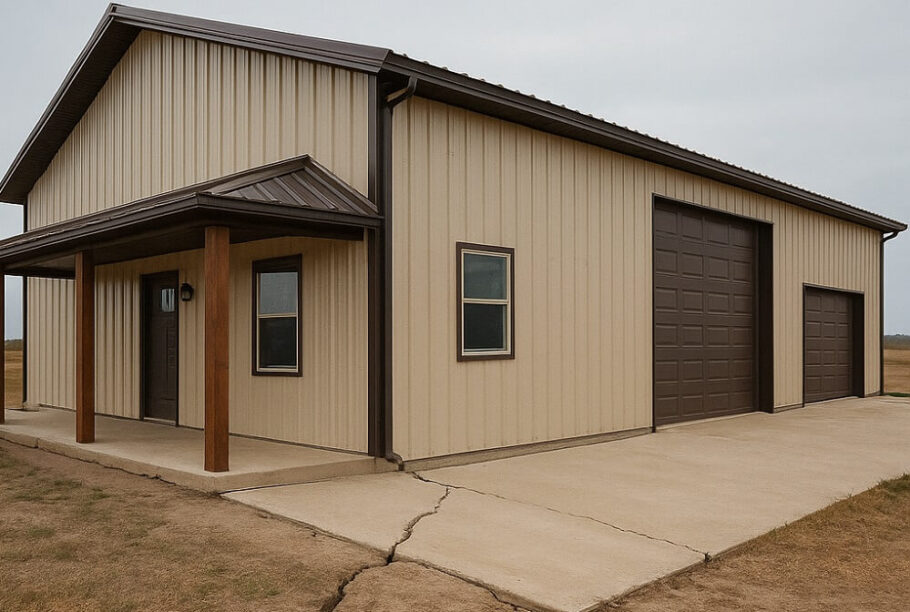
The barndominium has evolved far beyond its agricultural roots. What began as a practical metal building with living quarters has become a flexible architectural concept that blends durability, affordability, and modern design. As homeowners push for higher performance, better energy efficiency, and longer-lasting structures, construction methods are also evolving. One method gaining serious traction is the use of Insulated Concrete Forms (ICFs).
An ICF barndominium combines the open-span, customizable nature of a barndominium with the strength and efficiency of reinforced concrete walls. The result is a structure that excels in energy performance, resilience, and comfort—often outperforming traditional wood or steel-framed barndominiums in demanding climates.
This article explores what ICF barndominiums are, how they work, their advantages and challenges, and when they make sense as a smart building strategy.
Understanding Insulated Concrete Forms
Insulated Concrete Forms are modular building blocks made from rigid foam insulation, typically expanded polystyrene (EPS). These blocks or panels interlock like large LEGO pieces to create wall forms. Once assembled, steel reinforcement is placed inside the cavity, and concrete is poured, forming a solid reinforced concrete core sandwiched between two layers of continuous insulation.
Unlike removable concrete forms, ICFs remain in place permanently. The foam becomes part of the wall assembly, delivering insulation, air sealing, and sound control without additional layers.
In an ICF barndominium, these walls replace conventional framing for exterior walls and, in some cases, interior load-bearing walls, while still allowing for open floor plans and large roof spans typical of barndominium designs.
Why ICFs Are a Natural Fit for Barndominiums
Barndominiums are already valued for their strength and efficiency. When combined with ICF construction, these benefits are amplified.
Barndominium owners often want:
- Open interiors with minimal structural interruptions
- Low operating costs
- High durability and low maintenance
- Superior performance in extreme weather
ICF construction aligns perfectly with these goals, especially for residential-focused barndominiums rather than agricultural-only structures.
Energy Efficiency That Outperforms Traditional Construction
One of the most compelling reasons to choose ICFs is energy efficiency.
Continuous Insulation
Traditional framed walls contain studs that create thermal bridges, allowing heat to escape. ICF walls provide continuous insulation on both sides of the concrete core, drastically reducing heat transfer.
Most ICF walls achieve effective R-values between R-22 and R-30, but real-world performance often exceeds that due to thermal mass effects.
Thermal Mass Advantage
The concrete core acts as a thermal battery. It absorbs heat during the day and releases it slowly when temperatures drop. This moderates indoor temperature swings and reduces HVAC cycling.
In an ICF barndominium, this means:
- Cooler interiors in hot climates
- Warmer interiors in cold climates
- Lower heating and cooling costs year-round
Many ICF homeowners report 30–60% energy savings compared to conventional construction.
Airtight Construction
ICF walls are inherently airtight. With proper detailing around windows, doors, and roof connections, air infiltration is dramatically reduced. This improves comfort and indoor air quality while lowering energy loss.
Structural Strength and Disaster Resistance
Barndominiums are often built in rural or exposed areas where weather extremes are common. ICF construction dramatically increases resilience.
Wind Resistance
ICF walls can withstand wind loads exceeding 200 mph, making them ideal for hurricane-prone or tornado-prone regions. The reinforced concrete core provides strength that wood or light-gauge steel framing simply cannot match.
Fire Resistance
Concrete and foam insulation do not provide fuel for fires. ICF walls typically achieve 2–4 hour fire ratings, offering far greater protection than standard framed walls. This is especially valuable for barndominiums with attached workshops or garages.
Seismic Performance
The monolithic nature of ICF walls performs exceptionally well in earthquakes. Steel reinforcement combined with concrete creates a ductile, continuous load path that resists cracking and collapse.
Acoustic Performance and Interior Comfort
One often-overlooked benefit of ICF barndominiums is sound control.
The dense concrete core combined with foam insulation significantly reduces sound transmission. This is ideal for:
- Barndominiums near highways or industrial areas
- Homes with workshops, metal fabrication, or machinery
- Multi-generational living spaces
Interior spaces feel quieter, more solid, and less “hollow” compared to metal or wood-framed buildings.
Design Flexibility for Modern Barndominiums
A common misconception is that ICF construction limits design flexibility. In reality, it offers more freedom in many ways.
Open Floor Plans
ICF walls easily support long roof spans, allowing for large open interiors without frequent load-bearing walls. This suits:
- Great rooms
- Open kitchens
- Loft-style living areas
Exterior Finishes
ICF walls accept almost any exterior finish, including:
- Metal siding
- Stucco
- Brick or stone veneer
- Fiber cement panels
- Wood accents
This allows an ICF barndominium to maintain the classic barn aesthetic or adopt a modern, industrial, or farmhouse style.
Interior Finishes
Interior walls can be finished with drywall, plaster, wood paneling, or exposed concrete for a modern industrial look. Electrical chases can be cut directly into the foam, simplifying rough-in work.
Construction Process of an ICF Barndominium
Understanding the building process helps clarify why ICFs perform so well.
Foundation Integration
ICF walls are often integrated directly with the foundation, creating a continuous concrete structure from footing to roof. This improves load transfer and reduces weak points.
Wall Assembly
ICF blocks or panels are stacked according to the design plan. Reinforcing steel is placed horizontally and vertically, following engineering specifications.
Concrete Placement
Concrete is poured in lifts to avoid blowouts. Once cured, the wall is structurally complete, insulated, and ready for finishes.
Roof Systems
ICF walls can support:
- Steel truss roofs
- Wood trusses
- Hybrid post-frame systems
This flexibility allows designers to blend traditional barndominium roof construction with advanced wall systems.
Cost Considerations and Long-Term Value
ICF construction typically has a higher upfront cost compared to conventional framing. However, this cost difference is often misunderstood.
Initial Construction Costs
On average, ICF walls may add 5–10% to the shell cost of a barndominium. Factors influencing cost include:
- Local labor experience
- Concrete prices
- Design complexity
In areas where ICF contractors are common, the cost gap can be minimal.
Operational Savings
Over the life of the building, ICF barndominiums often cost less due to:
- Lower energy bills
- Reduced HVAC system size
- Minimal maintenance
- Longer building lifespan
When analyzed over 30–50 years, ICF construction frequently outperforms conventional methods financially.
Insurance and Resale Benefits
Many insurers offer lower premiums for ICF homes due to fire and storm resistance. Resale value can also increase as buyers recognize the performance advantages.
Sustainability and Environmental Impact
ICF barndominiums align well with sustainable building goals.
Reduced Energy Consumption
Lower energy use translates directly into reduced carbon emissions over the life of the building.
Material Efficiency
Although concrete has a higher embodied carbon, the long lifespan and reduced operational energy often offset this impact. Many ICF manufacturers now incorporate recycled materials into foam components.
Durability Equals Sustainability
A building that lasts 100 years with minimal repairs is inherently more sustainable than one requiring frequent replacement or renovation.
Challenges and Considerations
While ICF barndominiums offer many advantages, they are not without challenges.
Contractor Experience
ICF construction requires proper training. Working with designers and builders experienced in ICFs is essential to avoid issues during concrete placement and detailing.
Design Planning
Changes after construction begins are more difficult than in framed buildings. Electrical, plumbing, and openings must be carefully planned in advance.
Moisture Management
Although ICF walls are highly moisture-resistant, proper detailing around windows, doors, and roof connections is critical to prevent condensation and water intrusion.
When an ICF Barndominium Makes the Most Sense
ICF barndominiums are especially well-suited for:
- Extreme climates
- High-wind or wildfire-prone regions
- Energy-conscious homeowners
- Multi-use buildings with living and work spaces
- Long-term or generational homes
For owners prioritizing durability, comfort, and efficiency over short-term savings, ICF construction is a powerful option.
The Future of High-Performance Barndominiums
As building codes become stricter and energy costs continue to rise, construction methods like ICFs are moving from niche to mainstream. When paired with the adaptability of barndominium design, Insulated Concrete Forms create structures that are not only visually striking but also exceptionally high-performing.
An ICF barndominium is more than just a trend. It represents a shift toward smarter, stronger, and more efficient buildings—structures designed to stand the test of time while delivering superior comfort and efficiency every day.
For homeowners seeking a barndominium that truly excels in performance, resilience, and long-term value, building with Insulated Concrete Forms is a strategy worth serious consideration.