
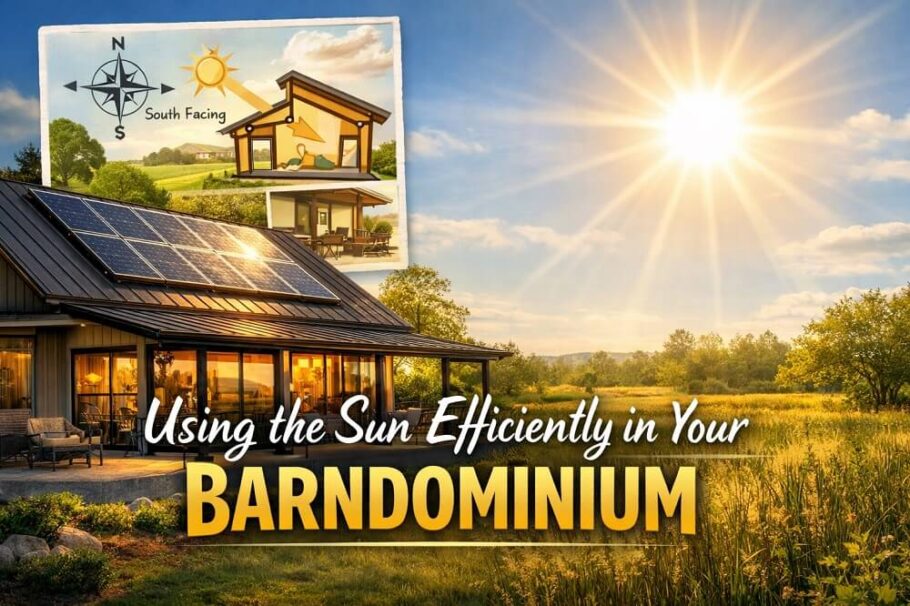
Barndominiums are known for their open layouts, structural efficiency, and adaptability to different climates. One of their greatest yet often underutilized advantages is their ability to work with the sun rather than against it. When designed thoughtfully, a barndominium can harness sunlight for natural lighting, passive heating, energy generation, and even long-term durability. Efficient use of the sun is not just about adding solar panels—it begins at the earliest design decisions and continues through material choices, layout planning, and daily living habits.
This guide explores how to use the sun efficiently in a barndominium, from orientation and window placement to thermal mass, shading strategies, and renewable energy integration.
Understanding Solar Efficiency in Barndominium Design
Solar efficiency means maximizing the benefits of sunlight while minimizing its drawbacks. Sunlight provides free illumination and heat, but unmanaged solar exposure can also lead to overheating, glare, fading interiors, and higher cooling costs. The goal is balance.
Barndominiums are especially well-suited for solar-efficient design because of their simple structural forms, large roof surfaces, and flexible interior layouts. With the right planning, they can outperform conventional homes in energy efficiency.
Site Orientation and Building Placement
One of the most critical decisions for solar efficiency happens before construction even begins: how the barndominium is positioned on the land.
In most regions of the Northern Hemisphere, including the U.S., the ideal orientation places the long axis of the building running east to west. This allows the main living spaces and most windows to face south, where sunlight is more consistent and easier to control.
South-facing exposure provides:
- Maximum sunlight in winter when the sun is lower in the sky
- Reduced heat gain in summer when the sun is higher and easier to shade
- Better daylight distribution throughout the day
East-facing windows bring in strong morning sun, which can be pleasant but sometimes harsh. West-facing windows receive intense afternoon sun, often causing overheating. North-facing windows provide soft, indirect light and are excellent for studios, offices, or spaces where glare control is important.
Thoughtful placement on the site can also take advantage of natural land features such as tree lines, slopes, and nearby structures to control sun exposure.
Designing Floor Plans Around Sunlight
Efficient solar use goes hand in hand with interior layout planning. In a barndominium, where open-concept spaces are common, it’s easier to zone areas based on sun exposure.
Living rooms, kitchens, dining areas, and family spaces benefit the most from southern light. These areas are typically used during the day and can take advantage of both natural illumination and passive solar heating.
Bedrooms often work well on the east side of the building, receiving gentle morning light while remaining cooler in the evening. Utility rooms, garages, storage areas, bathrooms, and mechanical spaces can be placed on the north side, acting as buffer zones that reduce heat loss.
This zoning strategy improves comfort while reducing reliance on artificial lighting and mechanical heating and cooling systems.
Window Placement and Glazing Strategy
Windows are the primary interface between your barndominium and the sun. Their size, placement, and performance characteristics dramatically affect energy efficiency.
South-facing windows should generally be larger, as they provide the most useful sunlight. North-facing windows should be smaller but well-insulated. East- and west-facing windows require careful control to prevent overheating.
Modern high-performance glazing makes a significant difference. Look for:
- Low-E (low emissivity) coatings to reduce unwanted heat transfer
- Double- or triple-pane windows with gas fills
- Properly rated Solar Heat Gain Coefficient (SHGC) values based on climate
In colder climates, a higher SHGC on south-facing windows allows more heat gain in winter. In warmer climates, lower SHGC values help keep interiors cool.
Clerestory windows are particularly effective in barndominiums with tall walls or vaulted ceilings. Positioned high on the wall, they allow sunlight to penetrate deep into the interior without sacrificing privacy or wall space.
Daylighting Strategies for Large Interior Spaces
Barndominiums often have expansive interior volumes that can feel dark if daylight is not managed properly. Daylighting strategies ensure sunlight reaches deeper into the building.
Skylights and roof windows are powerful tools when used carefully. North-facing skylights provide consistent, soft light with minimal heat gain. South-facing skylights should include shading or diffusing elements.
Light shelves are another effective feature. These horizontal surfaces reflect sunlight onto the ceiling, spreading light further into the room while reducing glare near the window.
Interior finishes matter as well. Light-colored walls, ceilings, and floors reflect sunlight, reducing the need for artificial lighting. Matte finishes prevent harsh glare while still enhancing brightness.
Passive Solar Heating Principles
Passive solar heating uses the sun’s energy to warm a building naturally, without mechanical systems. Barndominiums are excellent candidates for passive solar design due to their open interiors and structural flexibility.
Key elements include:
- Proper orientation and window placement
- Thermal mass to store heat
- Insulation and air sealing to retain warmth
Concrete slab floors are a major advantage in barndominiums. When exposed to sunlight, the slab absorbs heat during the day and releases it slowly at night, stabilizing indoor temperatures. This is especially effective in cold or mixed climates.
Masonry walls, stone features, and even water elements can also act as thermal mass. The more evenly sunlight reaches these materials, the more effective they become.
Controlling Summer Heat with Shading
Efficient solar use isn’t only about capturing sunlight—it’s also about blocking it when necessary. Overheating is one of the most common problems in metal and hybrid barndominiums if shading is ignored.
Roof overhangs are one of the simplest and most effective solutions. Properly sized overhangs block high summer sun while allowing low winter sun to enter south-facing windows.
Other shading options include:
- Covered porches and verandas
- Pergolas with adjustable louvers
- Exterior shutters or screens
- Retractable awnings
Landscaping plays a role as well. Deciduous trees on the south and west sides provide shade in summer while allowing sunlight through after losing their leaves in winter.
Using the Roof for Solar Energy Production
Barndominiums typically have large, uninterrupted roof surfaces, making them ideal for solar panel installation. A roof with minimal penetrations and a favorable pitch can significantly reduce installation costs.
Metal roofing is particularly solar-friendly. It lasts longer, reflects excess heat, and pairs well with standing seam solar mounting systems that avoid roof penetrations.
To maximize efficiency:
- Aim for south-facing roof planes when possible
- Avoid shading from nearby trees or structures
- Design roof pitch based on latitude and solar goals
Solar energy can power lighting, appliances, HVAC systems, and even electric vehicle charging. When combined with battery storage, it also increases resilience during power outages.
Insulation and Envelope Performance
Sun efficiency depends heavily on how well the barndominium retains or rejects heat. A poorly insulated structure wastes solar gains and increases energy bills.
Metal buildings require special attention to insulation to prevent thermal bridging and condensation. Common solutions include:
- Spray foam insulation for air sealing
- Rigid foam panels with thermal breaks
- Hybrid insulation systems combining multiple materials
High-performance wall and roof assemblies allow the barndominium to benefit from solar heating without losing energy through the envelope.
Interior Comfort and Daily Living Benefits
When sunlight is used efficiently, the benefits extend beyond energy savings. Natural light improves mood, productivity, and overall well-being. Spaces feel larger, warmer, and more inviting.
Reduced dependence on artificial lighting lowers electricity use and extends fixture lifespan. Passive heating reduces strain on HVAC systems, lowering maintenance costs and increasing system longevity.
Over time, these benefits translate into lower operating costs, higher resale value, and a more comfortable living environment.
Planning for Climate and Location
Solar strategies must always be adapted to local climate conditions. What works in a cold northern region may not be appropriate in a hot, humid climate.
In hot climates, the focus should be on shading, ventilation, reflective materials, and limited east-west glazing. In colder climates, maximizing south-facing exposure and thermal mass becomes more important.
Mixed climates require flexible solutions that balance heating and cooling needs throughout the year.
Long-Term Value of Solar-Efficient Barndominiums
Using the sun efficiently is an investment in the long-term performance of a barndominium. While some strategies may increase upfront design or construction costs, they typically pay for themselves through energy savings and improved comfort.
As energy prices rise and sustainability becomes a greater priority, solar-efficient homes are increasingly attractive to buyers and lenders alike. Barndominiums that embrace smart solar design are well-positioned for the future.
Conclusion
The sun is one of the most powerful and reliable resources available to barndominium owners. When thoughtfully integrated into design, layout, materials, and systems, sunlight becomes a tool rather than a challenge.
From building orientation and window placement to passive heating, shading, and solar power generation, efficient use of the sun can transform a barndominium into a comfortable, resilient, and energy-smart home. By planning early and designing intentionally, you can let the sun do much of the work—naturally, quietly, and efficiently.