
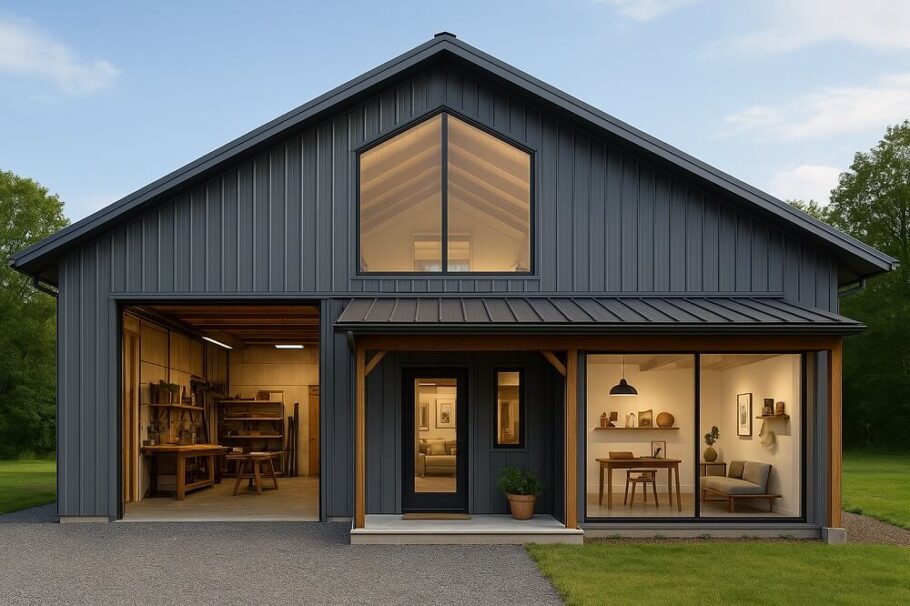
The metal roof gleams under an approaching storm. For many barndominium owners, that sight raises a critical question: is this beautiful steel shell a lightning rod waiting to happen? The short answer might surprise you. While metal buildings attract lightning no more than any other structure, they require a specific, code-compliant approach to protection that goes far beyond the old-fashioned lightning rod.
The Myth of the Lightning Magnet
Metal roofs do not attract lightning. Lightning strikes the highest point in an area, regardless of what that point is made of. A 100-foot oak tree next to a metal barndominium is statistically more likely to be struck than the building itself. However, when lightning does strike a metal structure, the conductive nature of steel presents unique challenges and opportunities for protection.
Grounding Basics for Steel Buildings
Every barndominium needs proper grounding regardless of lightning risk. The building’s steel frame creates an inherent path to ground, but the connection must be intentional and code-compliant. National Electrical Code (NEC) Article 250 requires that metal building frames be grounded. For barndominiums, this typically means connecting the steel structure to ground rods driven at least eight feet into the earth.
The grounding system serves a dual purpose. First, it provides a safe path for lightning current to dissipate into the earth. Second, it stabilizes the electrical system and reduces the risk of shock. Many barndominium owners make the mistake of grounding only the electrical panel, leaving the steel frame floating. That oversight can lead to dangerous voltage differences during a lightning event.
Lightning Rods vs. Structural Grounding
A common misconception holds that metal buildings don’t need lightning rods because the metal itself serves as protection. This is partially true but incomplete. The metal skin and frame provide excellent conductivity, but they still require a complete path to ground. Traditional lightning rods, known as air terminals in the industry, are rarely necessary on metal buildings if the structure itself is properly grounded.
What does matter is the continuity of the conductive path. Every steel panel, beam, and column should be bonded together to create an uninterrupted pathway. Loose connections, rusted fasteners, or isolated sections of metal can create resistance points where dangerous arcing can occur. During a strike, even a small gap can cause side-flashing—where lightning jumps from the intended path to nearby conductive materials, potentially starting fires or damaging equipment.
The Surge Protection Imperative
Grounding the structure addresses the primary lightning path, but it does nothing to protect the expensive electronics inside. Modern barndominiums often house home offices, entertainment systems, sophisticated kitchen appliances, and workshop equipment. A nearby lightning strike miles away can induce destructive surges through power lines and data cables.
Effective surge protection requires a layered approach. The first line of defense is a whole-house surge protector installed at the main electrical panel. This device clamps voltage spikes before they enter the building’s wiring. Secondary protection at individual outlets provides additional defense for sensitive electronics. Importantly, surge protectors must be properly grounded to function—another reason why a robust grounding system is non-negotiable.
Point of Entry Protection
Lightning frequently enters a building through incoming utility lines. Power lines, phone lines, cable television connections, and internet cables can all conduct surges. Each of these entry points requires protection. Coaxial cable protectors, Ethernet surge suppressors, and telephone line protectors are often overlooked but essential components of a comprehensive protection strategy.
For barndominiums in rural areas with overhead power lines, the risk increases significantly. A direct strike to a utility pole can send thousands of volts through the lines and directly into unprotected equipment. Installing service entrance surge protection at every utility panel is a wise investment that costs far less than replacing a home theater system or a welding machine.
Common Grounding Mistakes
Ground rods are not all created equal. Copper-clad rods are standard, but stainless steel rods offer better longevity in corrosive soils. The connection between the grounding electrode conductor and the rod must be exothermic welded or made with an approved clamp. Many DIY installations use standard plumbing clamps, which corrode and loosen over time.
Soil conductivity plays a significant role in grounding effectiveness. Dry, sandy soil provides poor conductivity, requiring additional ground rods spaced at least six feet apart. Some installations benefit from ground rings—a buried conductor encircling the structure. Soil amendments like bentonite clay or conductive backfill materials can improve grounding in problematic conditions.
A single ground rod often proves insufficient. The NEC requires a resistance to ground of 25 ohms or less. If a single rod fails to achieve this, a second rod must be installed. Many jurisdictions now require two ground rods as a minimum, regardless of measured resistance.
Protection Beyond the Lightning Bolt
Surge protection extends beyond lightning events. Everyday occurrences like grid switching, motor starts, and nearby equipment cycling can create smaller but cumulative voltage spikes. Over time, these transients degrade electronics, shortening their lifespan. The same surge protectors that guard against lightning also protect against these daily electrical disturbances.
Uninterruptible Power Supplies (UPS) provide an additional layer of protection for critical equipment. These devices condition power, filter surges, and maintain operation during brief outages. For home offices or workshop computers, a UPS can prevent data loss and equipment damage from both surges and power interruptions.
Structural Considerations
The metal frame of a barndominium creates a Faraday cage effect, which actually offers some protection to interior contents. The steel skeleton and metal skin form a conductive enclosure that helps shield internal electronics from electromagnetic fields. This natural shielding complements the grounding and surge protection systems.
However, openings in the steel envelope—windows, doors, garage doors—break the Faraday cage and provide entry points for electromagnetic energy. Proper bonding of all metal components, including door frames and window frames, maintains the integrity of the protective shield. This bonding also ensures that any lightning current on the building’s exterior finds a safe path to ground rather than entering the interior.
Code Compliance
The NEC provides specific requirements for grounding and bonding metal buildings. Section 250.104(C) requires bonding of metal building frames to the grounding electrode system. Section 250.52 lists approved grounding electrodes, including metal underground water pipes, ground rods, and concrete-encased electrodes. Local amendments may add additional requirements.
Inspectors look closely at grounding systems during construction. A failed inspection due to improper grounding can delay occupancy and add expense. Engaging a qualified electrical contractor familiar with local codes ensures compliance and proper protection. The relatively small cost of professional installation pales in comparison to the potential losses from an unprotected building.
The Final Takeaway
A properly protected barndominium does not need traditional lightning rods on the roof. The metal structure itself provides excellent conductivity when properly grounded and bonded. The essential components are a robust grounding electrode system, bonding of all metal parts, and comprehensive surge protection at every point of entry.
Understanding lightning protection transforms anxiety about the metal roof into confidence in the building’s safety systems. The glint of steel under storm clouds becomes a reminder of the thoughtful engineering that protects both the structure and the life inside. Preparation transforms a potential hazard into a manageable aspect of modern construction.