
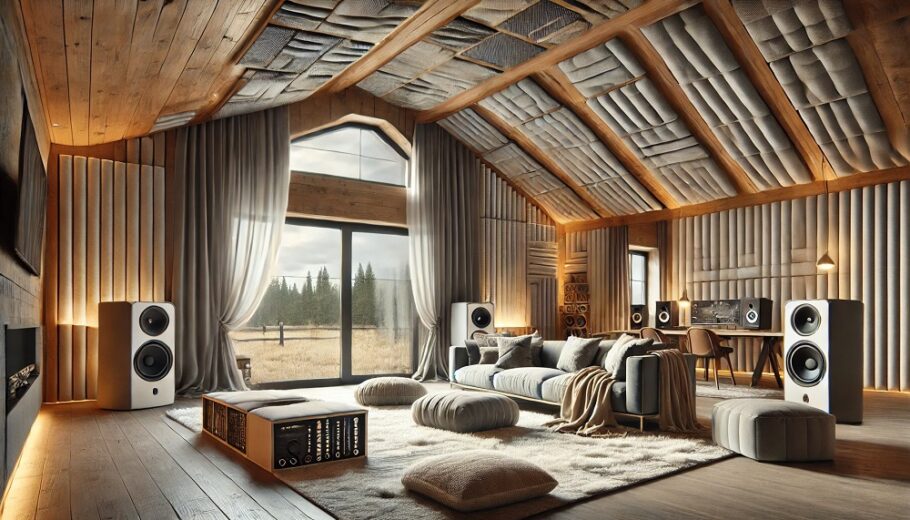
Barndominiums are known for their open layouts, metal construction, and cost-effective versatility. They can function as homes, workshops, offices, or multi-use live–work spaces. However, one of the most common challenges barndominium owners face is noise. Metal panels, large open interiors, and high ceilings can amplify sound, creating echo, vibration, and unwanted noise transfer between rooms.
Soundproofing a barndominium is not just about comfort—it’s about privacy, productivity, and long-term livability. Whether you want to reduce rain noise on a metal roof, isolate a workshop from living spaces, or create a quiet home office or bedroom, proper soundproofing strategies can make a dramatic difference.
This guide walks through how sound behaves in barndominiums, the most effective materials, and step-by-step soundproofing strategies for walls, ceilings, floors, doors, and mechanical systems—without compromising the industrial aesthetic many barndominium owners love.
Understanding Sound Problems in Barndominiums
Before diving into solutions, it’s important to understand why barndominiums are often noisier than conventional homes.
Why Barndominiums Amplify Sound
Most barndominiums use post-frame or steel-frame construction paired with metal siding and roofing. While structurally efficient, these materials transmit sound easily. Common noise issues include:
- Echo and reverberation from large open spaces
- Rain and hail noise on metal roofs
- Sound transfer between rooms due to thin interior partitions
- Mechanical noise from HVAC systems, workshops, or garages
- Exterior noise intrusion in rural or industrial locations
Because sound behaves differently in open, hard-surfaced environments, soundproofing a barndominium requires a combination of blocking sound transmission and absorbing sound within the space.
Soundproofing vs Sound Treatment: Know the Difference
A common mistake is assuming all acoustic products provide soundproofing. In reality, there are two distinct goals.
Soundproofing
Soundproofing focuses on preventing sound from entering or leaving a space. This requires mass, airtight construction, and isolation.
Examples include:
- Dense insulation
- Double-stud or staggered walls
- Sealed doors and windows
- Decoupled ceilings
Sound Treatment
Sound treatment improves sound quality inside a room by reducing echo and reverberation. It does not stop sound from traveling through walls.
Examples include:
- Acoustic panels
- Soft furnishings
- Fabric wall coverings
- Baffles and ceiling clouds
A well-soundproofed barndominium usually needs both approaches.
Soundproofing the Barndominium Walls
Walls are one of the most important areas to address, especially between living areas, bedrooms, offices, and workshops.
Use High-Performance Wall Insulation
Insulation is your first line of defense against noise. For barndominiums, the best options include:
- Mineral wool insulation for superior sound absorption
- Dense fiberglass batts designed for acoustic performance
- Spray foam combined with additional mass layers
Mineral wool is especially effective because it absorbs a wide range of sound frequencies and offers fire resistance.
Add Mass with Multiple Drywall Layers
Sound moves more easily through lightweight walls. Adding mass makes it harder for sound waves to pass through.
Effective strategies include:
- Installing double layers of drywall
- Using sound-dampening drywall compounds between layers
- Choosing thicker drywall where possible
This method is particularly useful for bedrooms, media rooms, and home offices.
Decouple Walls for Maximum Noise Control
If you are designing or renovating, decoupling walls is one of the most powerful soundproofing techniques.
Options include:
- Staggered stud walls
- Double-stud walls
- Resilient channels or sound isolation clips
Decoupling prevents vibration from traveling directly through framing, which is crucial in steel-framed barndominiums.
Soundproofing Ceilings and Roof Systems
High ceilings and metal roofs are hallmarks of barndominiums—but they also contribute to noise issues.
Reduce Rain and Hail Noise on Metal Roofs
Rain noise can be one of the biggest complaints in metal barndominiums. To reduce it:
- Install thick roof insulation above ceiling planes
- Use rigid insulation boards with mass
- Add acoustic underlayment beneath metal roofing
- Consider ceiling assemblies that include air gaps
A properly insulated roof system can reduce rain noise dramatically while improving energy efficiency.
Treat High Ceilings to Reduce Echo
Vaulted or cathedral ceilings often create echo and sound bounce. Solutions include:
- Suspended acoustic baffles
- Wood slat ceilings with acoustic backing
- Fabric-wrapped ceiling panels
- Exposed beams combined with absorption materials
These treatments help maintain the open feel while controlling sound.
Soundproofing Floors in a Barndominium
Many barndominiums are built on concrete slabs, which reflect sound rather than absorb it.
Use Soft Flooring Materials Where Possible
Adding absorption at the floor level can significantly reduce echo.
Effective options include:
- Area rugs with thick pads
- Carpet in bedrooms and offices
- Cork or rubber flooring in workspaces
These materials reduce footstep noise and overall reverberation.
Floating Floors for Multi-Level Barndominiums
If your barndominium includes a loft or second level, floating floor systems can reduce impact noise.
Techniques include:
- Acoustic underlayment beneath flooring
- Rubber isolation mats
- Engineered flooring systems designed for sound control
Doors and Windows: Weak Points in Soundproofing
Even the best walls can fail if doors and windows are not properly treated.
Choose Solid-Core Doors
Hollow-core doors allow sound to pass easily. Solid-core doors provide better sound isolation and feel more substantial.
For improved performance:
- Add perimeter door seals
- Install door sweeps
- Use double-door systems for offices or studios
Upgrade Windows for Noise Control
Windows are another major sound leak. Solutions include:
- Double- or triple-pane windows
- Laminated glass designed for sound reduction
- Proper sealing around window frames
If exterior noise is a concern, window upgrades can make a noticeable difference.
Soundproofing Mechanical Systems and Utilities
Noise doesn’t only travel through walls—it can also move through ductwork, plumbing, and structural connections.
Quiet HVAC Design
Large open barndominiums often require powerful HVAC systems, which can create noise.
Reduce HVAC noise by:
- Using lined ductwork
- Installing vibration isolators
- Designing longer duct runs with gentle turns
- Separating mechanical rooms from living spaces
Isolate Workshops and Utility Rooms
If your barndominium includes a shop, garage, or mechanical space:
- Build isolated wall assemblies
- Use sealed doors with sound-rated cores
- Add ceiling insulation between floors
- Mount equipment on vibration-dampening pads
Interior Design Choices That Improve Acoustics
Soundproofing does not have to look industrial or technical. Many design choices naturally improve acoustics.
Furniture and Layout Considerations
Strategic placement of furniture can reduce sound bounce.
Helpful elements include:
- Upholstered furniture
- Bookshelves filled with books
- Fabric wall hangings
- Curtains or drapes
These elements soften sound while adding warmth to large open spaces.
Blending Acoustic Panels with Barndominium Style
Modern acoustic panels come in designs that complement rustic, modern, or industrial interiors.
Popular options include:
- Wood-finished acoustic panels
- Slatted wall systems
- Custom fabric panels in neutral tones
These solutions maintain the aesthetic while improving sound comfort.
Planning Soundproofing During Design vs Retrofitting
Soundproofing is most cost-effective when planned early, but improvements can still be made after construction.
New Construction Advantages
When soundproofing is included during design, you can:
- Choose optimal wall assemblies
- Design room separation strategically
- Integrate insulation seamlessly
- Reduce long-term costs
Retrofitting Existing Barndominiums
For existing structures, focus on:
- Adding insulation where accessible
- Sealing gaps and penetrations
- Using acoustic panels and soft finishes
- Upgrading doors and windows
Even small changes can significantly improve noise levels.
Common Soundproofing Mistakes to Avoid
Many homeowners invest in soundproofing without seeing results due to avoidable errors.
Common mistakes include:
- Confusing sound treatment with soundproofing
- Ignoring air gaps and sealing
- Using lightweight materials alone
- Focusing on one surface instead of the entire room
- Skipping professional planning for complex layouts
A holistic approach always delivers better results.
Final Thoughts: Creating a Quieter Barndominium Without Sacrificing Style
Soundproofing a barndominium is not about eliminating all noise—it’s about controlling sound to create a more peaceful, functional, and enjoyable living environment. With the right combination of insulation, mass, isolation, and thoughtful interior design, even large metal structures can feel quiet and comfortable.
Whether you are designing a new barndominium or upgrading an existing one, investing in sound control pays off in better sleep, improved privacy, higher productivity, and long-term satisfaction. When done correctly, soundproofing blends seamlessly into the structure, preserving the open, industrial charm that makes barndominiums so appealing—while delivering the quiet comfort of a modern home.