
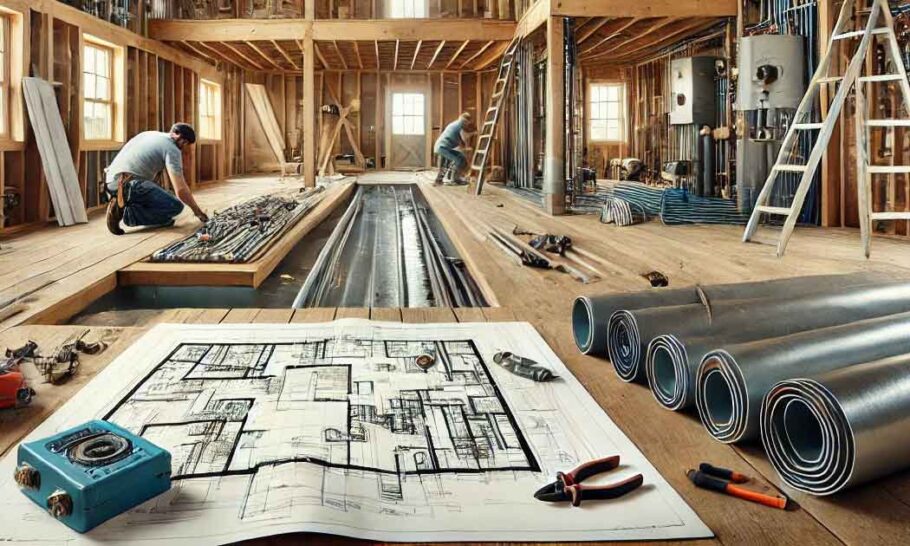
Barndominiums offer a unique blend of structural efficiency, open interior layouts, and long-term durability. However, plumbing is one of the most misunderstood and improperly executed systems in barndominium construction. Unlike traditional homes, barndominiums often combine metal framing, slab-on-grade foundations, large open spans, and flexible layouts—all of which demand a different plumbing strategy.
Proper barndominium plumbing is not just about running pipes from point A to point B. It requires thoughtful planning, coordination with structural and mechanical systems, climate awareness, and future-proofing. A poorly designed plumbing system can lead to slab leaks, freezing pipes, pressure loss, condensation, corrosion, and expensive repairs that are difficult to access once the building is complete.
This guide walks through everything you need to know to properly design, install, and maintain plumbing in a barndominium, whether you are building new or remodeling an existing structure.
Understanding How Barndominium Plumbing Differs from Traditional Homes
Barndominiums are commonly built using post-frame or steel-frame construction and often sit on concrete slabs rather than crawlspaces or basements. These design choices significantly impact plumbing decisions.
In traditional homes, plumbing lines often run through crawlspaces or floor joists, making access and modifications relatively easy. In contrast, barndominiums frequently embed water supply and drain lines directly into or beneath the slab. Once the slab is poured, mistakes are expensive to correct.
Additionally, barndominiums often feature:
- Open-concept interiors with fewer interior walls
- Long plumbing runs between fixtures
- Mixed-use spaces such as workshops or garages
- High ceilings and exposed structural elements
All of these factors make early plumbing design critical.
Plumbing Planning Should Begin with the Floor Plan
The most important step in proper barndominium plumbing happens before construction begins. Plumbing must be planned alongside the floor plan, not added later.
Wet areas should be grouped whenever possible. Bathrooms, kitchens, laundry rooms, and utility spaces should be positioned close together to reduce pipe length, material cost, and pressure loss. Long plumbing runs increase the risk of leaks, heat loss in hot water lines, and slow drain performance.
When designing the floor plan, consider:
- Stacking bathrooms back-to-back
- Locating kitchens near utility rooms
- Minimizing distance from water heater to fixtures
- Avoiding plumbing lines under heavy structural columns
Strategic layout decisions can save thousands of dollars and prevent long-term maintenance headaches.
Choosing the Right Plumbing System for a Barndominium
Material selection plays a major role in the durability and efficiency of barndominium plumbing systems.
Water Supply Line Materials
PEX piping is the most popular choice for modern barndominiums. It is flexible, resistant to freezing, corrosion-resistant, and easy to route through metal framing.
PEX is especially well-suited for barndominiums because:
- It tolerates minor movement in steel structures
- It reduces the number of fittings needed
- It performs well in slab and wall applications
- It is faster to install than copper
Copper piping is still used in some projects but is more expensive and vulnerable to corrosion when in contact with concrete or dissimilar metals.
CPVC may be used in certain areas but is less flexible and more prone to cracking in cold climates.
Drain, Waste, and Vent Pipe Materials
PVC is the standard choice for drain and vent systems in barndominiums. It is lightweight, cost-effective, and resistant to corrosion. ABS may be used in some regions, but PVC remains the most common option.
All drain lines must maintain proper slope to ensure effective waste removal, especially in slab installations where gravity flow is critical.
Slab-on-Grade Plumbing Considerations
Most barndominiums are built on slab foundations, which makes plumbing layout especially important.
Before pouring the slab, all underground plumbing must be accurately installed, tested, and inspected. Errors at this stage can lead to slab leaks that require cutting through concrete to repair.
Key slab plumbing considerations include:
- Precise placement of drain stubs
- Adequate pipe bedding and protection
- Use of sleeves where pipes pass through concrete
- Pressure testing before concrete placement
Sleeving pipes allows for slight movement and reduces stress from slab expansion and contraction. This is especially important in climates with temperature fluctuations.
Proper Venting Is Non-Negotiable
Plumbing vents are essential for maintaining proper air pressure in the drainage system. Without adequate venting, drains will be slow, gurgle, or allow sewer gases to enter living spaces.
Barndominiums often complicate venting because of high ceilings and metal roof systems. Vents must be carefully routed to avoid structural conflicts and condensation issues.
Proper venting strategies include:
- Centralizing vent stacks where possible
- Insulating vent pipes in cold climates
- Using roof flashings designed for metal roofing
- Avoiding excessive horizontal vent runs
In some designs, air admittance valves may be used, but they should never replace primary vent stacks unless permitted by local code.
Water Heater Placement and Hot Water Distribution
Because barndominiums can be large and spread out, water heater placement is critical for comfort and efficiency.
A centrally located water heater reduces wait times for hot water and minimizes heat loss. In larger barndominiums, multiple water heaters or point-of-use units may be necessary.
Tankless water heaters are popular in barndominiums due to their space-saving design and energy efficiency. However, they require proper electrical or gas infrastructure and adequate flow rate planning.
Hot water recirculation systems are another effective solution, especially in long plumbing runs. These systems keep hot water readily available at fixtures, reducing water waste and improving convenience.
Protecting Plumbing from Freezing and Condensation
Although metal buildings are durable, they are more susceptible to temperature swings than traditional wood-framed homes. Plumbing must be protected accordingly.
Cold-weather protection strategies include:
- Routing water lines inside insulated walls
- Avoiding exterior wall plumbing where possible
- Insulating supply lines and vent pipes
- Using pipe heat tape in extreme climates
Condensation is another concern, particularly in humid environments. Cold water lines can sweat, leading to moisture buildup, mold growth, and corrosion of nearby metal components. Proper insulation and vapor barriers help mitigate this risk.
Integrating Plumbing with Mechanical and Structural Systems
Plumbing should never be installed in isolation. Coordination with HVAC, electrical, and structural systems is essential in barndominium construction.
Metal framing often requires protective grommets or sleeves where pipes pass through steel members to prevent abrasion. Plumbing penetrations must also be properly sealed to maintain building envelope integrity.
Open-ceiling designs, common in barndominiums, may expose plumbing lines. In these cases, careful planning is required to balance aesthetics, accessibility, and insulation.
Code Compliance and Professional Oversight
Barndominiums must meet the same plumbing codes as conventional homes, but local jurisdictions may have additional requirements based on building type or zoning classification.
Common code considerations include:
- Minimum pipe sizes
- Fixture spacing requirements
- Vent stack placement
- Backflow prevention
- Cleanout accessibility
Working with a licensed plumber who understands barndominium construction is critical. DIY plumbing mistakes often lead to failed inspections, insurance issues, and costly repairs.
Planning for Future Expansion and Flexibility
One of the advantages of barndominiums is their adaptability. Plumbing systems should be designed with future expansion in mind.
Adding extra drain stubs, capped water lines, or oversized vent stacks can make future bathroom or kitchen additions far easier. Planning ahead during initial construction costs very little compared to retrofitting later.
This is especially important for:
- Guest suites
- Workshop bathrooms
- Outdoor kitchens
- Rental or multi-family conversions
Long-Term Maintenance and Accessibility
Once a barndominium is complete, accessing plumbing can be more difficult than in traditional homes. Designing for maintenance access is often overlooked but extremely important.
Best practices include:
- Installing accessible shutoff valves
- Providing cleanouts in logical locations
- Avoiding buried fittings under slabs
- Clearly labeling plumbing zones
Good documentation of plumbing layouts also helps future repairs and renovations.
Final Thoughts on Proper Barndominium Plumbing
Proper barndominium plumbing is about precision, foresight, and integration. Because barndominiums rely heavily on slab foundations and open layouts, plumbing mistakes are harder to fix and more expensive to correct than in conventional homes.
By planning early, grouping wet areas, selecting the right materials, coordinating with other systems, and working with experienced professionals, you can create a plumbing system that is efficient, durable, code-compliant, and ready for the future.
A well-designed plumbing system may be invisible once the walls are closed, but it plays a massive role in comfort, efficiency, and long-term value. Getting it right from the beginning ensures your barndominium performs as well as it looks for decades to come.