
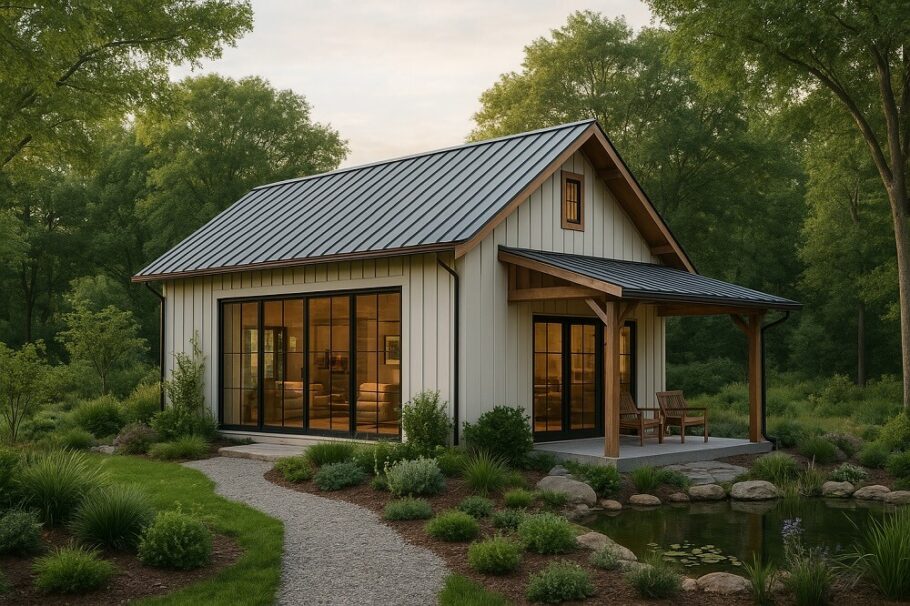
The barndominium lifestyle has taken the residential world by storm, and for good reason. These soaring metal structures blend rural charm with modern efficiency, creating homes that feel both monumental and intimate. But here is where many barndominium owners stumble: the landscaping. Nothing kills that rugged, authentic vibe faster than a suburban lawn with a few token shrubs plopped next to a forty-foot metal building.
The outdoor spaces surrounding a barndominium deserve the same thoughtful design as the interior. This is not about hiding the building or softening its edges into something it is not. This is about creating a conversation between steel, wood, and the land itself.
Start with the Scale of the Structure
Barndominiums are not modest homes. They command attention with their height, their rooflines, and their sheer presence. Landscaping that works for a ranch-style bungalow will look utterly lost against a barndominium wall. The first rule of designing these outdoor spaces is thinking in volume, not just square footage.
Plantings need to have heft. Skip the dainty ornamental grasses and think big: towering sunflowers, mature evergreens, thickets of native shrubs that will grow to eight or ten feet. A single massive boulder carries more visual weight than a dozen small ones scattered about. The landscape should feel like it belongs to the same family as the building—substantial, unapologetic, and grounded.
Hardscaping follows the same logic. Patios and walkways benefit from wider proportions. A four-foot path looks like a garden hose next to a barndominium. Six feet minimum, preferably eight. The same goes for outdoor seating areas. The furniture should not look like it blew in from a tiny city balcony. Sturdy pieces built from reclaimed wood, heavy steel, or thick concrete block hold their own against the building’s industrial character.
Embrace the Industrial Aesthetic Outdoors
The barndominium style thrives on honest materials. Corrugated metal, exposed fasteners, raw timber—these elements tell a story of utility and durability. Outdoor spaces should continue that narrative rather than pivoting to something overly polished.
Consider a fire pit area constructed from salvaged steel plates or railroad ties. A dining table made from a steel gate valve wheel or a spool repurposed from electrical cable. Outdoor lighting in the form of gooseneck fixtures with metal shades, similar to what one might find in an old factory or warehouse. These touches reinforce the aesthetic without resorting to kitsch.
The key is restraint. One or two industrial statement pieces carry more impact than a yard cluttered with rusty relics. A single repurposed grain silo turned into a studio or guest quarters makes a powerful statement. A dozen tractor seats scattered around the patio just looks like a salvage yard.
Let the Surrounding Landscape Do the Heavy Lifting
The most successful barndominium landscapes do not fight the existing terrain. They work with it. If the property sits on prairie, lean into the grasses and wildflowers that already thrive there. If it is wooded, clear only what is necessary and let the forest edge blur into the yard.
Native plantings are not just an ecological choice—they are an aesthetic one. A barndominium looks like it belongs on the land when the plants around it are the same ones growing in the adjacent fields and forests. The transition from building to landscape feels seamless rather than jarring.
This approach also saves money and maintenance headaches. Plants adapted to the local climate do not need constant coddling. No irrigation systems fighting against nature, no fertilizers propping up struggling specimens. Just healthy, resilient growth that looks right because it is right.
Create Functional Zones with Purpose
A barndominium property is typically generous in size, which invites the creation of distinct outdoor rooms. The trick is making these spaces feel connected rather than disjointed.
The primary outdoor living area might sit off the main entrance or the kitchen, featuring a covered porch with deep overhangs that mirror the barn roofline. This space functions as an extension of the interior—a place for dining, entertaining, or simply watching the weather roll across the fields.
Beyond that, consider a working zone. Many barndominium owners appreciate the practicality of their homes and want that same utility outdoors. A designated area for gardening, with raised beds built from corrugated metal or weathered barn wood. A potting shed that echoes the main building’s materials. A chicken coop that looks like a miniature version of the house. These elements add charm without sacrificing the authentic character of the property.
A transition zone between the active areas and the wilder parts of the property can soften the boundary. Think of a meadow of native wildflowers, or a gravel path that meanders through tall grasses before disappearing into the treeline. These in-between spaces prevent the property from feeling like a manicured lawn dropped into the middle of nowhere.
The Right Plants for the Right Places
Choosing plants for a barndominium landscape means balancing toughness with beauty. The plants need to hold their own against wind, sun, and the reflective heat that bounces off metal walls. They also need to look good throughout the seasons.
Ornamental grasses are natural allies here. Their texture contrasts beautifully with smooth metal surfaces, and they move constantly in the breeze, bringing the landscape to life. Varieties like switchgrass, feather reed grass, and big bluestem provide height and drama without requiring much from the gardener.
For year-round structure, evergreens are indispensable. But avoid the predictable foundation plantings of arborvitae and boxwood. Think instead of junipers with interesting form, pines with character, or native cedars that have been growing on the land for generations. These plants feel timeless rather than trendy.
Flowering shrubs and perennials add seasonal interest without needing to be the star of the show. Coneflowers, black-eyed Susans, and butterfly weed bring vibrant color in summer and seed heads that persist through winter. Lilacs and hydrangeas offer old-fashioned charm that complements the barn aesthetic. The goal is a landscape that looks good in December as well as June.
Hardscaping That Feels Built to Last
The barndominium itself makes no apologies for its durability. The outdoor spaces should project the same sense of permanence. This is not the place for flimsy pavers or thin concrete that cracks within a year.
Reclaimed materials are particularly well-suited to this style. Old barn wood makes stunning decking or fencing. Salvaged bricks can become a patio that looks like it has been there for a century. Broken concrete from demolition sites, called urbanite, creates interesting retaining walls and pathways with a rough, honest texture.
Gravel and crushed stone are practical choices that fit the aesthetic perfectly. A gravel driveway or pathway has that agricultural feel while providing excellent drainage. Choose angular stone rather than rounded river rock—it compacts better and looks more substantial. For a more refined look, decomposed granite creates a stable surface with a natural appearance.
Concrete, when used, should be either heavily textured or left with a raw, board-formed finish. Stamped patterns that mimic brick or stone feel dishonest in this context. Let the concrete be concrete, with its natural color variations and subtle imperfections.
Lighting That Extends the Day
Barndominium landscapes come alive at night when the right lighting transforms the property. The scale of these buildings demands fixtures with presence—no tiny path lights here.
Consider mounting large, industrial-style fixtures on the exterior walls. Goosenecks with metal shades, reproduction factory lights, or even actual salvaged warehouse fixtures. These cast warm pools of light that highlight the building’s texture while illuminating the adjacent outdoor spaces.
For pathways and garden areas, low-voltage lighting can be effective when chosen carefully. Look for fixtures with clean lines and simple forms. Avoid anything with ornate details or simulated antique finishes. A straightforward metal stake light with a simple shade fits the aesthetic far better than something trying too hard to be charming.
Uplighting adds drama to the barndominium’s exterior. Position fixtures to graze the corrugated walls, emphasizing the vertical lines and the rhythmic pattern of the metal. This technique is particularly effective on taller buildings where the play of light and shadow becomes a feature in itself.
The Art of Negative Space
One of the most common mistakes in barndominium landscaping is overplanting. The building itself is a bold statement that needs room to breathe. Cramming shrubs and trees right against the foundation clutters the view and diminishes the impact of both the building and the plants.
Give the structure space. A generous setback from the walls allows the eye to take in the full form of the building. It also creates room for practical access—barndominiums often need maintenance on their metal walls and roofing, and dense plantings make that work difficult.
Use negative space strategically. A wide expanse of gravel or lawn in front of the main facade frames the building like a painting. A simple path leading to the entrance cuts through this space with purpose. This approach creates a sense of arrival and ceremony that feels appropriate for such a significant structure.
Water Features with Industrial Flair
Water features can be spectacular additions to a barndominium landscape when they match the aesthetic. Skip the faux rocks and plastic fountains. Think instead of a stock tank turned into a reflecting pool. A steel trough converted to a water garden. A simple basin with a sheet of water cascading over a raw steel edge.
These features work because they use materials that belong in the same world as the building. They also tend to be simpler to install and maintain than elaborate pond systems. A recirculating pump, a basin, and some thoughtful placement can create a focal point that feels completely integrated with the overall design.
For larger properties, a natural pond or wetland area can be enhanced with minimal intervention. Clear out some trees for views, add a simple dock or seating area, and let the water itself do the work. The reflection of a barndominium in still water is one of those images that seems to capture the essence of the lifestyle.
Fencing and Boundaries That Belong
The fencing around a barndominium property should read as functional first and decorative second. This is not the place for white vinyl or ornate wrought iron.
Split rail fencing, post and beam, or simple barbed wire on wooden posts all fit the rural context. For more privacy, consider board fencing with the rough side facing out, or corrugated metal panels mounted between posts. These options maintain the agricultural character while serving their practical purpose.
Gates deserve special attention. A substantial gate at the entrance to the property sets the tone for everything beyond. Consider a sliding gate on a track, similar to what one might see on a working ranch. Or a pair of heavy swing gates that require a moment to open and close—a small ritual that signals arrival.
The hardware matters as much as the structure. Heavy hinges, substantial latches, and chain or rope pulls add authenticity. Avoid lightweight components that feel flimsy against the scale of the gate and the building beyond.
Seasonal Considerations
A barndominium landscape should look intentional in every season. Summer gardens burst with color and fragrance while providing shade and outdoor living spaces. Autumn brings the drama of changing leaves and the warmth of fire pit gatherings. Winter reveals the bones of the design—the structure of the evergreens, the texture of the hardscaping, the stark beauty of bare branches against metal walls.
Plan for each season. Include plants with winter interest like red-twig dogwood, ornamental grasses that hold their form, and evergreens that maintain color. Position outdoor living areas to capture winter sun and summer shade. Consider how snow will accumulate and where it will drift when designing walkways and parking areas.
The barndominium lifestyle connects people to the rhythms of the land. The landscape should honor that connection, changing and evolving through the seasons just as the land itself does.
Making It Your Own
Ultimately, the best barndominium landscaping reflects the people who live there. Some properties will lean heavily into the agricultural roots with vegetable gardens, orchards, and livestock areas. Others will emphasize the industrial aesthetic with salvaged materials and bold sculptural elements. Still others will prioritize wildlife habitat with native plantings and naturalized areas.
The common thread is authenticity. A barndominium landscape should never feel like it is trying to be something it is not. No Mediterranean villa vibes, no English cottage gardens, no suburban perfection. Just honest, durable, beautiful spaces that belong to the land and the building they surround.
The materials should have integrity. The plants should be suited to the place. The design should honor the scale of the structure and the character of the site. When all these elements come together, the result is something remarkable—a home that feels rooted in its place, connected to its history, and perfectly suited to the people who inhabit it.