
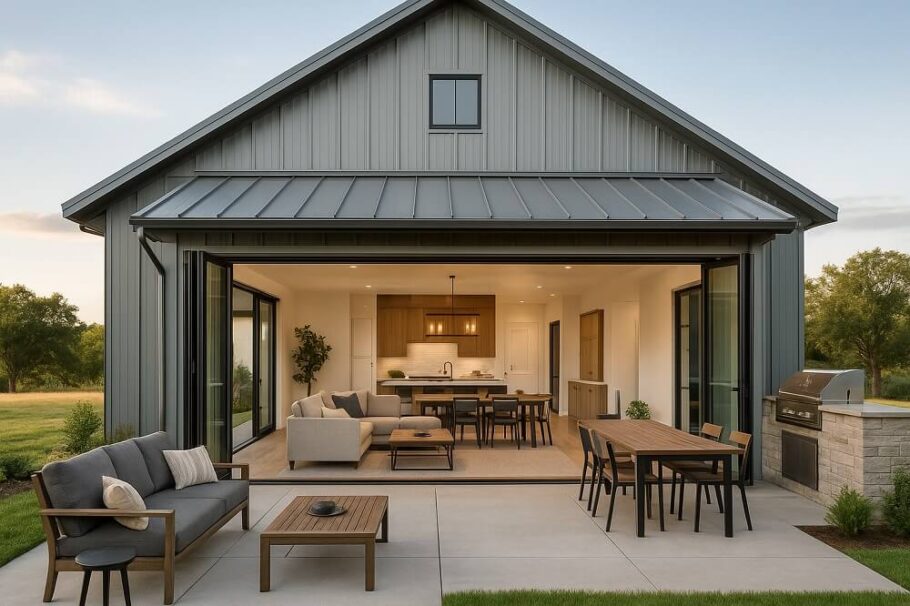
The barndominium has stormed the world of modern architecture, offering an irresistible blend of rustic charm and industrial practicality. Yet, for all its open-concept allure, the vast, soaring great room that defines these structures presents a singular challenge: how does one transform a cavernous space into a series of intimate, purposeful areas without compromising the airy, unobstructed feel that drew one to the style in the first place?
The answer lies in the philosophy of the indoor “outdoor room.” This approach transcends traditional interior design, applying the principles of exterior living—defined boundaries, distinct functions, and a connection to nature—to the interior landscape. It is a strategic methodology for taming the expanse, creating a series of distinct “rooms” that coexist harmoniously under a single, dramatic roof.
The Philosophy of the Internal Expanse
In a conventional home, walls dictate function. The kitchen is separated from the dining room, which is separated from the living room. The barndominium rejects this cellular approach. The great room is a single, continuous volume, often featuring towering ceilings, exposed structural beams, and expansive windows. This is its greatest strength and its most significant design hurdle.
The indoor outdoor room concept does not fight this openness. Instead, it works in concert with it by creating visual anchors and functional zones. This is not about building interior walls; it is about creating a feeling of enclosure and purpose within the larger whole. The result is a space that feels both monumental and intimate, where one can host a large gathering without losing the sense of a cozy nook for quiet conversation. It is about designing for the life lived within, rather than simply decorating a square footage.
Constructing the Framework: The Language of Zones
Creating these distinct zones requires a deliberate and layered design approach. It is a process of subtraction as much as addition, of defining without confining. Several key elements serve as the architects of this internal landscape.
The Power of the Floor Plane
The most direct method for separating zones is through a change in floor level or material. A sunken living area, even by a single step, psychologically creates a distinct “room” separate from the surrounding floor. More practically, varying flooring materials is a powerful and subtle tool.
Consider a designated living area anchored by a large, durable rug or a defined section of wood flooring, differentiating it from the polished concrete of the kitchen and dining zones. The change in texture underfoot and visual transition signals a shift in function. For instance, a large, flat-weave jute rug can define a casual seating area, while a plush, high-pile wool rug signals a more luxurious, relaxed zone for lounging. The material itself speaks to the intended use of the space.
The Strategic Ceiling
The ceiling plane is often overlooked, yet in the cavernous volume of a barndominium, it is a primary tool for defining space. The use of different ceiling treatments can anchor a zone without altering the floor plan.
The classic approach is the use of wood-plank ceilings or beams. Running reclaimed barnwood planks across the ceiling of the living area creates a visual “lid” that lowers the perceived height, making the space feel more intimate and grounded. Contrast this with a sleek, white metal ceiling in the kitchen, which reflects light and enhances the sense of airy openness. The transition from wood to metal across the ceiling creates a clear, visual boundary between the two zones, defining them as separate but connected spaces.
The Furniture as Architecture
In the absence of walls, furniture becomes architecture. A large, sectional sofa does not just provide seating; it creates the back wall of the living area. The orientation of the furniture is critical. A floating sofa, placed with its back to the kitchen, effectively separates the two spaces, creating a natural pathway behind it. A long, low console table placed behind a sofa can further define this boundary, offering a landing spot for decor and a visual barrier that does not obstruct sightlines.
The use of a massive, live-edge dining table can similarly anchor the dining zone. Its sheer physical presence commands the space, creating a central hub around which the rest of the room is organized. The scale of the furniture must be appropriate to the volume of the room. An undersized sofa in a 40-foot-wide great room will look lost, while a substantial, deep-seated sectional will fill the void and create a sense of groundedness.
Creating the “Outdoor Rooms”
With the foundational framework in place, one can begin to assign specific functions to the newly defined zones. These should feel like distinct outdoor “rooms” brought inside, each with its own character and purpose.
The “Covered Patio” Living Area
This is the heart of the great room, the primary gathering space. The design should evoke the relaxed, casual atmosphere of a covered patio. The palette here should lean toward earthy, natural tones: warm beiges, soft greens, and the rich browns of wood and leather.
The furniture should invite lounging. Deep, sink-in sofas, oversized ottomans that function as coffee tables, and a collection of textured throw pillows encourage a sense of relaxation and permanence. The lighting in this zone is key. A statement ceiling fan with wood blades is a practical and aesthetic necessity, reinforcing the indoor-outdoor connection. The absence of a central overhead light forces the use of layered lighting. Floor lamps with large, fabric shades create a warm, ambient glow, while table lamps on side tables provide intimate pools of light for reading or conversation. This zone is about fostering human connection and comfort, mimicking the long, lazy afternoons spent on a favorite porch.
The “Summer Kitchen” Dining and Culinary Zone
In the barndominium, the kitchen is not a hidden service area but a featured social hub. This zone is the culinary command center, designed to function as an expansive outdoor summer kitchen. This means a heavy emphasis on the hood. A large, statement range hood—perhaps crafted from copper, stainless steel, or a custom wood structure—is the architectural centerpiece of this area. It defines the cooking space and acts as a visual anchor.
The island should be massive and multifunctional. It is not merely a countertop but a defining piece of furniture. Its face should be clad in a material that separates it from the cabinetry, such as shiplap, brick, or a contrasting stained wood, to make it feel like a stand-alone piece of outdoor furniture. The dining area adjacent to it should feature a table that can accommodate large groups, reinforcing the idea of communal feasting. Open shelving displaying ceramic dishes and glassware adds to the lived-in, approachable feel of an outdoor kitchen, prioritizing function and display over sterile, closed cabinetry.
The “Screened Porch” Transition Zone
Every great outdoor room has a transition space, a sheltered area that bridges the inside and out. In the barndominium great room, this can be a “screened porch” zone—a space that doesn’t need walls but creates a sense of separation from the more active areas.
This zone might be positioned near the largest windows or a set of sliding glass doors leading to an actual outdoor patio. Furnish it with comfortable, weather-resistant wicker or teak chairs and a small, delicate side table. This is the quiet zone, a place for morning coffee or an evening glass of wine, separate from the bustle of the kitchen and the energy of the main living room. It is a breathing space, a visual pause in the expansive floor plan that feels light, airy, and connected to the outdoor landscape. A large fiddle-leaf fig or a grouping of potted palms within this zone strengthens the connection to the natural world, completing the illusion of an outdoor sanctuary.
The Art of Lighting and Transition
The success of these indoor outdoor rooms hinges on the subtle art of transition. The eye should move seamlessly from one zone to the next, yet each space should feel distinct. Lighting is the primary tool for achieving this.
Dimmers are an absolute necessity. The ability to lower the lights in the living area while keeping the kitchen bright and functional is paramount for creating atmosphere. The use of decorative pendants over the dining table and island provides focused task lighting, while ambient lighting from floor and table lamps creates warmth in the living area. This layering of light is what separates a well-designed open plan from a cavernous, overlit warehouse.
The architecture of the barndominium itself—the massive windows, the exposed wood beams, the tall, open structure—provides a spectacular canvas. The goal is not to cover this up but to use it to the advantage of the zones. A large, sliding barn door can hide a pantry or a home office, adding to the aesthetic while serving a purpose. Large windows framing the living area become the “back wall” of that outdoor room, connecting it directly to the landscape beyond.
The Benefits of the Defined Space
Investing the time and thought into creating these distinct zones yields a home that is not only visually stunning but profoundly more livable. The chaos of a single, undifferentiated space is tamed. There are clear areas for cooking, entertaining, relaxing, and dining, each with its own appropriate scale, lighting, and ambiance.
This approach encourages a more social and integrated family life. The cook is not isolated in a separate room but is part of the conversation, connected to the dining and living areas. Children can do homework at the dining table while parents prepare dinner, with each activity feeling contained within its own zone. The home becomes a stage for daily life, where the grandness of the architecture serves the intimacy of human interaction.
Ultimately, designing an indoor outdoor room is about honoring the spirit of the barndominium. It is about preserving its inherent openness while crafting a functional and emotionally resonant home. It is the realization that a great room is not just about the space itself, but about the life that fills it. By creating these distinct, room-like enclaves, one transforms a building into a home—a place of comfort, connection, and quiet grandeur.