
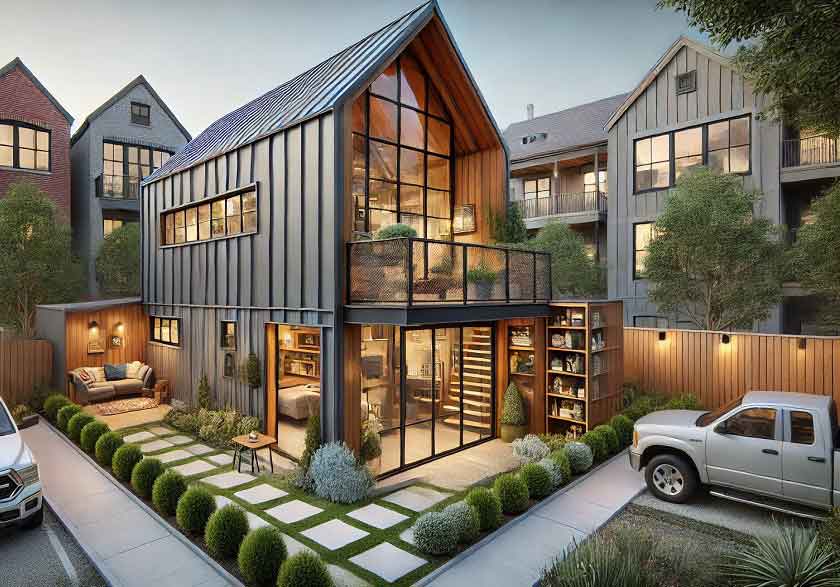
Barndominiums have exploded in popularity for good reason. They offer wide-open spaces, high ceilings, and that perfect blend of rustic charm with modern practicality. But here’s the thing about all that vertical square footage—it practically begs for a loft. Who wouldn’t want an extra sleeping nook, a home office overlooking the main living area, or a cozy reading retreat tucked up high?
The problem is that lofts can go terribly wrong. Too many barndominium owners rush into adding a loft only to end up with something that feels more like a cramped treehouse than a functional living space. The railing feels oppressive. The ceiling closes in. The whole thing turns into a dust-collecting afterthought that nobody actually wants to use.
But a well-designed loft? That changes everything. Done right, a loft adds usable square footage while actually making the main floor feel more expansive. The key lies in a handful of design principles that separate airy, inviting lofts from claustrophobic disasters.
Start With Ceiling Height (And Be Honest About It)
Before cutting a single piece of lumber, take a hard look at the building’s existing ceiling height. This isn’t the place for wishful thinking. A comfortable loft needs at least seven feet of headroom in the walking areas, though seven and a half is better. Any less than that, and even tall guests will find themselves ducking instinctively.
But here’s where most people get tripped up. The ceiling height on the main floor matters just as much as the loft itself. Stealing headroom from below creates a suffocating feeling on the main level. Nobody wants to feel like they’re walking under a low bridge every time they cross the living room.
For a loft that works on both levels, aim for at least fourteen feet of total interior height from slab to ceiling. That gives seven feet below and seven feet above—the absolute minimum. Sixteen feet is where things start getting comfortable, with eight feet on each level. Anything over eighteen feet provides genuine breathing room and design flexibility.
The Railing Makes or Breaks Everything
The fastest way to make a loft feel cramped has nothing to do with the loft itself. It’s the railing. A solid half-wall or a chunky wooden balustrade cuts off sightlines and creates a visual barrier that closes everything in. The main floor loses its connection to the upper level, and the loft feels like a separate cave rather than an overlook.
Glass railings solve this problem better than anything else. Frameless glass panels keep the open feel while providing necessary safety. Yes, they cost more than wooden spindles or cable railings. But for a barndominium where the whole point is open space, glass railings are worth every penny. They disappear visually, letting light flow freely between levels.
If glass isn’t in the budget, thin cable railings with minimal metal frames come in a close second. The key is keeping the visual weight light. Thick wooden posts spaced close together create a jail-cell effect that destroys the open atmosphere. Thin vertical cables or rods with wide spacing preserve sightlines while meeting building codes.
Strategic Light Placement Changes Everything
Dark lofts feel small. Bright lofts feel spacious. This sounds obvious, but most barndominium lofts suffer from terrible lighting plans. The main floor gets all the attention—the big windows, the sliding glass doors, the statement lighting. The loft ends up with a single overhead fixture and maybe a small gable window if the owner remembered.
Natural light needs to reach the loft directly, not just filter up from below. Clerestory windows placed high in the exterior walls bring light deep into the loft space without sacrificing wall space for furniture. Skylights or solar tubes work wonders for interior lofts that don’t have exterior walls on either side. Even a single well-placed skylight can transform a dim loft into a bright, inviting space.
Artificial lighting matters just as much. Recessed lights keep the ceiling clean and unobstructed. Wall sconces provide task lighting without taking up floor space or hanging down into headroom. Avoid pendants or chandeliers in the loft—they eat up precious vertical space and create obstacles to walk around.
Choose the Right Ceiling Shape
Flat ceilings in a loft create a boxy, confined feeling. The eye hits a hard horizontal line and stops there. A vaulted ceiling that follows the roofline changes the entire experience. The eye travels upward along the slope, making the space feel larger than its actual footprint.
Shed roofs work beautifully for lofts. One side slopes up toward the peak while the other remains lower, creating a dynamic asymmetry that feels intentional and spacious. A-frame ceilings with exposed rafters add character while maximizing headroom right down the center line. The trick is positioning the walking path and furniture under the tallest part of the ceiling.
For barndominiums with scissor trusses, take advantage of the angled bottom chords. These create a natural cathedral ceiling effect without requiring custom framing. The loft floor sits on the lower truss chords, while the ceiling follows the upper chords upward toward the center.
Size the Loft Appropriately
Here’s a hard truth that needs saying. A loft that spans the entire width and depth of the barndominium almost always feels cramped, even with plenty of headroom. Why? Because the main floor loses its grand, open character. Looking up and seeing a solid ceiling overhead instead of the roof peak changes the entire spatial perception.
The best lofts occupy no more than one-third to one-half of the building’s footprint. A partial loft leaves the rest of the space open to the full ceiling height, preserving that dramatic barn feel. The main floor retains its volume, and the loft becomes a distinct area rather than a second story trying to hide.
Think in terms of bridges and balconies rather than full floors. A loft that cantilevers out over part of the living room creates visual interest and a sense of floating. The open area below becomes a feature rather than a problem.
Furniture Scale Cannot Be Ignored
A loft that feels cramped often suffers from furniture that’s simply too large for the space. A king-sized bed might fit technically, but it will leave six inches of walking space on either side. A full-sized desk creates a commanding presence that dominates a small loft. Oversized armchairs eat up floor space and make the room feel stuffed.
Low-profile furniture preserves the feeling of height. Platform beds that sit close to the floor keep the sightlines open. Floating shelves replace bulky bookcases. Wall-mounted desks fold away when not in use. Floor cushions and poufs provide flexible seating without permanent bulk.
Every piece of furniture in a loft needs to earn its square footage. If something doesn’t serve a clear purpose, leave it out. Lofts work best with minimal, intentional furnishings that don’t compete for attention with the architecture itself.
Color and Material Choices Matter More Than Expected
Dark colors absorb light and make spaces feel smaller. This isn’t groundbreaking advice, but lofts amplify the effect dramatically. A dark-walled loft feels like a cave. Light walls, ceilings, and floors reflect light around the space, making every square foot feel larger.
White walls with light wood floors create the most spacious feeling. Off-whites like Swiss Coffee or Simply White avoid the sterile look of pure white while keeping things bright. Light gray or beige works too, but keep the value high. Save the dramatic dark colors for accent walls or furniture pieces.
Materials should continue from the main floor rather than changing abruptly. A loft that suddenly switches to different flooring or wall treatments feels disconnected. Consistent materials tie the two levels together visually, making the loft feel like a natural extension of the space below rather than an awkward addition.
Don’t Forget About Airflow
Stale, still air makes any space feel uncomfortable, and lofts are notorious for poor air circulation. Heat rises, so lofts get stuffy in summer. Cold settles, so lofts get chilly in winter. Without proper airflow, the space becomes unpleasant regardless of how well it’s designed.
Ceiling fans are the simplest solution, but they need adequate clearance. A low-profile fan mounted flush to the ceiling works better than a standard fan with a downrod in tight spaces. Even better, install a fan that can run in reverse to push warm air down in winter.
For barndominiums with open lofts, a whole-house fan pulls air up through the space and exhausts it out the roof, creating natural airflow that benefits both levels. Mini-split systems with wall-mounted heads placed strategically in the loft provide dedicated heating and cooling without ductwork.
Storage That Disappears
Open shelving and visible storage clutter create visual noise that makes lofts feel smaller. Every item on display adds to the sense of crowding. Closed storage that hides away belongings keeps the space clean and open.
Built-in drawers under window seats provide hidden storage without taking up extra floor space. Cabinets built into the knee walls—the short walls where the roof slope meets the floor—turn unusable space into valuable storage. A storage bed with drawers underneath eliminates the need for a separate dresser.
The goal is zero visible clutter. If belongings are on display, they need to look intentional and curated, not random. A few well-chosen decorative objects beat a shelf stuffed with miscellaneous items every time.
The Bridge Effect Works Wonders
Sometimes the cramped feeling comes not from the loft itself but from how it connects to the rest of the space. A loft that sits flush against the exterior wall feels more enclosed than one that projects inward like a bridge or balcony.
Extending the loft floor beyond the supporting wall below creates an overhang effect. This projection breaks up the vertical line of the wall below and gives the loft its own distinct presence. The space underneath becomes a defined area rather than just empty air, and the loft feels more intentional and less like an afterthought.
For barndominiums with enough width, two lofts on opposite sides connected by a small bridge creates a stunning architectural feature. The open space between them preserves sightlines and airflow while providing twice the usable square footage.
Know When to Walk Away
Not every barndominium needs a loft. Sometimes the best design decision is leaving the space completely open. A loft added just because there’s room often ends up feeling forced and uncomfortable. The goal isn’t maximizing every possible square foot—it’s creating spaces that actually work.
If the ceiling height is marginal, if natural light can’t reach the upper level, if the main floor will lose its character by adding a loft above—walk away. Build a mezzanine or a small platform instead. Or leave the space open and enjoy the volume. A barndominium with soaring ceilings and no loft still has plenty to offer.
But when the conditions are right—when the height is there, when the light flows through, when the design respects both levels—a loft transforms a good barndominium into a great one. The trick is approaching it with clear eyes and a willingness to sacrifice square footage for the sake of feel. Build it right, and nobody will ever call it cramped.