
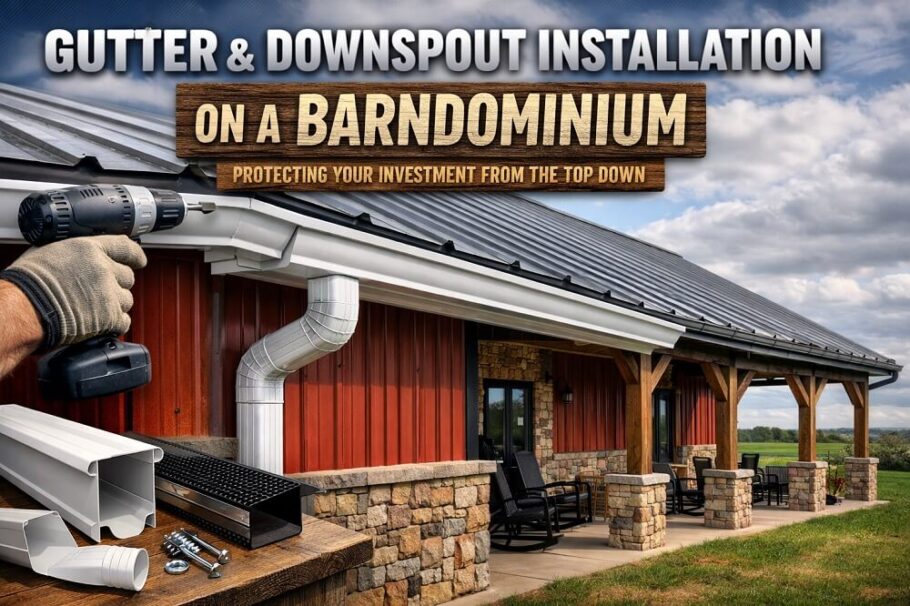
When planning a barndominium build, most attention goes toward major structural elements such as the foundation, framing, roof panels, insulation, and interior finishes. Gutters and downspouts are often treated as an afterthought or pushed to the final stages of construction. Despite this, a properly designed gutter and downspout system plays a critical role in protecting the structure, the foundation, and the surrounding site.
Barndominiums typically have large metal roofs with long eave runs that shed water quickly. Without a well-planned drainage system, rainwater can overwhelm the ground below, leading to erosion, staining, and moisture-related damage. Installing the right system—and installing it correctly—helps prevent long-term maintenance issues and costly repairs.
This guide explains how to design and install effective gutters and downspouts specifically for barndominiums, focusing on performance, durability, and long-term value.
Why Gutters Matter More on a Barndominium
Metal roofs shed water faster than traditional roofing materials. On a barndominium, this creates high volumes of runoff concentrated along long roof edges. Without gutters, water falls directly at the base of the building, saturating soil and splashing against siding and trim.
Several factors make gutters especially important on barndominiums:
- Large roof surface areas generate more runoff during storms
- Long, uninterrupted eaves increase the chance of uneven drainage
- Metal roofing accelerates water flow
- Rural or open sites are more vulnerable to erosion
Over time, uncontrolled runoff can undermine the slab edge, damage walkways, and create muddy conditions around doors and garage openings.
Understanding Barndominium Roof Drainage Challenges
Before choosing a gutter system, it is important to understand how water moves across a barndominium roof. Roof design directly affects where and how water is collected.
Common barndominium roof styles include:
- Gable roofs with long straight eaves
- Monitor-style roofs with multiple elevation changes
- Single-slope or shed roofs
- Combination roofs with porches, lean-tos, or wraparound extensions
Each configuration changes how water flows toward the eaves. Valleys and transitions often concentrate runoff, creating areas that require larger gutters or additional downspouts. Covered patios and shop entrances also need special attention to prevent water from discharging in high-traffic areas.
Choosing the Right Gutter Size for a Barndominium
One of the most common mistakes in barndominium construction is installing gutters designed for standard residential homes. Many barndominiums require larger systems to handle the volume of runoff produced by wide metal roofs.
Typical gutter size options include:
- 5-inch K-style gutters, suitable only for smaller roof areas
- 6-inch K-style gutters, ideal for most full-size barndominiums
- Oversized or 7-inch gutters, recommended for long eaves or high-rainfall regions
- Half-round gutters, often chosen for architectural or aesthetic reasons
Larger gutters reduce the risk of overflow during heavy rain and work more efficiently when paired with properly sized downspouts.
Selecting Gutter Materials for Metal Buildings
The material you choose affects durability, appearance, and maintenance requirements. Barndominiums benefit from gutter materials that can withstand temperature changes, UV exposure, and rural environmental conditions.
Common material options include:
- Aluminum gutters, which are lightweight, corrosion-resistant, and available in seamless designs
- Steel gutters, known for strength and impact resistance but requiring protective coatings
- Copper gutters, offering exceptional longevity and a high-end appearance
- Vinyl or PVC gutters, which are affordable but generally unsuitable for large barndominiums
For most projects, seamless aluminum gutters provide the best balance of performance, cost, and visual compatibility with metal siding.
Downspout Design and Placement Strategy
Downspouts are just as important as the gutters themselves. Even oversized gutters will fail if downspouts are too small or poorly located.
Key downspout considerations include:
- Size, with 3×4-inch downspouts preferred over standard 2×3-inch residential options
- Spacing, typically one downspout every 30 to 40 feet of gutter
- Discharge location, directing water at least 4 to 6 feet away from the foundation
- High-volume areas, such as roof valleys that may need dedicated downspouts
Well-placed downspouts reduce erosion and prevent water from pooling near slabs and walkways.
Installation Best Practices for Barndominium Gutters
Correct installation ensures the system performs as intended over the long term. Gutters that are improperly pitched or inadequately supported can sag, overflow, or pull away from the structure.
Best practices include:
- Maintaining a slight slope toward downspouts, typically about 1/4 inch per 10 feet
- Using heavy-duty hidden hangers spaced no more than 24 inches apart
- Installing gutters beneath proper drip edge flashing to prevent water from running behind fascia
- Allowing for thermal expansion at joints and downspout connections
Attention to these details greatly improves system durability and reliability.
Special Considerations for Snow, Ice, and Heavy Rain
Climate plays a major role in gutter design. In colder regions, snow can slide off metal roofs rapidly and impact gutters if not properly planned.
In these conditions, consider:
- Roof-mounted snow retention systems
- Reinforced gutters and additional hanger spacing
- Heat cables in areas prone to ice buildup
In high-rainfall areas, additional downspouts and oversized gutters help prevent overflow and soil erosion during intense storms.
Gutter Guards and Leaf Protection Systems
Barndominiums are often located in rural or wooded settings where debris buildup is common. Gutter guards help reduce maintenance and prevent blockages.
Popular options include:
- Mesh screens that block leaves and needles
- Solid covers that shed debris over the gutter edge
- Foam inserts for budget-friendly protection
While no system is completely maintenance-free, gutter guards significantly reduce cleaning frequency.
Maintenance and Long-Term Care
Routine inspection and maintenance are essential to keeping gutters functioning properly. A small amount of upkeep goes a long way in preventing structural issues.
Recommended maintenance tasks include:
- Inspecting gutters at least twice per year
- Checking hangers and fasteners for looseness
- Clearing downspouts of obstructions
- Monitoring soil conditions near discharge points
Addressing minor issues early helps avoid expensive repairs later.
Planning Gutters Early in the Barndominium Design Phase
Planning gutters during the design phase allows for better integration with the building’s structure and appearance. Early coordination improves both performance and aesthetics.
Early planning makes it easier to:
- Design fascia and trim for proper mounting
- Conceal downspouts where desired
- Incorporate underground drainage solutions
- Avoid retrofits after exterior finishes are installed
Treating gutters as a core system rather than an accessory leads to better long-term results.
Final Thoughts on Gutter and Downspout Installation for Barndominiums
Gutters and downspouts may not be the most visually exciting part of a barndominium, but they are essential for protecting the building and the site around it. Large metal roofs require drainage systems that go beyond standard residential solutions.
By selecting the correct gutter size, choosing durable materials, properly sizing downspouts, and following proven installation practices, you protect your foundation, reduce maintenance issues, and extend the life of your barndominium.