
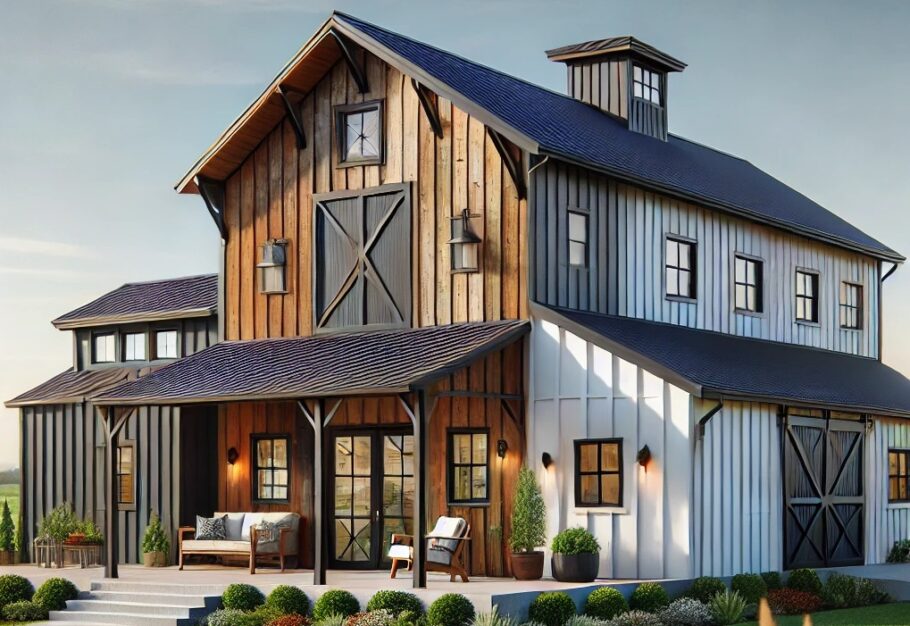
There is something undeniably satisfying about pulling a beautiful piece of history from a pile of discards and giving it a second life. That feeling gets even better when that salvaged piece ends up as a standout feature in a brand new barndominium. The barndominium trend has taken the housing world by storm, offering wide-open floor plans, steel construction, and a blank canvas for creativity. But a brand new barndominium can sometimes feel a little too clean, a little too sterile. That is where salvage yards come into play.
Walking through a salvage yard is not a trip to a big box store. There is no polished showroom or neatly stacked inventory. Instead, there are piles of rusty beams, stacks of weathered boards, bins of mismatched hardware, and rows of old windows caked in dust. Most people drive right past. But for those building a barndominium, that yard is a goldmine. The key is knowing which used materials actually perform well in a new build and which ones are better left behind. Not every old thing belongs in a new structure, especially one with the unique demands of a barndominium.
Why Salvage Belongs in a Barndominium
Barndominiums already blur the line between agricultural function and modern living. That hybrid nature makes them the perfect candidate for reclaimed and salvaged materials. A farmhouse sink in a suburban tract home can feel forced. In a barndominium, it just fits. The same goes for old barn wood, factory cart wheels turned into coffee tables, or corrugated tin ceilings. Salvage adds soul.
Beyond aesthetics, there are practical reasons to go this route. Salvaged materials often cost a fraction of what new equivalents run. They also come with a story and a level of craftsmanship that modern manufacturing rarely matches. Old-growth lumber is denser and more stable than today’s fast-grown timber. Cast iron fixtures from the 1920s will outlast anything stamped out last year in a foreign factory. And the environmental angle cannot be ignored. Keeping usable materials out of landfills while avoiding the energy cost of producing new ones is a genuine win.
Wood: Beams, Boards, and Barn Siding
Wood tops the list of salvage yard treasures for a barndominium. The trick is knowing which wood to grab and how to inspect it.
Heavy timber beams from old factories, warehouses, or grain elevators are absolute gold. These beams are often Douglas fir, old-growth pine, or oak that has been drying for decades. They show minimal checking and warping compared to new green timbers. Use them as exposed ceiling joists, beam wraps, or even as structural posts if an engineer gives the nod. Look for beam ends that are solid, no soft spots from rot, and no signs of powderpost beetles. A few nail holes or bolt holes add character. A spongy end means walk away.
Barn siding is the classic barndominium salvage score. Those long, weathered boards with remnants of red paint or grayed-out patina make incredible accent walls, wainscoting, or sliding barn doors. The best pieces come from the interior of old barns where the weather had less chance to do damage. Check for extensive dry rot by poking with a screwdriver. A little surface weathering is fine. Deep crumbly rot is not. Also watch for hidden hardware like old nails that can ruin a saw blade. A metal detector wand pays for itself quickly.
Flooring from salvage yards is trickier but can work beautifully. Old heart pine flooring, maple gym floors, or oak strip flooring can be refinished and installed in a barndominium great room or loft. The challenge is thickness. Used flooring often gets sanded down so many times that the tongue and groove becomes compromised. Look for flooring that still has at least a half inch of wood above the groove. Also, acclimate any wood flooring to the barndominium’s interior environment for several weeks before installation to avoid surprises with expansion or contraction.
Metal Roofing and Corrugated Panels
A barndominium practically begs for metal. On the roof and on accent walls, corrugated steel or tin adds an unmistakable agricultural edge. Salvage yards often have piles of it.
Corrugated roofing panels from old tobacco barns or machine sheds bring instant authenticity. The rust patterns, the wavy dips, the occasional bullet hole—that cannot be faked. Use these panels on a vaulted ceiling, as a kitchen backsplash, or as wainscoting in a mudroom. For exterior use on a new barndominium, think carefully. Rust will continue to rust unless sealed. Clear coat or a low-sheen exterior polyurethane can lock in the patina while stopping active corrosion. On a roof itself, avoid heavily rusted salvage panels. Leaks are not worth the look. Stick to newer salvage panels or factory seconds for roof decking.
Standing seam metal shows up at salvage yards too, usually from commercial building tear-downs. This is premium stuff if the clips and seams are still functional. For a barndominium’s main roof, new metal is the safer bet. But for a porch roof, a shed dormer, or a smaller outbuilding, salvaged standing seam can save serious money. Check that the panels are not oil-canned or wavy from poor original installation.
Windows: Letting the Light In Without Letting the Cash Out
New windows for a barndominium can bankrupt a project fast. Salvage yards offer an alternative, but only for the patient and the careful.
Old wooden double-hung windows have a charm that vinyl can never touch. But they are terrible insulators unless restored and paired with storm windows. For a barndominium in a cold climate, skip single-pane antiques for the main living areas unless planning to add interior or exterior storms. For a workshop area, a screened porch, or a non-climate-controlled space, those old windows are perfect.
Commercial steel windows from old schools or factories are a different story. These are tough, thin-profile, and surprisingly efficient when fitted with modern insulated glass units. Some salvage yards specialize in these. The frames can be sandblasted and powder-coated or painted. The pivot hinges and latches are often rebuildable. For a modern barndominium with an industrial edge, a bank of salvaged steel casement windows is a showstopper.
What to avoid in salvage windows includes any frame with dry rot, any glass that is permanently fogged between panes (if double-pane), and any unit missing critical hardware that cannot be replaced. Also, bring a tape measure. Nothing is more frustrating than hauling home a gorgeous window only to find it fits nothing. Standardizing sizes across the salvage search makes life easier.
Doors: Entryways With Attitude
Doors take a beating in their first life, which means salvage yards have plenty of them. The trick is finding the ones with life left to give.
Old factory doors with windows, often called “commercial flush doors,” are fantastic for interior openings in a barndominium. They are heavy, solid, and usually built like tanks. The windows bring borrowed light between rooms. Look for doors with intact cores. Some old doors are hollow or have crumbling particle board interiors. Tap on them. A solid thud is good. A hollow drum sound is not.
Bare wood doors from old houses—four-panel, six-panel, or simple plank styles—can be stripped and refinished for bedroom or bathroom doors in a barndominium. The standard width of old doors is often narrower than modern codes require. For a primary bedroom doorway, 36 inches is now typical. Many old doors are 30 or 32 inches. That is fine for closets, pantries, or secondary bedrooms. Measure door openings before falling in love with a door.
Exterior entry doors from salvage require the most caution. A barndominium needs security and insulation. An old solid wood door can provide both if it fits tightly and has no rot. Check the bottom edge especially. That is where moisture kills doors. Also, verify the door jamb and threshold are included or can be matched. A door alone is useless without the frame it swings in.
Plumbing Fixtures and Hardware
Salvage yards hide gems in bins and on back shelves. The plumbing and hardware sections often reward the patient digger.
Vintage faucets from the 1920s through the 1950s are works of art. Brass bodies, porcelain handles, sculptural forms. Many can be rebuilt with new washers and seats. The catch is compatibility with modern plumbing codes. Some old faucets lack the anti-scald or backflow prevention features required in new construction. For a barndominium on a private well system with no municipal inspections, that may not matter. For a permitted build in a jurisdiction, check with the local inspector first.
Cast iron sinks are heavy, tough, and beautiful. A salvaged farmhouse apron-front sink is the holy grail of barndominium kitchens. They weigh hundreds of pounds, so the cabinet below needs reinforcement. The enamel finish may be chipped. That is a dealbreaker for some and a character mark for others. For a utility sink in a mudroom or shop, even a cracked enamel sink works fine.
Towel bars, hooks, and door hardware from salvage yards can pull a whole barndominium together. Old glass knobs, brass hinges, and cast iron coat hooks add texture. Most of these pieces just need a soak in white vinegar or a quick run through an ultrasonic cleaner. Replace missing screws with new ones that match the patina as closely as possible.
Lighting and Electrical
Here is where salvage gets tricky. Old electrical components are not safe by modern standards. But the housings and fixtures can be rewired.
Vintage light fixtures from the 1950s and earlier have glass shades, brass chains, and cast iron bases that new fixtures try to copy and rarely match. A competent electrician can rewire any fixture to modern standards. The cost of rewiring runs twenty to fifty dollars per fixture depending on complexity. Even with that added expense, a salvaged art deco ceiling light usually costs less than a cheap new one from a home center.
Avoid old wiring, outlets, switches, and fuse boxes. The insulation on old wires crumbles. Old outlets lack grounding. Fuse boxes are fire hazards compared to modern breaker panels. Leave those in the salvage yard. Take only the decorative housings and replace everything electrical inside with new components.
Porcelain sockets and industrial light shades are fair game. These often come from old garages or factories. A bare porcelain socket with a cage around it makes a perfect light over a barndominium workbench. The wiring inside is so simple that replacement is trivial.
Structural Steel and Brackets
Barndominiums use steel framing more often than wood these days. Salvage yards can feed that appetite.
Steel I-beams and C-channel show up from demolished industrial buildings. For a barndominium with a clear-span great room or a mezzanine loft, salvaged steel can handle the load. The trick is certification. New steel comes with mill test reports that engineers rely on for load calculations. Salvaged steel has no papers. A structural engineer can test a sample or specify a generous safety factor. It adds cost but still often beats buying new beam stock.
Angle iron, flat bar, and brackets are low-risk salvage. Use them for shelving, stair stringers, railing supports, or welding projects around the barndominium. Rust on the surface is fine. Pitting that reduces thickness is not. A simple wire brush or sandblasting cleans most surface rust.
What to Leave Behind
Not every salvage score is a winner. Some materials should stay in the yard no matter how tempting the price.
Old insulation of any kind. Fiberglass, rock wool, foam board—all of it. Insulation degrades, settles, and can harbor mold, pests, or asbestos. Buy new insulation. It is not that expensive and the health risks of old stuff are real.
Plywood and OSB that has been stored outside. Delamination and water damage make these structurally useless. They are not worth hauling.
Old carpet or padding. Even if it looks clean, decades of dirt, dust mites, and unknown spills live in that carpet. No salvage carpet belongs in a new barndominium.
Galvanized water pipe. Used for plumbing in old houses, this pipe rusts from the inside out. What looks fine on the outside can be nearly closed off with rust on the inside. For decorative purposes, fine. For actual water delivery, never.
Making the Score Work
Finding great salvage is only half the battle. The other half is cleaning, treating, and installing it correctly in a new barndominium build.
Inspect everything before bringing it home. Look for rot, rust-through, cracked castings, and loose joints. A little restoration work is part of the fun. A complete rebuild is usually not worth the time.
Clean salvage materials properly. Barn wood often comes with barn dust, mouse droppings, and decades of grime. A stiff brush, a vacuum with a HEPA filter, and a wash with diluted bleach or oxalic acid (wood bleach) makes a difference. Metal needs degreasing and possibly a rust converter treatment before paint or clear coat.
Store salvage correctly until ready to install. Dry, flat, off the ground. Wood needs to acclimate. Metal needs to stay dry to avoid accelerating rust.
Have a backup plan. A salvage-dependent build can stall if a critical piece turns out to be unusable. Purchase extras, or design flexibility into the barndominium so that a different size window or a different beam can substitute without wrecking the whole look.
The Bigger Picture
Building a barndominium is already an exercise in thinking differently about what a home can be. Bringing in salvaged materials pushes that thinking further. The result is a home that no catalog can replicate. Every piece of old barn wood on a feature wall tells a story. Every repurposed factory window throws light across a floor where nothing like it existed before.
Salvage yards reward patience, knowledge, and a willingness to get a little dirty. The scores are out there. Old beams that cost a fraction of new ones. Windows with wavy glass that cannot be reproduced. Hardware with heft and detail that vanished from mass production decades ago. For a barndominium, those pieces are not just materials. They are the difference between a new building and a home with a past.