
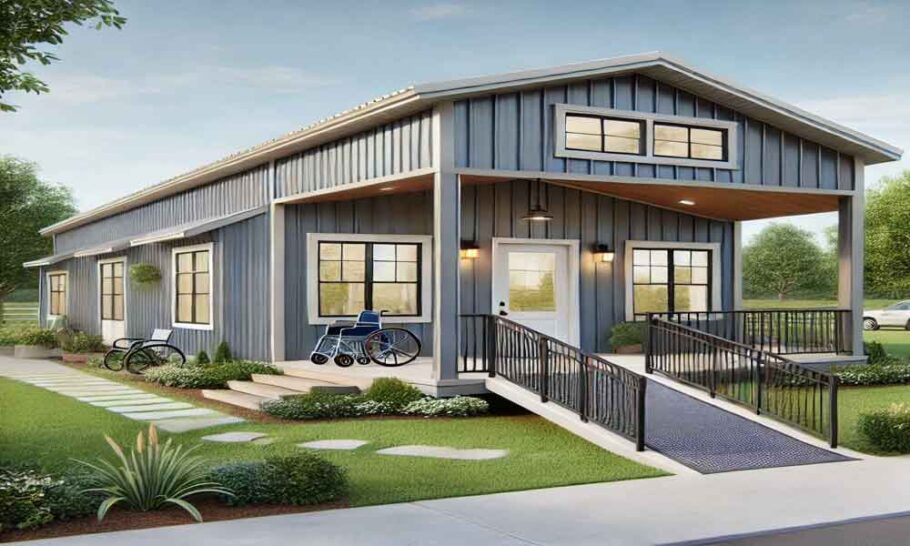
The barndominium has earned its reputation as a rugged, cost-effective hybrid dwelling—steel siding, open floor plans, and that unmistakable blend of workshop grit with living space comfort. But put one in a flood zone, and suddenly those wide-open ground floors become liabilities rather than assets. Standard post-frame construction wasn’t born with flood resilience in mind. Yet thousands of these structures now sit in AE, VE, or A zones, often built by owners who didn’t fully grasp what floodplain compliance actually demands.
Here’s the reality that catches most people off guard: FEMA and local floodplain administrators don’t care much about pretty finishes or soaring ceilings. They care about hydraulic forces, buoyancy, debris impact, and repetitive loss prevention. For a barndominium to survive—and legally exist—in a high-risk flood area, two engineering strategies dominate the conversation: breakaway walls beneath elevated living spaces, and critical utilities positioned where rising water simply cannot reach them. Get these wrong, and the structure becomes uninsurable, unpermittable, and genuinely dangerous.
The Fundamental Problem with Ground-Floor Barndominium Spaces
Traditional barndominium designs often place the main living quarters on a single slab, or they use a raised slab with minimal crawlspace. In flood zone terminology, that’s a problem. Any enclosed area below the Base Flood Elevation (BFE) receives intense scrutiny. If someone intends to use that lower level for storage, a workshop, or parking, the regulations demand that the enclosure cannot impede floodwaters. No permanent walls that trap water, no finished surfaces that wick moisture upward, and absolutely no habitable space below the BFE.
But barndominium owners love their ground-level shop space. That’s the entire point of the building type for many people. So how does one reconcile the desire for enclosed lower areas with regulations that essentially want water to flow through unobstructed? The answer lies in breakaway walls—a concept borrowed from coastal construction but increasingly applied to riverine flood zones as well.
Engineering Breakaway Walls That Actually Work
A breakaway wall sounds almost too simple. It’s a wall designed to fail. But intentional failure requires precision engineering. The wall must stand up to everyday wind loads, accidental vehicle bumps, and typical workshop activity. Yet when floodwaters rise and exert lateral pressure, that same wall must release, collapse, or hinge open without compromising the structural frame above.
The typical approach uses frangible connections—think stainless steel bolts or galvanized shear screws that pass through the wall framing into the post-frame columns. Under normal conditions, these fasteners hold everything rigid. But at a calculated hydrostatic pressure (usually between 10 and 20 pounds per square foot, depending on local codes), the fasteners shear off, or the wall panels themselves fracture along scored lines.
Materials matter enormously here. Pressure-treated plywood or OSB with vertical scoring allows panels to break into manageable sections. Some designers specify marine-grade polymer panels that hinge outward rather than shattering, which reduces debris generation. The frame itself—the horizontal girts and vertical studs within the breakaway section—needs to be sacrificial. Light-gauge steel or untreated dimensional lumber works because nobody expects to reuse those components after a major flood.
The critical piece that separates good breakaway design from bad: venting even within the breakable sections. Small flood vents equalize water pressure on both sides of a wall before it reaches the failure threshold. That pressure equalization often prevents premature collapse during slow-rise flooding, reserving the breakaway function for sudden surge events or high-velocity flow conditions.
Elevating Utilities Beyond the Reach of Floodwater
Breakaway walls handle the structural side of flood adaptation. But utilities determine whether a barndominium becomes livable again within weeks or condemned into a gut renovation. The rule is brutally simple: everything mechanical, electrical, and plumbing-related must sit above the Design Flood Elevation (DFE), which typically adds one to two feet of freeboard above the BFE.
For a barndominium on pilings or a raised stem wall foundation, that means the first floor elevation might sit eight or ten feet above grade. But utilities still need to reach down to the slab-level workshop or garage. This creates a vertical distribution challenge that many owners underestimate.
Start with the electrical panel. No subpanels below the DFE. None. That means the main service panel goes on an elevated platform—often a mezzanine level within the barndominium’s open volume—or mounts directly to an upper wall section with conduit dropping down through sealed penetrations. Those penetrations require expandable firestop seals that also accommodate pipe movement during flooding without breaking apart.
HVAC equipment presents an even stickier problem. Package units on ground-level pads are outright illegal in flood zones. But lifting an air conditioner onto a roof platform creates maintenance access nightmares, and rooftop units in hurricane-prone areas face wind load issues that many barndominium roofs aren’t designed to handle. The better solution uses split systems with condensing units mounted on elevated steel frames attached to the main posts. Four to six feet of clearance underneath allows floodwater passage while keeping the equipment dry. Air handlers go in attic spaces or on elevated interior platforms, never in crawlspaces or basements.
Water heaters deserve special attention. Tankless units mounted high on workshop walls often sit above the DFE while still serving ground-floor fixtures. But the gas lines feeding them need shutoff valves at the elevation where the line first enters the building—above flood level, always. For tank-style heaters, nobody should attempt to elevate those heavy cylinders on wooden platforms. Engineered steel stands bolted into the post-frame columns provide the necessary stability, with flexible gas connectors and dielectric water line unions that accommodate minor building movement.
The Hidden Complexity of Flood-Adaptive Barndominium Slabs
Where most flood-adaptive designs fall apart is at the transition between elevated living space and ground-level workshop slabs. The slab itself—that massive concrete floor everyone wants for vehicle storage and heavy equipment—becomes an anchor in more ways than one. Concrete slabs float, crack, and shift during flood events. They also trap sediment and contaminants that turn post-flood cleanup into a hazmat situation.
One emerging strategy uses elevated deck slabs suspended from the post-frame structure rather than poured on grade. This approach costs more upfront but eliminates the flood-induced slab failure problem entirely. The barndominium’s lower level becomes a true open area with nothing more than compacted gravel or permeable pavers on the soil below. Water flows through, sediment washes out, and cleanup involves a pressure washer rather than a jackhammer.
For owners committed to a traditional slab on grade, the code path requires flood openings—those familiar vent covers that allow water to pass through foundation walls. But here’s the nuance most builders miss: flood openings require net open area calculations based on the total enclosed square footage. A 2,000-square-foot workshop needs a surprising amount of venting, often more than looks aesthetically reasonable. Engineering the slab edge forms to incorporate screened openings that double as breakaway wall anchors solves two problems at once.
Material Selection for Post-Flood Survivability
Builders who understand flood zones know that drying capability determines long-term viability. Closed-cell spray foam on elevated floor framing resists water absorption but traps moisture against structural members if flooding comes from below. Open-cell foam allows drainage but holds contaminants. The better approach for barndominiums in flood zones? No insulation in the elevated floor cavity at all. Instead, insulate the walls above the DFE and accept that the raised floor itself remains unconditioned space beneath the living level.
For lower level workshop finishes, forget drywall entirely. Cement board with taped and floated seams handles repeated wetting better than any gypsum product. Stainless steel fasteners throughout—every screw, every nail, every bracket. Galvanized hardware corroses within years of exposure to brackish floodwater, while stainless holds up for decades. The cost difference stings at build time but pays for itself after the first serious flood event when nothing needs replacement.
Navigating Local Approvals Without Losing Your Mind
Permitting a flood-adaptive barndominium requires engineering letters, not just drawings. A registered professional engineer must seal the breakaway wall calculations, specifying failure pressures, fastener schedules, and panel thicknesses. The local floodplain administrator will likely request hydraulic modeling showing that the breakaway walls don’t divert flow onto neighboring properties. That modeling costs money and time, but skipping it guarantees permit denial.
Elevation certificates become permanent attachments to the property deed. Every barndominium in a flood zone needs one before construction starts, another at completion, and another after any substantial improvement. The certificate documents the lowest floor elevation, utility elevations, and flood opening compliance. Lenders won’t touch a flood zone property without a current certificate, and FEMA’s National Flood Insurance Program requires it for any subsidized policy.
Here is where many barndominium owners make a critical error: assuming that elevating the living space and adding breakaway walls automatically qualifies the lower level as a garage or storage area with no further restrictions. Not quite. If that lower level has finished walls, climate control, or any finishes beyond bare concrete and exposed framing, regulators reclassify it as living area. The line between workshop and habitable space matters enormously. Keep the lower level rough, uninsulated, and clearly non-residential in all finishes. No carpet scraps, no plywood paneling, no space heaters. Visible structural elements and bare floors send the right message during inspection.
The Real-World Performance Question
Breakaway walls work exactly as designed in actual flood events—when installed correctly. Post-event assessments from Hurricane Harvey and Hurricane Ian show that properly engineered breakaway panels reduce structural loading on main columns by 60 to 80 percent compared to rigid walls. Barndominiums with these systems experienced far less foundation movement and post-frame racking than those with traditional enclosed ground floors.
But the aftermath reveals something engineers don’t always advertise. Replacing breakaway walls after a flood isn’t a simple screw-in job. Floodwater deposits silt, debris, and biological contaminants inside the wall cavities. The attachment points on the main columns may need cleaning and inspection for corrosion. Some jurisdictions require full replacement rather than repair because the original failure calibration no longer applies after one use.
That reality pushes some owners toward a different philosophy: no breakaway walls at all, just an entirely open lower level. No walls means no failure points, no replacement costs, and no arguments with inspectors about vent sizing. For barndominiums in high-velocity flow zones like coastal VE zones, open foundations aren’t just optional—they’re mandatory. Breakaway walls only appear in A zones where wave action isn’t a primary concern.
Final Thoughts on Building Smart in Flood Country
The barndominium’s inherent flexibility makes flood adaptation easier than with conventional stick-frame houses. Post-frame construction already separates structural loads at discrete column locations, leaving wall bays open for breakaway panels or flood vents. The tall ceiling heights common to barndominiums provide natural space for elevated utilities and mezzanine-level equipment rooms. And the aesthetic tolerance for exposed industrial finishes means flood-resilient materials don’t clash with the design language.
But none of these advantages matter without proper engineering documentation and a willingness to sacrifice some ground-floor usability for safety and compliance. The workshop space below the BFE will never feel like a traditional finished garage. It will have gaps, vents, removable panels, and a general roughness that disturbs owners expecting a polished retail-style space. That is the trade-off. Accept it upfront, design accordingly, and the barndominium becomes one of the most flood-resilient building types available. Ignore the constraints, and the first flood turns a dream home into a legal and financial nightmare that no amount of insurance money can fully erase.