
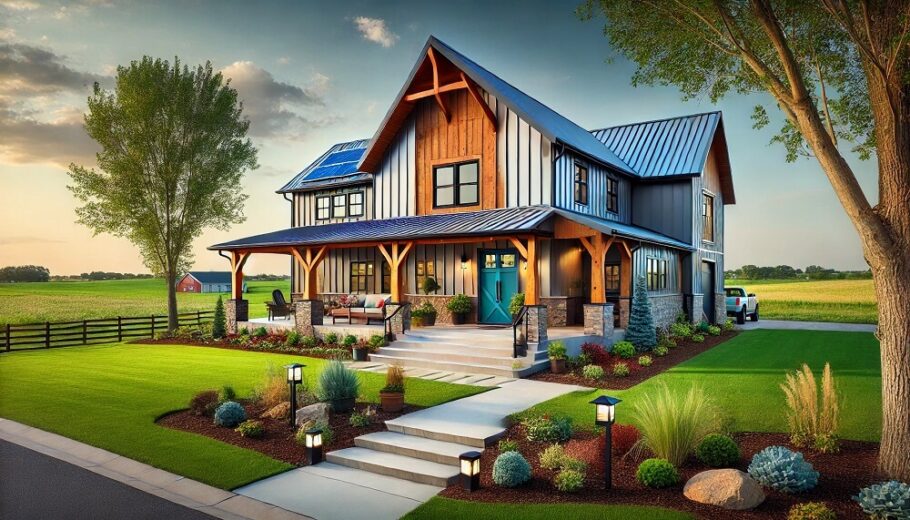
Flooding is no longer a rare, once-in-a-generation event. For many regions—coastal plains, river valleys, agricultural lowlands, and hurricane-prone zones—floodwater is a recurring design condition. As climate patterns shift and extreme rainfall events intensify, homeowners and builders are being forced to rethink how structures interact with water.
Barndominiums, with their steel frames, open spans, and flexible layouts, are uniquely suited to flood-adaptive design—if engineered correctly. Flood-adaptive barndominium design is not about resisting water at all costs. It’s about anticipating inundation, minimizing damage, preserving structural integrity, and enabling fast recovery.
This article dives deep into the engineering principles, structural strategies, material choices, and regulatory considerations that define flood-adaptive barndominium design. Whether you are building in a FEMA flood zone or simply planning for long-term resilience, these concepts are essential.
Understanding Flood Risk Before Design Begins
Flood-adaptive engineering starts with risk assessment, not with materials or floor plans.
Every site behaves differently during a flood. The depth, duration, velocity, and frequency of floodwater all influence design decisions. Engineers must understand whether flooding is driven by river overflow, storm surge, flash flooding, or groundwater rise.
Key site-specific factors include:
- Base Flood Elevation (BFE)
- Historical flood depths and duration
- Soil permeability and erosion risk
- Floodwater velocity and debris load
- Potential for scour around foundations
For barndominiums, which often sit on rural or semi-rural land, flood risk can be underestimated. Agricultural drainage systems, upstream development, and changing rainfall patterns can turn “safe” land into flood-prone land over time.
Designing for flood adaptability means designing for the future flood, not the last one.
Elevation as the First Line of Defense
The most effective flood mitigation strategy is simple in concept: keep the living space above floodwater.
Elevating a barndominium above the Base Flood Elevation—often with additional freeboard—is foundational to flood-adaptive engineering.
Raised Structural Platforms
Barndominiums lend themselves well to elevated construction because steel framing can efficiently span between raised supports. Common elevation strategies include:
- Pier and beam foundations
- Elevated steel columns on deep footings
- Structural podium decks above flood level
By lifting the occupied space, floodwater is allowed to pass underneath the structure without exerting damaging hydrostatic pressure.
Freeboard Engineering
Freeboard refers to building higher than the minimum required elevation. Engineers often recommend 1 to 3 feet of freeboard above BFE to account for:
- Wave action
- Debris buildup
- Future flood level increases
This added elevation significantly reduces insurance costs and long-term risk.
Foundation Systems Designed for Inundation
Traditional slab-on-grade foundations are vulnerable in flood-prone areas. Hydrostatic pressure can crack slabs, while saturated soils can lead to settlement and failure.
Flood-adaptive barndominiums rely on foundation systems that remain stable when submerged.
Deep Piers and Piles
Concrete or steel piers extend below the zone of soil scour, anchoring the structure into stable strata. These systems:
- Resist uplift forces
- Allow water to flow around them
- Reduce lateral pressure buildup
Steel column barndominiums integrate naturally with pier foundations, making them ideal for flood zones.
Breakaway Foundation Enclosures
If enclosed areas exist below the elevated living space—such as storage or parking—they should be designed as sacrificial zones.
Breakaway walls are engineered to fail under flood pressure without damaging the primary structure. This prevents water from pushing against rigid walls and transferring force into the frame.
Structural Engineering for Flood Forces
Floodwater exerts more than just vertical pressure. Lateral forces, buoyancy, and debris impact must all be addressed.
Buoyancy Resistance
Even heavy buildings can float if floodwater surrounds enclosed spaces. Engineers counteract buoyancy through:
- Open foundation designs
- Flood vents in enclosed areas
- Structural anchoring systems
Steel-framed barndominiums excel here, as their load paths can be precisely engineered from roof to foundation.
Lateral Load Path Design
Fast-moving floodwater behaves like a horizontal wind load. Structural systems must transfer these forces safely into the ground.
Flood-adaptive barndominiums use:
- Moment frames
- Braced steel frames
- Rigid column-to-footing connections
These systems prevent racking, twisting, and progressive collapse during flood events.
Flood-Resistant Materials and Assemblies
Materials below the design flood elevation must tolerate wetting, drying, and contamination without degradation.
Steel Framing Advantages
Steel is inherently flood-resilient:
- It does not rot or swell
- Strength remains intact after drying
- It resists mold growth
However, corrosion protection is essential. Flood-adaptive designs specify:
- Hot-dip galvanized steel
- Epoxy-coated structural components
- Stainless steel fasteners in critical zones
Wall and Finish Systems Below Flood Level
Materials used below flood elevation should be considered expendable or washable, not precious.
Common flood-resilient materials include:
- Concrete masonry units
- Fiber cement panels
- Pressure-treated lumber
- Closed-cell spray foam insulation
Drywall, traditional insulation, and wood finishes should be avoided below flood level or detailed for easy replacement.
Flood-Adapted Mechanical, Electrical, and Plumbing Systems
Many flood losses occur not from structural failure, but from damaged building systems.
Elevated Utilities
Critical systems must be placed above flood elevation:
- Electrical panels
- HVAC equipment
- Water heaters
- Backup power systems
In barndominiums, mechanical lofts and mezzanines make elevated system placement efficient and accessible.
Flood-Resistant Electrical Design
Electrical systems below flood level should:
- Use sealed conduit
- Include quick-disconnect components
- Be designed for safe shutdown before inundation
This allows for faster post-flood re-energization without full system replacement.
Designing Ground Levels to Accept Water
A flood-adaptive barndominium does not fight water at ground level—it welcomes it strategically.
Flow-Through Design
Open ground levels allow water to move freely, reducing pressure and structural stress. Typical uses include:
- Vehicle parking
- Equipment storage
- Agricultural use
- Open workshops
These spaces are detailed with durable finishes and minimal permanent fixtures.
Drainage and Wash-Down Strategy
Post-flood recovery is accelerated when ground levels:
- Slope toward drains
- Use smooth, washable surfaces
- Avoid concealed cavities
Designing for clean-out is just as important as designing for survival.
Site Engineering and Landscape Integration
Flood-adaptive design extends beyond the building footprint.
Grading and Water Pathways
Site grading should guide floodwater around and under the structure, not toward it. Engineers use:
- Swales and channels
- Raised building pads
- Reinforced drainage paths
Poor site design can undermine even the best structural system.
Erosion and Scour Protection
Floodwater can remove soil from around foundations. Protection strategies include:
- Riprap placement
- Geotextile reinforcement
- Vegetated stabilization zones
These measures preserve foundation integrity over repeated flood cycles.
Regulatory Considerations and Insurance Implications
Flood-adaptive barndominium design must align with local and federal regulations.
FEMA Compliance
In the United States, FEMA floodplain regulations dictate:
- Minimum elevation requirements
- Foundation types
- Allowable materials below BFE
Designing beyond minimum compliance often results in lower insurance premiums and higher resale value.
Resilience as a Financial Strategy
While flood-adaptive design may increase upfront costs, it dramatically reduces:
- Repair expenses
- Downtime after floods
- Insurance claims
- Long-term depreciation
For barndominium owners, resilience is not just protection—it’s an investment.
The Future of Flood-Adaptive Barndominiums
As flood risk expands geographically, flood-adaptive engineering will become standard practice rather than a specialty.
Emerging strategies include:
- Amphibious foundation systems
- Modular elevated living pods
- Smart flood monitoring integration
- Hybrid steel-concrete resilient frames
Barndominiums, with their structural efficiency and design flexibility, are poised to lead this evolution.
Conclusion: Engineering for Coexistence With Water
Flood-adaptive barndominium design represents a shift in mindset. Instead of asking how to keep water out at all costs, engineers ask how the structure can remain safe, functional, and recoverable when water arrives.
Through elevation, resilient foundations, flood-tolerant materials, and intelligent system placement, barndominiums can thrive in environments once considered unbuildable.
In a world where floods are becoming more frequent and unpredictable, the most successful buildings will not be the ones that resist nature—but the ones engineered to live alongside it.
Flood-adaptive barndominiums are not just buildings for today. They are structures designed for the realities of tomorrow.