
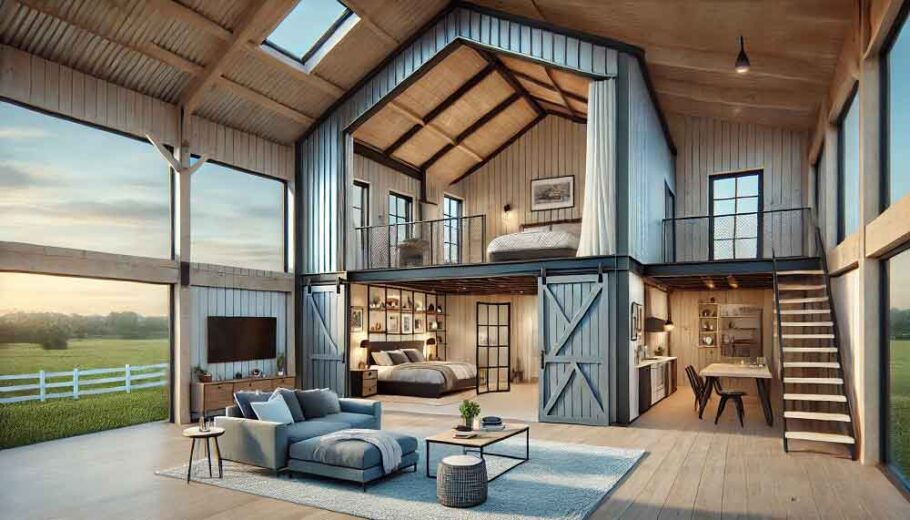
Barndominiums have evolved from simple metal barns into stylish, energy-efficient, and highly customizable homes. Their popularity continues to soar due to their affordability, speed of construction, large open floor plans, and ability to blend rustic charm with modern durability. But behind the beauty and flexibility of a barndominium lies a crucial reality: structural engineering defines how strong, safe, and long-lasting the home will be.
Whether you’re building a barndominium from a metal post-frame shell, a hybrid steel-and-wood frame, or a fully welded steel structure, engineering plays a central role in determining longevity, storm resistance, foundation integrity, and everyday durability. Below is an in-depth look at the primary engineering considerations required to ensure your barndominium stays strong for decades.
Understanding Structural Loads in a Barndominium
All structures must withstand loads, but barndominiums—especially those built with wide-open interiors—place unique demands on engineering. Loads fall into three main categories:
Dead Loads
These are the permanent weights the structure must support: the steel frame, the metal or composite roof, concrete slab, insulation, interior walls, and fixed appliances. Engineers must calculate dead loads carefully to prevent long-term sagging or structural fatigue.
Live Loads
Live loads include people, furniture, snow accumulation, stored items in mezzanine spaces, and any temporary weights. If your barndominium includes a loft, balcony, or second story, the engineering must account for higher live load requirements.
Environmental Loads
Environmental forces affect barndominiums more significantly than conventional homes because of large roof spans and long wall surfaces. These include:
- Wind pressure and suction
- Seismic (earthquake) forces
- Snow loads
- Soil pressure against foundations
- Thermal expansion from heat
Proper engineering ensures the structure disperses these forces safely without deformation or failure.
Wind Engineering: Keeping the Structure Upright in Storms
Barndominiums are often built in rural areas where wind exposure is high. Metal buildings can perform exceptionally well in windstorms—but only when properly engineered.
Wind Load Calculations
Engineers use ASCE (American Society of Civil Engineers) wind load standards to address:
- Uplift on roof panels
- Lateral forces on long walls
- Suction forces at roof edges
- Pressure around large openings such as garage doors
Reinforcement Strategies
To resist wind forces, barndominiums often require:
- Steel moment frames
- Braced wall panels
- Additional purlin-to-frame connections
- Stronger anchor bolts embedded deeper into the foundation
- Heavier-gauge metal for roof and wall panels
If you’re in a hurricane-prone region, certified hurricane clips, reinforced trusses, and wind-rated overhead doors are non-negotiable.
Foundation Engineering: The Strength Starts Below Ground
A barndominium’s foundation must support the structure and transfer loads safely into the soil. Because many barndominiums use steel columns instead of load-bearing exterior walls, the foundation plays a heightened role.
Slab-on-Grade with Footings
Most barndominiums use a thickened slab reinforced with rebar. Engineers must determine:
- Proper slab thickness (typically 4–6 inches, sometimes 8 inches for heavy homes)
- Rebar spacing and depth
- Edge footings for perimeter load transfer
- Control joints to prevent cracking
Pier-and-Beam Systems
Some designs use concrete piers under steel columns. These require:
- Accurate pier placement
- Sufficient depth below frost line
- Lateral bracing to prevent column movement
Soil Engineering
Soil conditions dictate foundation design. Clay, sand, and rocky terrain each require different reinforcement strategies. Engineers may recommend:
- Soil compaction before pouring the slab
- Gravel base layers
- Vapor barriers
- Moisture control around the perimeter
Without the right foundation engineering, even a strong steel frame can shift, crack, or settle unevenly.
Structural Steel: The Backbone of a Strong Barndominium
The quality, size, and engineering of the steel frame determine how well the building handles loads and resists deformation.
Steel Gauge and Type
A barndominium typically uses:
- 14-gauge or heavier steel for studs
- 12-gauge or heavier steel for structural framing
- 26–29 gauge metal panels
Heavier gauges increase strength, reduce flexing, and improve storm performance.
Welded vs. Bolted Connections
Both are strong, but each has engineering considerations:
- Welded frames offer superior rigidity, ideal for large open spans.
- Bolted frames are easier to assemble, replace, and inspect.
Engineering must ensure all connections transfer loads safely, especially where roof and wall systems meet.
Bracing and Lateral Support
Barndominiums require diagonal bracing or moment frames to prevent side-to-side racking during storms or earthquakes. Without bracing, wide-open interiors become weak points.
Roof Engineering: Protecting Against Snow, Wind, and Heat
Barndominium roofs cover large spans, meaning they must be engineered to resist multiple load forces.
Roof Pitch Considerations
A low-pitch roof (1:12 or 2:12) is common for metal buildings, but it requires careful engineering for:
- Rain drainage
- Snow shedding
- Wind uplift resistance
Higher-pitch roofs may improve snow management and allow attic spaces but increase wind pressure.
Purlins and Trusses
Engineers must size these elements properly to support both live and dead loads. Larger spans require deeper purlins or custom trusses.
Proper Fasteners
Roof screws must be:
- Rated for uplift resistance
- Installed in the correct pattern
- Sealed to prevent water intrusion
An improperly engineered roof is one of the most common failure points in low-cost barndominium builds.
Wall Engineering and Lateral Stability
Although barndominiums often rely on steel frames rather than load-bearing walls, the wall panels still serve structural purposes.
Shear Strength
Wall systems must resist sideways movement. Metal panels provide some shear strength, but engineers often add:
- Steel strap bracing
- Rigid frame reinforcements
- Structural sheathing (in hybrids)
Window and Door Openings
Large openings weaken long walls. Engineering solutions include:
- Heavier-gauge framing
- Reinforced headers
- Wind-rated door systems
This is especially important for designs with large glass walls or roll-up garage doors.
Moisture, Thermal, and Corrosion Engineering
Strength isn’t just about wind or structural loads—material durability is equally important.
Condensation Control
Metal buildings naturally sweat unless engineered with:
- Vapor barriers
- Closed-cell spray foam
- Proper ventilation
- Thermal breaks in roof systems
Insulation Strategy
Engineers must calculate insulation needs to prevent thermal stress on the steel frame.
Corrosion Resistance
Moisture can lead to rust, weakening structural steel. Engineering should include:
- Galvanized steel components
- Protective coatings
- Moisture management around the foundation
Seismic Engineering: Preparing for Earthquakes
In seismic zones, barndominiums need additional engineering to resist horizontal shaking forces.
Effective engineering may include:
- Rigid steel frames
- Diagonal cross bracing
- Base isolation pads (in advanced designs)
- Stronger anchor bolts and hold-down systems
A properly engineered steel frame performs exceptionally well in earthquakes due to flexibility and ductility.
Engineering for Large Open Floor Plans
One of the biggest advantages—and challenges—of a barndominium is the wide-open interior. Removing interior load-bearing walls requires:
- Larger steel beams
- Moment-resisting frames
- Engineered truss designs
Skipping engineering here can lead to sagging roofs, deflection, or structural instability.
Engineering for Long-Term Maintenance
Strength is not only built during construction; it must be preserved over decades. Engineers often recommend:
- Scheduled structural inspections every 5–10 years
- Monitoring for corrosion or moisture intrusion
- Roof fastener replacement cycles
- Foundation crack inspections
- Repainting or recoating steel
These steps prevent small issues from turning into structural problems.
Conclusion: Engineering Is What Makes a Barndominium Truly Strong
Barndominiums offer amazing design freedom and cost savings, but their performance depends entirely on sound engineering. Proper structural calculations, foundation design, steel sizing, roof engineering, wind and seismic resistance, and material durability all contribute to a safe and long-lasting home.
The beauty of a barndominium may lie in its style, but its true strength lies in the engineering you don’t see.
Barndominiums have evolved from simple metal barns into stylish, energy-efficient, and highly customizable homes. Their popularity continues to soar due to their affordability, speed of construction, large open floor plans, and ability to blend rustic charm with modern durability. But behind the beauty and flexibility of a barndominium lies a crucial reality: structural engineering defines how strong, safe, and long-lasting the home will be.
Whether you’re building a barndominium from a metal post-frame shell, a hybrid steel-and-wood frame, or a fully welded steel structure, engineering plays a central role in determining longevity, storm resistance, foundation integrity, and everyday durability. Below is an in-depth look at the primary engineering considerations required to ensure your barndominium stays strong for decades.
Understanding Structural Loads in a Barndominium
All structures must withstand loads, but barndominiums—especially those built with wide-open interiors—place unique demands on engineering. Loads fall into three main categories:
Dead Loads
These are the permanent weights the structure must support: the steel frame, the metal or composite roof, concrete slab, insulation, interior walls, and fixed appliances. Engineers must calculate dead loads carefully to prevent long-term sagging or structural fatigue.
Live Loads
Live loads include people, furniture, snow accumulation, stored items in mezzanine spaces, and any temporary weights. If your barndominium includes a loft, balcony, or second story, the engineering must account for higher live load requirements.
Environmental Loads
Environmental forces affect barndominiums more significantly than conventional homes because of large roof spans and long wall surfaces. These include:
- Wind pressure and suction
- Seismic (earthquake) forces
- Snow loads
- Soil pressure against foundations
- Thermal expansion from heat
Proper engineering ensures the structure disperses these forces safely without deformation or failure.
Wind Engineering: Keeping the Structure Upright in Storms
Barndominiums are often built in rural areas where wind exposure is high. Metal buildings can perform exceptionally well in windstorms—but only when properly engineered.
Wind Load Calculations
Engineers use ASCE (American Society of Civil Engineers) wind load standards to address:
- Uplift on roof panels
- Lateral forces on long walls
- Suction forces at roof edges
- Pressure around large openings such as garage doors
Reinforcement Strategies
To resist wind forces, barndominiums often require:
- Steel moment frames
- Braced wall panels
- Additional purlin-to-frame connections
- Stronger anchor bolts embedded deeper into the foundation
- Heavier-gauge metal for roof and wall panels
If you’re in a hurricane-prone region, certified hurricane clips, reinforced trusses, and wind-rated overhead doors are non-negotiable.
Foundation Engineering: The Strength Starts Below Ground
A barndominium’s foundation must support the structure and transfer loads safely into the soil. Because many barndominiums use steel columns instead of load-bearing exterior walls, the foundation plays a heightened role.
Slab-on-Grade with Footings
Most barndominiums use a thickened slab reinforced with rebar. Engineers must determine:
- Proper slab thickness (typically 4–6 inches, sometimes 8 inches for heavy homes)
- Rebar spacing and depth
- Edge footings for perimeter load transfer
- Control joints to prevent cracking
Pier-and-Beam Systems
Some designs use concrete piers under steel columns. These require:
- Accurate pier placement
- Sufficient depth below frost line
- Lateral bracing to prevent column movement
Soil Engineering
Soil conditions dictate foundation design. Clay, sand, and rocky terrain each require different reinforcement strategies. Engineers may recommend:
- Soil compaction before pouring the slab
- Gravel base layers
- Vapor barriers
- Moisture control around the perimeter
Without the right foundation engineering, even a strong steel frame can shift, crack, or settle unevenly.
Structural Steel: The Backbone of a Strong Barndominium
The quality, size, and engineering of the steel frame determine how well the building handles loads and resists deformation.
Steel Gauge and Type
A barndominium typically uses:
- 14-gauge or heavier steel for studs
- 12-gauge or heavier steel for structural framing
- 26–29 gauge metal panels
Heavier gauges increase strength, reduce flexing, and improve storm performance.
Welded vs. Bolted Connections
Both are strong, but each has engineering considerations:
- Welded frames offer superior rigidity, ideal for large open spans.
- Bolted frames are easier to assemble, replace, and inspect.
Engineering must ensure all connections transfer loads safely, especially where roof and wall systems meet.
Bracing and Lateral Support
Barndominiums require diagonal bracing or moment frames to prevent side-to-side racking during storms or earthquakes. Without bracing, wide-open interiors become weak points.
Roof Engineering: Protecting Against Snow, Wind, and Heat
Barndominium roofs cover large spans, meaning they must be engineered to resist multiple load forces.
Roof Pitch Considerations
A low-pitch roof (1:12 or 2:12) is common for metal buildings, but it requires careful engineering for:
- Rain drainage
- Snow shedding
- Wind uplift resistance
Higher-pitch roofs may improve snow management and allow attic spaces but increase wind pressure.
Purlins and Trusses
Engineers must size these elements properly to support both live and dead loads. Larger spans require deeper purlins or custom trusses.
Proper Fasteners
Roof screws must be:
- Rated for uplift resistance
- Installed in the correct pattern
- Sealed to prevent water intrusion
An improperly engineered roof is one of the most common failure points in low-cost barndominium builds.
Wall Engineering and Lateral Stability
Although barndominiums often rely on steel frames rather than load-bearing walls, the wall panels still serve structural purposes.
Shear Strength
Wall systems must resist sideways movement. Metal panels provide some shear strength, but engineers often add:
- Steel strap bracing
- Rigid frame reinforcements
- Structural sheathing (in hybrids)
Window and Door Openings
Large openings weaken long walls. Engineering solutions include:
- Heavier-gauge framing
- Reinforced headers
- Wind-rated door systems
This is especially important for designs with large glass walls or roll-up garage doors.
Moisture, Thermal, and Corrosion Engineering
Strength isn’t just about wind or structural loads—material durability is equally important.
Condensation Control
Metal buildings naturally sweat unless engineered with:
- Vapor barriers
- Closed-cell spray foam
- Proper ventilation
- Thermal breaks in roof systems
Insulation Strategy
Engineers must calculate insulation needs to prevent thermal stress on the steel frame.
Corrosion Resistance
Moisture can lead to rust, weakening structural steel. Engineering should include:
- Galvanized steel components
- Protective coatings
- Moisture management around the foundation
Seismic Engineering: Preparing for Earthquakes
In seismic zones, barndominiums need additional engineering to resist horizontal shaking forces.
Effective engineering may include:
- Rigid steel frames
- Diagonal cross bracing
- Base isolation pads (in advanced designs)
- Stronger anchor bolts and hold-down systems
A properly engineered steel frame performs exceptionally well in earthquakes due to flexibility and ductility.
Engineering for Large Open Floor Plans
One of the biggest advantages—and challenges—of a barndominium is the wide-open interior. Removing interior load-bearing walls requires:
- Larger steel beams
- Moment-resisting frames
- Engineered truss designs
Skipping engineering here can lead to sagging roofs, deflection, or structural instability.
Engineering for Long-Term Maintenance
Strength is not only built during construction; it must be preserved over decades. Engineers often recommend:
- Scheduled structural inspections every 5–10 years
- Monitoring for corrosion or moisture intrusion
- Roof fastener replacement cycles
- Foundation crack inspections
- Repainting or recoating steel
These steps prevent small issues from turning into structural problems.
Conclusion: Engineering Is What Makes a Barndominium Truly Strong
Barndominiums offer amazing design freedom and cost savings, but their performance depends entirely on sound engineering. Proper structural calculations, foundation design, steel sizing, roof engineering, wind and seismic resistance, and material durability all contribute to a safe and long-lasting home.
The beauty of a barndominium may lie in its style, but its true strength lies in the engineering you don’t see. With the right engineering considerations, your barndominium can withstand storms, support impressive spans, resist corrosion, and provide a safe, strong home for generations.