
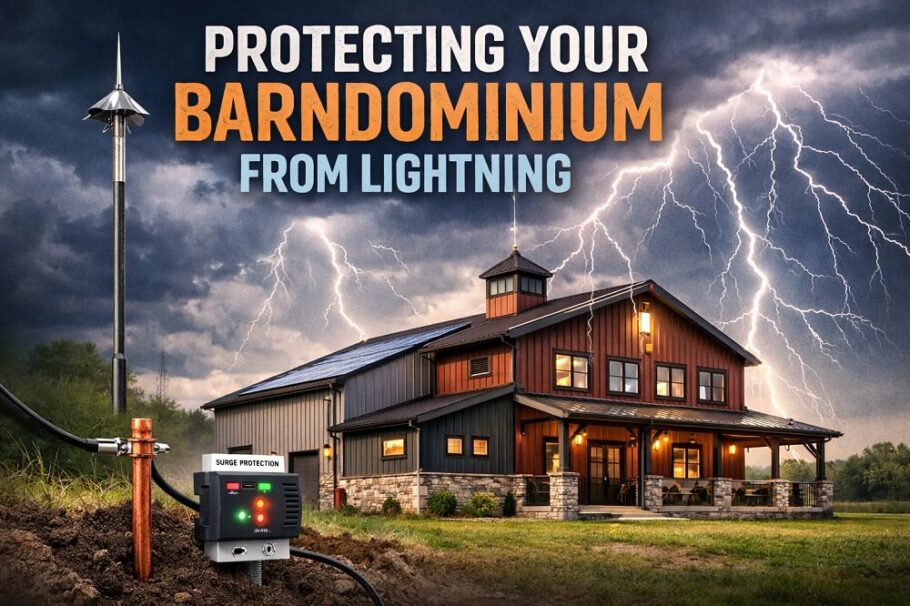
Barndominiums are known for their durability, efficiency, and modern-rustic appeal, but their unique construction methods—often combining metal frames, steel siding, and open rural locations—make lightning protection a critical design consideration. Lightning strikes may be rare on a single-structure basis, but when they occur, the damage can be catastrophic: fires, electrical system failure, damaged appliances, structural compromise, and even personal injury.
Because barndominiums frequently incorporate large metal surfaces and are often built in open fields or elevated rural areas, they can be more exposed to lightning risk than traditional suburban homes. The good news is that with proper planning, thoughtful design, and well-integrated protection systems, the risk can be significantly reduced.
This guide explores the key design considerations for protecting a barndominium from lightning, from site planning and structural grounding to electrical systems, roofing choices, and long-term maintenance strategies.
Understanding Lightning Risk in Barndominiums
Lightning is an electrical discharge caused by imbalances between storm clouds and the ground. When lightning strikes a structure, it seeks the shortest, least-resistant path to earth. If that path passes through framing, wiring, plumbing, or occupants, the results can be dangerous.
Barndominiums can be particularly vulnerable due to several factors:
- Large metal roofs and wall panels that can attract or conduct electrical energy
- Tall, isolated placement in open landscapes
- Long spans of exposed steel framing
- Extensive electrical systems powering workshops, offices, and living areas
Designing with lightning in mind is not about preventing lightning from striking altogether, but about controlling where the energy goes and how safely it is dissipated into the ground.
Site Selection and Building Placement
Lightning protection begins before construction even starts. The location of your barndominium plays a major role in its exposure to lightning strikes.
Structures built on hilltops, ridgelines, or wide-open plains are statistically more likely to be struck than those sheltered by surrounding terrain. When possible, avoid placing a barndominium as the tallest or most isolated object in an open area. Nearby tree lines, lower elevations, and natural land contours can help reduce exposure.
That said, many barndominiums are intentionally built in open rural settings for views, privacy, or agricultural use. In these cases, enhanced lightning protection becomes even more important and should be factored into the design budget from the beginning.
Metal Roofing and Wall Systems
Metal roofing is one of the most common features of barndominiums, and it often raises questions about lightning safety. Contrary to popular belief, metal roofs do not increase the likelihood of a lightning strike. However, they do conduct electricity extremely well once struck.
From a safety perspective, a metal roof can actually be an advantage—if properly grounded. When lightning hits a metal roof that is bonded and grounded correctly, the electrical energy can be safely routed into the earth instead of passing through the interior of the structure.
Key design considerations for metal roofing include:
- Ensuring all metal panels are electrically bonded together
- Connecting the roof system to a dedicated grounding network
- Avoiding isolated metal components that are not bonded
Unbonded metal elements can create dangerous voltage differences during a strike, increasing the risk of arcing and fire.
Structural Steel Framing Considerations
Many barndominiums use steel post-frame or rigid-frame construction. While steel framing offers strength and longevity, it also acts as a natural conductor for electrical energy.
Properly designed steel framing can function as part of a lightning protection system, but only if it is intentionally grounded and interconnected. Random or incomplete grounding can actually increase damage by allowing lightning energy to jump unpredictably between components.
Important design principles include:
- Continuous electrical bonding of all structural steel elements
- Direct grounding connections from the frame to earth electrodes
- Avoiding dissimilar metal connections that may corrode or lose conductivity over time
When steel framing is integrated into the grounding system, it helps distribute lightning energy evenly and safely.
Grounding Systems and Earth Electrodes
Grounding is the single most critical element of lightning protection. Without a proper grounding system, even the best lightning rods or surge protectors will fail.
A barndominium grounding system typically includes ground rods, ground plates, or concrete-encased electrodes (often called Ufer grounds). These components provide a low-resistance path for electrical energy to dissipate into the earth.
Design considerations for grounding include:
- Using multiple ground rods spaced properly around the structure
- Connecting grounding electrodes with heavy-gauge copper conductors
- Ensuring soil conditions support effective grounding (rocky or sandy soils may require additional electrodes)
Grounding systems should be designed by qualified professionals and tested after installation to confirm low resistance values.
Lightning Protection Systems (LPS)
A complete lightning protection system goes beyond grounding and includes several coordinated components that work together.
Typical elements of a lightning protection system include:
- Air terminals (commonly called lightning rods)
- Down conductors that route energy downward
- Bonding conductors connecting metal components
- Grounding electrodes that dissipate energy
For barndominiums with large roof areas, air terminals may be placed along ridges, peaks, and high points to intercept lightning strikes. The goal is to provide a preferred attachment point for lightning and guide it safely to the ground.
While lightning rods are not mandatory in all regions, they are strongly recommended for barndominiums located in high-risk lightning zones or exposed rural environments.
Electrical System Design and Surge Protection
Even if lightning never strikes the structure directly, nearby strikes can induce powerful voltage surges through utility lines. These surges can destroy appliances, damage HVAC systems, and corrupt electronic equipment.
Electrical system design should include multiple layers of surge protection:
- Whole-house surge protectors installed at the main electrical panel
- Secondary surge devices at subpanels or critical equipment
- Point-of-use surge protectors for sensitive electronics
Workshops inside barndominiums often include welders, CNC machines, air compressors, and other expensive equipment that is particularly vulnerable to surge damage. Designing for surge protection from the outset can save thousands of dollars over time.
Plumbing, Mechanical, and Auxiliary Systems
Lightning does not only travel through electrical wiring. It can also move through plumbing lines, HVAC ducting, and even concrete slabs with embedded metal.
All conductive systems entering or exiting the barndominium should be bonded to the grounding system, including:
- Metal water supply lines
- Gas lines
- HVAC equipment and ductwork
- Solar panel mounting systems
- Antennas and communication towers
Bonding equalizes electrical potential across systems and reduces the risk of side flashes, which occur when lightning jumps between unbonded components.
Roof Accessories and Exterior Features
Modern barndominiums often include features that increase lightning exposure, such as cupolas, chimneys, solar panels, weather vanes, or rooftop decks. Each of these elements should be evaluated for lightning protection.
Solar panel systems, in particular, require special attention. While photovoltaic panels are designed to withstand outdoor exposure, the associated wiring and inverters are sensitive to surges. Grounding and surge suppression for solar installations should be coordinated with the overall lightning protection strategy.
Exterior metal staircases, handrails, and awnings should also be bonded to prevent dangerous voltage differences during storms.
Interior Layout and Fire Safety Considerations
Lightning strikes can cause fires, especially when electrical energy arcs through combustible materials. Interior design choices can help reduce fire risk.
Considerations include:
- Using fire-rated wall assemblies around electrical rooms
- Maintaining proper clearances around electrical panels
- Installing arc-fault circuit interrupters where required
- Incorporating fire suppression systems in workshops or mechanical rooms
Smoke detectors, fire alarms, and emergency lighting should be protected with surge suppression to ensure functionality after a lightning event.
Insurance and Code Compliance
Lightning protection is not just a design issue—it is also an insurance and compliance matter. Some insurers offer reduced premiums for structures with certified lightning protection systems, especially in high-risk areas.
Local building codes may not explicitly require lightning protection, but they often reference national electrical and safety standards that address grounding and bonding. Designing beyond minimum code requirements can provide added safety and long-term value.
Consulting with structural engineers, electricians, and lightning protection specialists early in the design process ensures compliance and reduces costly retrofits later.
Maintenance and Long-Term Performance
Lightning protection systems are not install-and-forget solutions. Over time, corrosion, soil changes, construction modifications, or landscaping can compromise system effectiveness.
Long-term design planning should include:
- Accessible grounding connections for inspection
- Clear documentation of the lightning protection layout
- Periodic testing of grounding resistance
- Visual inspection of air terminals and bonding conductors
Any future additions to the barndominium—such as new wings, taller roof elements, or additional electrical systems—should be evaluated for lightning protection impacts.
Integrating Lightning Protection into the Overall Barndominium Design
The most effective lightning protection systems are those integrated seamlessly into the barndominium’s architecture. When planned early, grounding conductors can be concealed within walls, air terminals can blend with rooflines, and bonding connections can be incorporated into structural details.
Rather than treating lightning protection as an afterthought or optional upgrade, it should be considered a core component of safe, resilient barndominium design—especially in regions prone to thunderstorms.
Conclusion
Lightning is a powerful natural force that demands respect, particularly when designing a barndominium with extensive metal components and rural exposure. While no structure can be made completely immune to lightning, thoughtful design can dramatically reduce the risk of damage, fire, and injury.
By addressing site selection, metal roofing and framing, grounding systems, surge protection, and long-term maintenance, homeowners and designers can create barndominiums that are not only beautiful and functional, but also resilient against one of nature’s most unpredictable threats.
Investing in proper lightning protection is ultimately an investment in safety, durability, and peace of mind—ensuring your barndominium remains a secure haven no matter how fierce the storm outside becomes.