
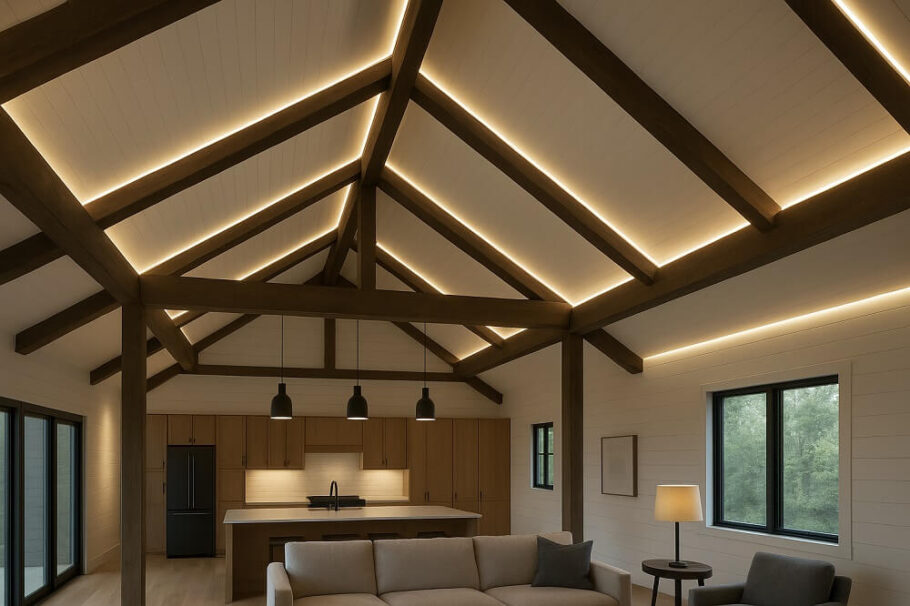
Barndominiums are known for their wide-open floor plans, structural efficiency, and rustic–modern appeal. One of the most powerful design features in any barndominium is ceiling height. High ceilings can make interiors feel expansive, dramatic, and luxurious, while even modest ceiling heights can feel taller and more engaging when designed creatively. Enhancing ceiling height and visual interest is not just about adding feet of vertical space; it’s about using architectural strategies, materials, lighting, and proportions to create an uplifting interior experience.
This blog explores creative, practical, and visually striking ways to enhance barndominium ceiling height and add architectural interest without sacrificing comfort, efficiency, or budget control.
Why Ceiling Design Matters in a Barndominium
Ceilings define how a space feels emotionally and physically. In barndominiums, which often rely on post-frame or steel-frame construction, ceilings are less constrained by load-bearing walls. This flexibility opens the door to bold vertical design choices that are difficult or expensive in traditional homes.
Well-designed ceilings can:
- Make interiors feel larger without increasing square footage
- Improve natural light distribution
- Enhance airflow and energy efficiency
- Add architectural character to otherwise simple spaces
- Increase perceived home value and visual sophistication
Whether your barndominium has a soaring structure or a compact footprint, ceiling design plays a key role in how the space is experienced.
Vaulted Ceilings for Instant Vertical Impact
Vaulted ceilings are one of the most popular ways to enhance ceiling height in a barndominium. By following the roofline rather than installing a flat ceiling, vaulted designs immediately introduce openness and drama.
In steel and hybrid wood-metal barndominiums, vaulted ceilings are often easier to achieve because the primary structure can span large distances without intermediate supports. This allows for uninterrupted ceiling planes and expansive vertical volume.
Vaulted ceilings work especially well in:
- Great rooms and open living areas
- Kitchen and dining spaces
- Primary bedrooms
- Entryways and foyers
To maximize their impact, vaulted ceilings can be paired with exposed beams, wood planking, or skylights that draw the eye upward and emphasize the vertical space.
Exposed Beams for Depth and Character
Exposed beams are a hallmark of barndominium design and an effective way to enhance visual interest without lowering the ceiling. Whether structural or decorative, beams introduce rhythm, texture, and scale.
Wood beams add warmth and contrast against metal roofing or drywall ceilings. Steel beams offer a sleek, industrial aesthetic that complements modern barndominium styles.
Design tips for exposed beams include:
- Running beams parallel to the longest wall to elongate the space
- Using darker beams against lighter ceilings for contrast
- Varying beam size or spacing for architectural rhythm
- Combining beams with vaulted or tray ceilings for layered depth
Even faux beams can deliver the same visual effect at a lower cost while maintaining the illusion of structure and height.
Tray Ceilings for Subtle Elevation
Tray ceilings are a refined way to add vertical interest without dramatically altering roof structure. By recessing the central portion of the ceiling, tray designs create depth and visual elevation.
In barndominiums, tray ceilings work particularly well in:
- Bedrooms
- Dining areas
- Home offices
- Living rooms with flat rooflines
To enhance the sense of height, tray ceilings can incorporate indirect lighting, contrasting paint colors, or wood accents. A lighter center panel paired with darker perimeter trim makes the ceiling feel taller and more expansive.
Cathedral Ceilings That Follow the Roofline
Cathedral ceilings are similar to vaulted ceilings but typically include symmetrical slopes that mirror the roof pitch. In barndominiums with gable roofs, cathedral ceilings feel natural and structurally honest.
These ceilings create a strong vertical axis and work beautifully in large open spaces where you want a dramatic focal point. When paired with clerestory windows or ridge skylights, cathedral ceilings flood interiors with daylight and reinforce the sense of openness.
Using tongue-and-groove wood panels, metal ceiling panels, or painted planks can further enhance texture and visual richness.
Clerestory Windows to Lift the Eye
One of the most effective ways to enhance perceived ceiling height is through light placement. Clerestory windows, positioned high on walls near the roofline, draw attention upward while flooding interiors with natural light.
In barndominiums, clerestory windows are especially effective because:
- They preserve wall space for furniture
- They improve ventilation and daylighting
- They emphasize vertical proportions
- They reduce reliance on artificial lighting
When combined with tall ceilings or vaulted spaces, clerestory windows amplify the sense of scale and openness without increasing energy costs when properly glazed.
Loft Spaces That Celebrate Vertical Volume
Lofts are a signature feature of many barndominiums and a creative way to make use of ceiling height while maintaining openness. Partial lofts preserve vertical volume below while adding functional space above.
Design strategies for lofts include:
- Open railings or cable systems to maintain sightlines
- Stepped or staggered loft levels for visual interest
- Double-height spaces adjacent to loft edges
- Integrated lighting under loft floors to enhance depth
Lofts work particularly well over kitchens, workshops, or secondary living areas, creating a layered interior that feels dynamic rather than cavernous.
Statement Lighting to Emphasize Height
Lighting plays a crucial role in highlighting ceiling height. Oversized pendant lights, chandeliers, and linear fixtures can visually anchor tall spaces while celebrating vertical scale.
In barndominiums with high ceilings:
- Long-drop pendants draw the eye upward
- Tiered chandeliers fill vertical space without overwhelming it
- Linear fixtures emphasize ceiling length and structure
- Up-lighting enhances ceiling texture and height
Lighting placement should be intentional. Fixtures that are too small can make ceilings feel disproportionately high, while properly scaled lighting creates balance and cohesion.
Vertical Materials That Stretch the Space
Material orientation has a powerful effect on perceived height. Vertical lines naturally draw the eye upward, making ceilings feel taller.
Creative material choices include:
- Vertical shiplap or board-and-batten ceilings
- Wood planks running from wall to ceiling
- Tall wall panels that extend to the roofline
- Vertical metal paneling for modern or industrial designs
Using consistent materials from walls into ceilings blurs boundaries and reinforces vertical continuity, especially in open-plan barndominiums.
Color Strategies That Enhance Height
Color can dramatically influence how tall a ceiling feels. Lighter colors reflect light and create openness, while darker tones can either ground a space or add drama when used strategically.
Effective color approaches include:
- Painting ceilings lighter than walls to lift the visual plane
- Using monochromatic palettes for seamless transitions
- Adding subtle contrast at ceiling edges to define height
- Highlighting beams or trusses with accent colors
In very tall spaces, slightly darker ceilings can create intimacy without reducing perceived height when paired with strong vertical elements.
Structural Trusses as Architectural Features
Many barndominiums use exposed roof trusses, which can become striking design features rather than hidden structural elements. When left visible, trusses add rhythm, geometry, and authenticity to tall ceilings.
Decorative or engineered trusses can:
- Break up large ceiling expanses
- Add visual movement
- Reinforce the building’s agricultural roots
- Support lighting, fans, or acoustic panels
Painting trusses to contrast with ceiling panels or leaving them in natural wood or steel finishes adds character without additional ornamentation.
Ceiling Fans That Enhance Scale and Comfort
Large-diameter ceiling fans are both functional and aesthetic in barndominiums with high ceilings. When properly sized, they reinforce the scale of the space while improving airflow and energy efficiency.
Modern ceiling fans with clean lines, wood blades, or industrial finishes complement barndominium interiors and visually connect floor-level activity with ceiling height.
Skylights for Vertical Drama
Skylights are a powerful way to enhance ceiling height by introducing daylight from above. In vaulted or cathedral ceilings, skylights emphasize roof geometry and create a sense of openness that extends beyond the physical structure.
Strategically placed skylights:
- Highlight ceiling slopes and angles
- Reduce reliance on artificial lighting
- Enhance mood and visual comfort
- Draw attention upward throughout the day
When designed with proper insulation and glazing, skylights can be both energy-efficient and visually transformative.
Mixing Ceiling Heights for Dynamic Interiors
Not every room needs a soaring ceiling. In fact, varying ceiling heights throughout a barndominium can make tall spaces feel even more dramatic by contrast.
Lower ceilings in bedrooms, hallways, or bathrooms create intimacy, while higher ceilings in shared spaces feel expansive and celebratory. Transition zones, such as dropped beams or partial walls, help guide the eye upward as spaces open up.
This intentional variation adds architectural sophistication and avoids the monotony of uniform ceiling planes.
Conclusion: Designing Upward with Purpose
Enhancing barndominium ceiling height and visual interest is about more than building taller walls or steeper roofs. It’s about thoughtful design choices that celebrate vertical space while supporting comfort, function, and efficiency.
From vaulted ceilings and exposed beams to lighting, materials, and color strategies, there are countless creative ways to elevate the interior experience of a barndominium. When ceiling design is approached as an integral part of the architecture rather than an afterthought, the result is a home that feels expansive, inspiring, and uniquely tailored to modern rural living.
By designing upward with intention, barndominium owners can transform simple structures into visually compelling spaces that feel as impressive as they are practical.