
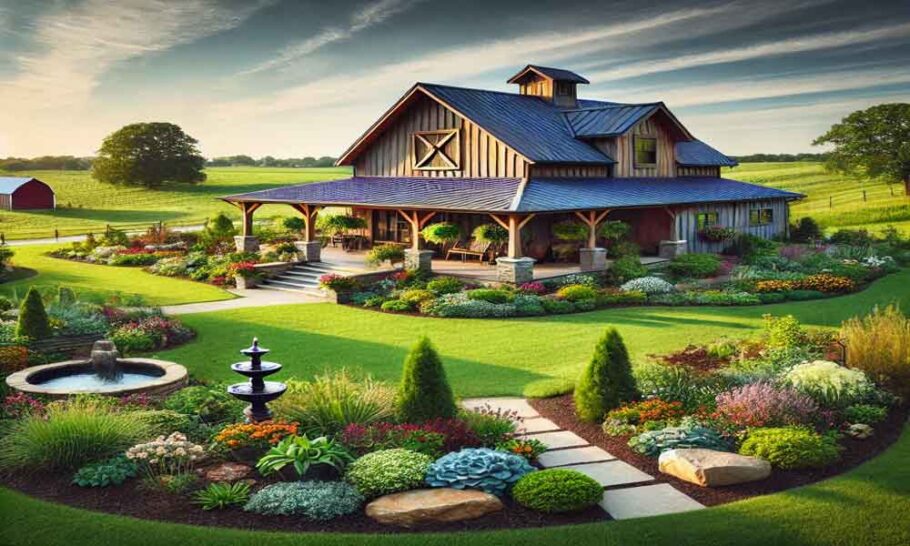
The barndominium trend isn’t slowing down. More people are trading traditional stick-built homes for these steel-framed, versatile structures that blend living quarters with workshop space, garage storage, or even a home-based business. But here’s the thing that trips up most future barndo owners: they fall in love with a house plan before they’ve even found a piece of dirt that can legally or physically support it. The land itself makes or breaks the entire project. Choose wrong, and the dream turns into a money pit of unexpected costs, denied permits, and endless headaches. Choose right, and the building process flows smoothly from survey to slab to final screw.
So what actually matters when hunting for that perfect parcel? Let’s break down the critical factors that separate buildable land from beautiful-but-useless acreage.
Zoning and Building Codes Come First
Before looking at a single property listing, understand local regulations. Barndominiums occupy a weird middle ground in many jurisdictions. Some counties classify them as agricultural buildings, others as residential dwellings, and a few have no category at all. Each classification brings different rules.
Call the local planning department. Ask two direct questions. First, does the county allow metal buildings to serve as primary residences? Second, what specific permits are required for a barndominium? Some areas have caught up with the trend and created friendly pathways. Others remain stuck in the past, requiring endless variances and appeals.
Pay special attention to minimum square footage requirements. A few counties demand that any primary residence exceed 1,200 or even 1,500 square feet. That makes sense for a house but not for someone wanting a modest 1,000 square foot barndo with a large attached shop. Minimum lot sizes also vary wildly. One rural county might allow a barndo on two acres while the neighboring county demands ten.
Homeowners associations deserve a separate warning. Even rural properties sometimes fall under HOA jurisdiction. Read every document before signing anything. Many HOAs explicitly ban metal buildings or any structure that doesn’t look like a traditional house. No variance will override those covenants.
Topography and Drainage Shape Everything
Flat land saves money. That’s the simple truth. Every hill, slope, or uneven section adds grading costs that escalate quickly. Heavy equipment costs hundreds per hour, and moving significant amounts of dirt runs into five figures fast.
But flat doesn’t mean featureless. A completely flat parcel with poor drainage turns into a swamp after spring rains. Walk the property after a heavy storm or look for evidence of standing water. Muddy patches, water stains on trees, or eroded channels all signal trouble. The building site needs a gentle slope away from the proposed foundation location. An ideal grade sits between 2 and 5 percent—enough to shed water but not so steep that retaining walls become necessary.
Watch out for low spots that collect runoff from neighboring properties. A piece of land might look dry during summer viewing but turn into a pond when snow melts or seasonal rains arrive. Check with neighbors or look up FEMA flood maps before committing.
Rocky ground presents another hidden expense. Bedrock close to the surface means blasting or specialized excavation equipment to dig footer trenches and utility lines. Test borings during due diligence reveal what lies beneath the topsoil. A few hundred dollars spent on a soil test saves tens of thousands in surprises later.
Soil Percolation and Septic Feasibility
Here’s where many barndominium dreams die. Unless the property connects to municipal sewer, and most rural barndo sites don’t, the soil must pass a percolation test. No perc, no septic. No septic, no certificate of occupancy. It’s that absolute.
A perc test measures how fast water drains through the soil. Sandy soils drain quickly but may not treat effluent adequately. Clay soils drain too slowly and cause system backups. The ideal soil has enough sand for drainage and enough organic matter for treatment.
Never assume that a property can support a conventional septic system just because surrounding homes have them. Soil conditions vary dramatically within a single acre. Make the purchase contract contingent on passing a perc test for the specific building site. Some sellers balk at this contingency, which should raise a major red flag.
For properties that fail a conventional perc test, alternative systems exist. Mound systems, aerobic treatment units, and drip dispersal systems can overcome poor soil conditions. But these alternatives cost two to four times more than a standard system. A $5,000 septic job can become $20,000 or more. Budget accordingly.
Water Access Isn’t Guaranteed
Municipal water hookups remain rare in truly rural areas. That leaves wells as the primary water source. Well drilling costs vary by depth and geology. In some regions, hitting water at fifty feet costs three thousand dollars. In others, drilling four hundred feet through granite costs thirty thousand or more.
Before buying land, check local well logs. Most states maintain public records showing depths and flow rates of nearby wells. Consistent depths across neighboring properties suggest reliable groundwater. Wildly variable depths signal fractured geology where one property gets abundant water and the next gets nothing.
Flow rate matters as much as depth. A barndominium with multiple bathrooms, a workshop sink, and outdoor spigots needs a minimum of five to ten gallons per minute. Lower flow rates mean storage tanks and pressure systems, adding complexity and cost.
Some properties come with existing wells. Never assume an old well works. Hire a well inspector to test flow rate, water quality, and pump condition. Abandoned wells sometimes become contaminated with bacteria, nitrates, or heavy metals. Treating contaminated water costs money every single month, not just once.
Power and Utility Connections
Electric service looks simple until it isn’t. Properties near existing power lines connect cheaply, often for a few thousand dollars or less. But rural land tucked far from the grid demands running new lines. The cost runs from ten to fifty dollars per foot, and that adds up fast. A half-mile driveway suddenly requires fifty thousand dollars or more just to see lights turn on.
Three-phase power deserves consideration for anyone planning serious workshop equipment. Most residential areas only offer single-phase power. Converting or installing three-phase costs exponentially more and may not be available at all.
Internet access increasingly determines property value. Remote work isn’t going away. Satellite internet has improved with Starlink and other low-earth orbit systems, but wired fiber or cable remains superior. Before falling in love with a property, check actual provider coverage maps. Some rural areas still rely on slow DSL or nothing at all.
Natural gas connections provide another utility puzzle. Propane solves the problem for properties without gas lines. Propane tanks require proper placement, regular refills, and venting considerations. None of these are dealbreakers, just costs to factor into the budget.
Road Access and Legal Easements
Every piece of land needs a legal, recorded access route. Never buy property that relies on a handshake agreement or an unrecorded easement across someone else’s land. Verbal agreements dissolve when property changes hands or relationships sour.
Public road frontage provides the cleanest access. The property touches a maintained public road, and that’s that. Private roads and shared driveways require maintenance agreements spelling out who pays for grading, snow removal, and repairs. Without written agreements, disputes become inevitable.
Check the road’s condition for heavy construction traffic. Concrete trucks, steel deliveries, and excavation equipment need stable, load-bearing roads. A pretty gravel lane that turns to mud after rain stops construction for weeks. Consider strengthening the road or scheduling deliveries during dry periods.
Winter access matters in colder climates. Does the county plow the road? How quickly after snowfall? A mile of unplowed private road means being snowed in for days after every storm.
Orientation, Views, and Wind
Barndominiums look simple from the outside, but their orientation on the land affects daily comfort. Pay attention to prevailing winds. A shop door facing into the wind brings dust and cold air inside every time it opens. Living room windows facing west bake the interior during summer afternoons unless shaded properly.
Sun angles determine heating and cooling costs. In northern climates, south-facing windows capture passive solar heat during winter while roof overhangs block high summer sun. In southern climates, minimizing western exposure reduces air conditioning bills dramatically.
Views matter for resale value even if they don’t matter personally. A barndominium positioned to overlook a treeline, pond, or meadow commands higher prices than one staring at a neighbor’s outbuilding. Walk the property at different times of day to see how the light plays across the landscape.
Flood Zones and Natural Hazards
FEMA flood maps provide the starting point for flood risk assessment, but they aren’t perfect. Properties outside designated flood zones can still flood during unprecedented rain events. Look for terrain features like streambeds, dry washes, or alluvial fans that carry water during heavy runoff.
Wildfire zones demand attention in the western United States. Building in high-risk areas requires fire-resistant construction methods, defensible space clearing, and potentially higher insurance premiums. Some insurers now refuse coverage in the highest-risk zones entirely.
Landslides, expansive soils, and sinkholes affect smaller geographic areas but cause catastrophic damage when they occur. State geological surveys publish hazard maps. A few hours of research prevents building a dream home on unstable ground.
Parcel Size and Shape
Bigger isn’t always better. A perfectly shaped five-acre parcel might build out beautifully while a fifty-acre swamp never supports a foundation. Concentrate on usable acreage—the portion of the land that isn’t wetland, floodplain, cliff face, or protected conservation area.
Setback requirements eat up more land than most people realize. County rules might require twenty-five feet from the front property line, fifteen feet from side lines, and thirty feet from rear lines. Add a required separation between the house and any agricultural buildings or livestock areas. Suddenly a two-acre parcel feels tight.
Long, narrow parcels create placement challenges. A property that’s 200 feet wide by 1,000 feet deep leaves little room for building width. Access drives consume a disproportionate amount of space on skinny lots.
Check for utility easements crossing the property. Power companies, water districts, and gas lines all hold rights to access their infrastructure. Building within those easements risks forced removal at the owner’s expense. Always get an easement survey before finalizing a purchase.
Budget Beyond the Purchase Price
The land price is just the entry fee. Count on spending an additional 20 to 50 percent of the land cost on site preparation. Clearing trees, grading, digging a well, installing septic, running power, building a driveway—these expenses add up before a single barndominium component arrives.
Get actual quotes from local contractors before buying. Many sellers provide estimates that turn out wildly optimistic. A contractor walking the property gives real numbers based on local labor rates and material costs.
Consider the timeline. Land with existing utilities and a perc test passes in months. Raw land with no services takes a year or more from purchase to breaking ground. Financing matters too. Raw land loans require higher down payments and carry higher interest rates than improved property loans. Some lenders won’t finance barndominiums at all, so shop for construction lenders before shopping for land.
Future Resale Value and Neighbors
Even a forever home eventually sells. Think about what the property looks like to future buyers. Land with good access, utilities, and reasonable building restrictions holds value. Land with weird easements, poor water, or restrictive covenants turns into an albatross.
Pay attention to neighboring properties. A nearby gravel quarry, shooting range, or industrial operation won’t show up on standard disclosures but will affect quality of life. Visit the property on weekdays and weekends, morning and evening. Listen for noise, smell the air, watch traffic patterns. Neighbors can make rural living idyllic or miserable.
Look for signs of future development. Adjacent farmland might rezone for subdivisions. Timberland might become a solar farm. Check county comprehensive plans and zoning maps to see what’s permitted nearby. A peaceful view today could become a construction zone tomorrow.
The perfect barndominium land exists. It’s out there waiting. But finding it takes patience, research, and a willingness to walk away from beautiful parcels hiding fatal flaws. Start with zoning and utilities. Test the soil and perc. Verify every access and water claim. Run the numbers on site work before signing anything. Most importantly, resist falling in love with a view until the land passes every practical test. The view will still be there after the slab is poured, the walls are up, and the keys are in hand. That’s the moment to look out the window and smile.