
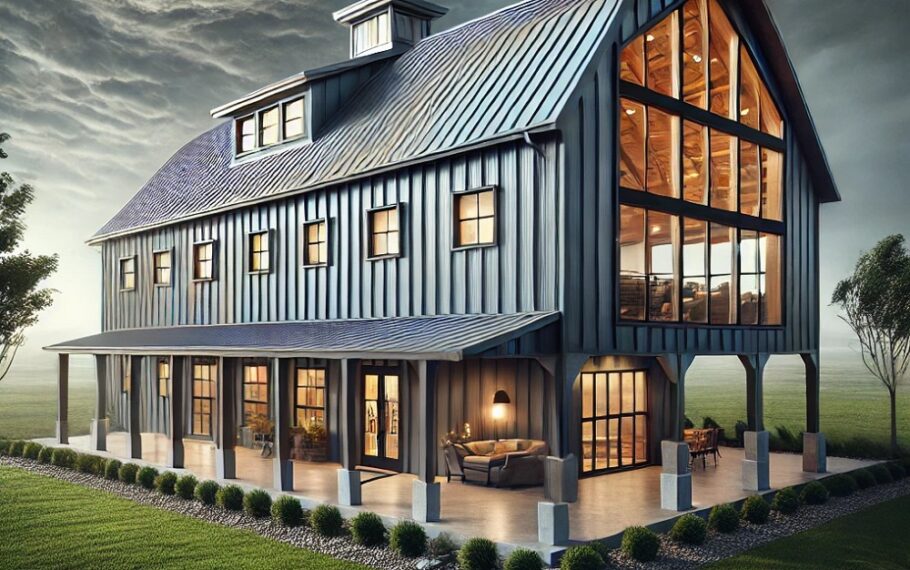
The barndominium has shed its humble agricultural roots to become a legitimate force in modern residential architecture. Steel beams, concrete floors, and wide-open interiors have made these structures incredibly popular for homeowners who want durability without sacrificing style. But there is a conversation happening quietly among builders, architects, and property owners that deserves far more attention than it gets—blast-resistant glazing and framing for barndominiums.
On the surface, the idea sounds excessive. Who needs bomb-proof windows on a rural property? The reality, however, is more nuanced and practical than most people realize. Blast-resistant construction isn’t just for military bases and government buildings anymore. Industrial accidents, propane tank explosions, nearby chemical plant incidents, and even severe weather events that generate pressure waves have made this type of protection relevant for a growing number of residential properties—including barndominiums.
Understanding the Threat Landscape
The typical barndominium sits on acreage, often near agricultural operations, fuel storage, or light industrial zones. That five-hundred-gallon propane tank buried twenty yards from the master bedroom? It represents a real pressure hazard. Those fertilizer tanks a quarter mile down the road? Same thing. Even natural gas pipelines running through rural properties can create blast scenarios that standard windows and frames were never designed to handle.
Standard residential windows fail catastrophically under blast loading. Glass shatters into thousands of lethal projectiles. Frames pull away from rough openings. The entire fenestration system essentially becomes a collection of high-velocity debris aimed directly at anyone inside. Blast-resistant glazing and framing systems are engineered specifically to prevent that outcome.
The Physics of Pressure Loading
Blast resistance operates on fundamentally different principles than hurricane resistance or impact resistance. A hurricane pushes steadily over seconds or minutes. A blast wave arrives almost instantaneously—measured in milliseconds—with an initial positive pressure spike followed immediately by negative pressure suction. This rapid cycling creates forces that standard materials cannot handle.
Blast-resistant glazing must absorb energy rapidly without breaching. The glass itself typically consists of multiple laminated layers bonded with specialized interlayers such as polyvinyl butyral or ionoplast polymers. These interlayers stretch rather than snap, capturing broken glass fragments in a flexible membrane that remains intact even after the glass cracks. The framing must match this performance, flexing under load without letting the entire assembly blow inward.
Laminated Glass Goes Heavy Duty
Standard laminated glass found in car windshields or storefronts offers minimal blast resistance. True blast-resistant glazing starts with much thicker constructions—often three-quarters of an inch to over an inch total thickness. Multiple plies of heat-strengthened or tempered glass sandwich high-performance interlayers that maintain cohesion under extreme stress.
The difference between standard laminated glass and blast-rated glass comes down to interlayer chemistry and ply count. Ordinary laminates use basic PVB that stiffens and fails relatively quickly under dynamic loading. Blast-rated systems utilize advanced ionoplast interlayers that retain elasticity during high-strain rate events. Some manufacturers incorporate polycarbonate layers for additional toughness, though this approach introduces scratch resistance concerns that matter for residential applications.
Annealed glass rarely appears in legitimate blast-resistant assemblies. Tempered glass offers better strength but has a nasty habit of disintegrating into thousands of small cubes upon failure—exactly what blast protection tries to avoid. Heat-strengthened glass occupies the middle ground and appears frequently in blast-resistant windows, offering better strength than annealed without the complete fragmentation pattern of tempered.
Framing That Holds Its Ground
Glass alone accomplishes nothing without framing designed to match its performance. This remains the most overlooked aspect of blast-resistant fenestration. Contractors sometimes install expensive laminated glass into standard aluminum or vinyl frames, creating a dangerous mismatch where the glass survives but the frame fails catastrophically.
Blast-resistant frames require reinforced corners, heavier wall thicknesses, and robust anchorage into the surrounding structure. Steel offers the best performance, though thermally broken steel assemblies exist for energy-conscious applications. Heavy-gauge aluminum frames with reinforced mullions and welded corners can work for lower protection levels, but steel dominates the higher end of residential blast protection.
Anchor spacing matters enormously. Standard window anchors every sixteen inches prove inadequate for blast loads. Blast-rated frames typically require anchors every six to eight inches, with deeper embedment into the structural framing behind. Some installations call for continuous angle anchors or cast-in-place embeds that tie the frame directly into the building’s primary structure.
Pressure Ratings and Performance Standards
The blast-resistant glazing industry relies on specific performance standards that translate laboratory testing into real-world specifications. ASTM F1642 provides the standard test method for glazing subjected to airblast loadings. This testing produces hazard level ratings ranging from one to five, where level one means no breach and no glass fragments enter the protected space, while level five indicates complete failure.
For residential barndominium applications, hazard level two or three typically provides adequate protection. Level two allows some glass fragments to enter but limits their velocity to non-lethal levels. The glazing remains in the frame, preventing the catastrophic failure that standard windows would experience under the same load.
Standoff distance plays a critical role in determining required protection levels. A barndominium located two hundred feet from a potential blast source needs much less glazing protection than one situated fifty feet away. This relationship follows an inverse square law—doubling the distance reduces blast pressure by roughly seventy-five percent.
Design Integration Without the Bunker Aesthetic
One objection to blast-resistant glazing centers on aesthetics. Nobody wants their barndominium to look like a military checkpoint. Fortunately, modern blast-resistant products have come a long way from the thick, green-tinted windows found on government buildings.
Current blast-resistant glazing can achieve neutral color, high visible light transmission, and relatively slim profiles when specified correctly. Multi-pane insulating glass units with blast-resistant inner lites maintain energy efficiency while providing protection. Low-emissivity coatings, argon fills, and warm-edge spacers work just as well in blast-rated assemblies as in standard windows.
The framing presents more of a visibility challenge. Steel frames will never match the slim profile of vinyl or standard aluminum. However, face-mounted stop systems and recessed installations can minimize the visual impact. Painting steel frames to match exterior finishes helps them blend in. Some manufacturers offer thermally broken steel frames with exterior aluminum cladding that combines blast performance with a more residential appearance.
Cost Considerations That Make Sense
Blast-resistant glazing and framing costs more than standard fenestration. There is no way around that reality. A typical blast-resistant window assembly might run three to five times the cost of a comparable standard window. That price jump causes many homeowners to dismiss the idea immediately.
But context matters. A barndominium represents a substantial investment in both money and lifestyle. The structure itself—steel frame, concrete slab, metal roofing—already leans toward durability and longevity. Adding blast-resistant glazing aligns with that same philosophy. More importantly, the consequences of a blast event near a standard barndominium are catastrophic enough that the additional upfront cost looks reasonable in comparison.
Insurance considerations also factor into the equation. Property owners near industrial facilities, pipelines, or fuel storage sometimes qualify for reduced premiums when blast mitigation measures are documented. The savings rarely offset the full cost of installation, but they help tip the balance toward doing things right rather than doing things cheap.
Installation Requires Specialized Attention
Even the best blast-resistant glazing will fail if installed incorrectly. This is not a DIY project. It is not even a standard window installation job. Contractors need specific training and certification from manufacturers to install blast-rated systems properly.
The critical details revolve around the attachment between frame and structure. Screws long enough to engage structural members. Properly sized pilot holes to avoid splitting framing materials. Backer rods and structural sealants that accommodate movement while maintaining the connection. Gaps between frame and rough opening that close up under load rather than opening wider.
Field modifications are strictly forbidden with blast-resistant systems. Cutting frame members, drilling additional holes, or substituting fasteners voids any performance rating and creates dangerous weak points. The entire assembly must be installed exactly as tested, or the protection promised by the rating simply does not exist.
Code Requirements and Legal Considerations
Building codes in most jurisdictions do not mandate blast-resistant glazing for residential occupancies. Exceptions exist near certain hazardous facilities, chemical plants, and military installations where local ordinances or property-specific requirements apply. Some states have adopted more stringent rules following industrial accidents that caused off-site residential damage.
Even when not required by code, property owners near potential blast hazards should consider blast-resistant glazing from a liability perspective. If an incident occurs and standard windows fail, causing injury or death, questions will be asked about what reasonable precautions could have been taken. Documented decisions to forego available safety measures do not fare well in courtrooms.
The same reasoning applies to builders and architects. Specifying standard windows for a barndominium within a known blast hazard zone creates professional liability exposure that most insurance policies will not cover. The prudent approach involves either installing blast-resistant systems or formally documenting that the client declined the recommendation in writing.
Future Trends in Residential Blast Protection
The technology continues to improve. Composite frames combining fiberglass or carbon fiber with steel cores promise reduced weight without sacrificing strength. Transparent armor materials originally developed for military vehicles are filtering down to commercial and residential products, though costs remain prohibitive for most applications.
Smart glazing with electrically adjustable opacity has been successfully integrated into blast-resistant assemblies, offering privacy control without compromising protection. Solar control coatings and electrochromic layers work within the laminated construction, though they add complexity and cost.
Testing methods are also evolving. Finite element analysis software now predicts blast performance with reasonable accuracy, reducing the need for expensive full-scale testing of every new configuration. This simulation capability accelerates product development and should eventually drive costs down.
Making an Informed Decision
Not every barndominium needs blast-resistant glazing. A structure located miles from any potential blast source, with no industrial neighbors and no significant fuel storage on site, probably gains little from this level of protection. Standard impact-resistant windows designed for hurricane zones may offer sufficient robustness for that scenario.
But barndominiums near industrial facilities, fuel depots, chemical plants, natural gas infrastructure, or agricultural chemical storage deserve serious consideration of blast-resistant fenestration. The same holds for properties serving as high-value targets for any reason, or those owned by individuals who face specific security concerns.
The decision should come from an honest risk assessment. Identify potential blast sources within reasonable proximity. Estimate likely standoff distances. Research any past incidents in the area. Consult with security engineers or blast mitigation specialists who can provide quantitative guidance rather than general assurances.
Blast-resistant glazing and framing represent a significant investment, but for the right application, that investment buys genuine peace of mind. A barndominium already built from steel and concrete has a rugged character that aligns well with serious protection. Adding windows and doors that match the structural durability of the rest of the building simply completes the picture.
The quiet confidence that comes from knowing the building envelope will hold when it matters most—that feeling has value no price tag can capture. For barndominium owners facing real blast hazards, the question is not whether blast-resistant glazing costs too much, but whether standard windows cost too little when measured against what truly matters.