
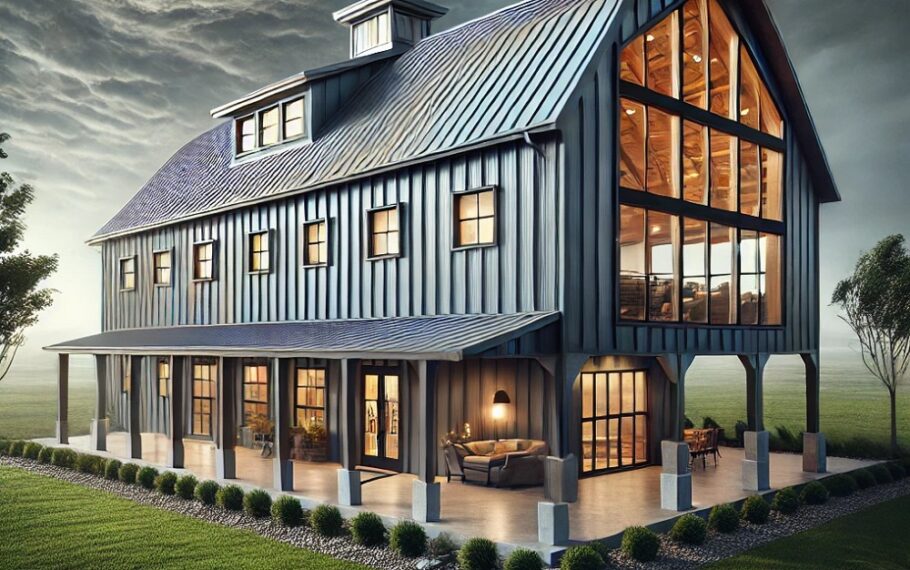
The barndominium presents a unique architectural paradox. It combines the cavernous, open-concept volume of a warehouse with the intimate living requirements of a modern home. While the aesthetic appeals to those seeking space and rustic durability, the thermal dynamics of such a structure can be challenging. A massive, sealed metal box under the summer sun becomes a heat sink, while a sealed box in winter can suffer from stagnant air and moisture buildup.
For decades, the solution has been to rely on heavy machinery—massive HVAC systems, industrial fans, and dehumidifiers. However, a growing shift toward biomimetic engineering is changing how these structures are designed. By looking at one of nature’s most efficient architects—the termite—builders and designers are finding ways to condition these large spaces without relying solely on grid power.
The Master Architects of the Savanna
To understand the future of barndominium ventilation, one must look at the mounds of the Macrotermes genus in Africa and Australia. These structures are not merely piles of dirt; they are sophisticated respiratory organs. A termite mound can stand over 30 feet tall and house millions of insects, all of which generate metabolic heat.
Despite external temperatures swinging from freezing nights to scorching days, the internal temperature of the mound’s fungal gardens remains remarkably stable. The termites achieve this not with air conditioning, but with geometry. The mound acts as a lung, utilizing the buoyancy of warm air and the pressure of external winds to drive a continuous exchange of gases. It is a system of passive ventilation that operates silently and without electricity.
The Stack Effect and Thermal Mass
Translating the biology of a termite mound to a steel-framed barndominium requires an understanding of two core principles: the stack effect and thermal mass.
In a termite mound, the central chimney is warmer than the outside air. As the warm air rises and exits the top, it creates a vacuum at the bottom, drawing fresh, cool air in through subterranean tunnels. This is the stack effect. In a barndominium, this concept can be replicated using a central cupola or a high-ridge monitor roof.
Instead of a low, flat ceiling that traps heat, a biomimetic design incorporates a vertical shaft that runs the length of the ridge. As the sun heats the metal roof, the air within this upper plenum warms and expands. It naturally seeks escape through high-level vents or clerestory windows. This expulsion of hot air pulls cooler air in through low-level intakes positioned on the shaded side of the building or through earth tubes buried underground.
Mimicking the Mound’s Surface Area
Termite mounds feature a complex network of ridges and bumps. This texture is not random; it increases the surface area exposed to the wind, facilitating heat dissipation and gas exchange. A smooth metal wall does little to manage heat, but a corrugated surface or a rain screen facade creates a microclimate.
For barndominium design, this translates to a “double skin” approach. By adding a secondary layer of siding with a gap between it and the structural wall, air can move freely through the cavity. This convective loop carries heat away before it can penetrate the insulation, much like the porous outer layer of a termite mound.
The Concept of Earth Tubes
One of the most effective biomimetic strategies derived from termite mounds is the use of earth-air heat exchangers, or earth tubes. The termites utilize the stable temperature of the soil deep underground to cool the air entering the colony.
In a barndominium setting, this involves running a network of pipes underground before they enter the living space. The earth maintains a consistent temperature of around 55 degrees Fahrenheit depending on latitude. As hot summer air is drawn through these tubes, it loses its heat to the surrounding soil. By the time the air enters the barndominium, it is pre-cooled, reducing the load on traditional HVAC systems. In winter, the process reverses; the earth pre-warms the freezing outside air before it enters the structure.
Structural Orientation and Wind Pressure
Termites build their mounds to face the sun, minimizing the surface area exposed to the midday heat while maximizing exposure to morning and evening breezes. This is known as solar orientation.
Barndominiums are often placed arbitrarily on a lot, but a biomimetic approach demands attention to prevailing winds. The design should incorporate wind scoops or specifically angled intakes that face the dominant summer breeze. This creates positive pressure on the windward side and negative pressure on the leeward side. The natural pressure differential forces air through the living space, even on days when the air is still.
The Role of Moisture Regulation
A significant issue in metal buildings is humidity. The termite mound actively manages moisture through its ventilation network, preventing the growth of mold that would destroy the fungal gardens. Similarly, a barndominium must manage moisture to prevent rust and indoor air quality issues.
Passive ventilation strategies derived from biomimicry ensure that moist air—generated by cooking, bathing, and respiration—is continuously flushed out. By maintaining a slight negative pressure in utility areas and a positive pressure in living areas, the structure breathes. This movement prevents condensation from forming on the steel structure, which is a common failure point in standard barn conversions.
Aesthetics Meets Biology
The integration of these systems does not have to compromise the rugged aesthetic of a barndominium. In fact, it can enhance it. The need for high-level ventilation can be met with architectural features like functional cupolas or monitor roofs that add visual interest to the roofline. The need for low-level intakes can be integrated into the foundation stem wall or discreetly placed louvered vents.
The result is a structure that looks like a barn but performs like a living organism. It regulates its own temperature, manages its own air quality, and reduces its dependence on mechanical systems.
Conclusion
The barndominium is a blank canvas for modern engineering. By abandoning the standard “sealed box” approach and embracing the biological wisdom of the termite mound, it is possible to create homes that are resilient, energy-efficient, and comfortable. The termite, through millions of years of evolution, solved the problem of ventilating a massive structure without power. By mimicking the mound’s chimney effect, thermal mass, and orientation, the barndominium can achieve the same silent, sustainable equilibrium.