
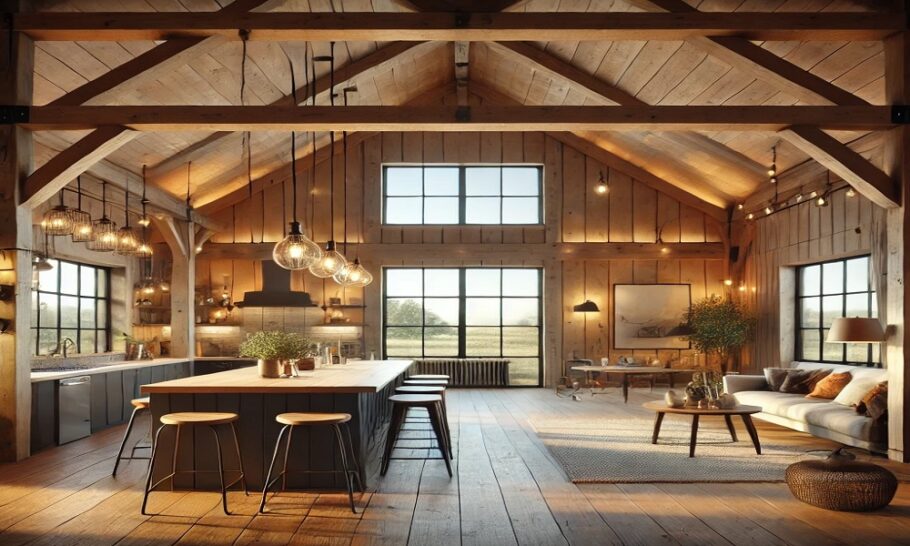
The barndominium movement has taken the housing market by storm, offering a unique blend of rustic aesthetic and modern functionality. But when it comes to heating these expansive, open-concept metal buildings, the conversation inevitably turns to the concrete slab beneath your feet. Radiant floor heating emerges as a compelling option, yet the question lingers: is it a smart financial move or an unnecessary luxury?
The Foundation of Comfort
Understanding how radiant floor heating works with a slab foundation is the first step in evaluating its value. Unlike forced-air systems that blow warm air through vents, radiant heating operates on a simple principle of thermal radiation. During construction, flexible tubing is laid in a pattern across the compacted gravel base, then encased in the concrete pour. This transforms the entire floor into a massive, low-temperature radiator.
The system functions by circulating heated water—or in some cases, electric coils—through this embedded tubing. The concrete mass absorbs the heat and gradually releases it upward, creating an even thermal blanket across the living space. This method eliminates the cold spots and drafts commonly associated with traditional HVAC systems, particularly in the vast, open floor plans characteristic of barndominiums.
The slab itself becomes the primary heat source. There is no need for bulky ductwork that competes with exposed beams and high ceilings for visual space. The heating elements are completely hidden, preserving the clean, industrial aesthetic that draws many to this style of home.
The Energy Efficiency Equation
The financial justification for radiant floor heating hinges largely on energy savings. The laws of thermodynamics favor this system in several key ways. First, water transfers heat more efficiently than air. A hydronic system operates at significantly lower temperatures—often between 85°F and 125°F—compared to the 140°F to 160°F air produced by forced-air furnaces. This lower temperature requirement translates directly into reduced energy consumption, especially when paired with a high-efficiency boiler or a heat pump.
Second, the thermal mass of the concrete slab acts as a battery. Once the floor reaches its target temperature, it holds that heat for extended periods. The system cycles on and off less frequently than a traditional furnace, avoiding the energy spikes associated with constant reheating of cold air. In a well-insulated barndominium, this can lead to operational cost reductions of 15% to 30% compared to conventional heating methods.
The efficiency gains become even more pronounced when considering the building envelope. Barndominiums often feature high ceilings and expansive windows, creating a volume of air that is notoriously difficult to heat with forced air. Radiant floor heating addresses the issue at the source, warming the occupants and objects in the room directly rather than attempting to condition all the air in the space. This targeted approach ensures that energy is not wasted heating the upper reaches of a vaulted ceiling.
The Financial Reality: Upfront Costs vs. Long-Term Gains
The primary deterrent for many is the initial investment. Installing a radiant floor system involves significant upfront costs that exceed those of a standard forced-air furnace. The expense includes the tubing, the manifold system, the boiler or heat source, and the labor involved in careful installation prior to pouring the slab. Retrofitting this system into an existing structure is prohibitively expensive, so the decision must be made during the design phase of the barndominium.
However, this high initial cost must be weighed against the long-term operational savings and the intrinsic value added to the property. In regions with harsh winters, the reduction in monthly utility bills can offset the initial premium over the lifespan of the home. Barndominiums with radiant floor heating often command higher resale values, appealing to buyers who recognize the superior comfort and efficiency of the system.
Maintenance costs are another factor to consider. While a forced-air furnace requires regular filter changes and duct cleaning, radiant systems have fewer moving parts. The tubing is encased in concrete, virtually eliminating the risk of damage or leaks. With proper water treatment and routine checks of the boiler, the system offers decades of reliable service with minimal intervention.
Potential Drawbacks and Mitigations
No system is without its challenges, and radiant floor heating has specific considerations unique to slab construction. One of the most critical is the response time. Because the concrete mass takes time to heat and cool, the system does not offer the instant gratification of a gas furnace. Temperature adjustments occur gradually, requiring a more consistent thermostat setting. This characteristic, while a drawback for some, actually supports the energy efficiency argument by preventing short-cycling and reducing wear on the system.
Floor coverings play a significant role in the system’s effectiveness. Concrete, tile, and natural stone are ideal conductors, allowing heat to pass through efficiently. Thick carpets or heavy area rugs act as insulators, blocking the radiant heat from reaching the living space. In a barndominium, where polished concrete floors are often the preferred aesthetic, the compatibility is perfect.
Finally, the success of the system hinges entirely on the quality of the insulation beneath the slab. Without a proper vapor barrier and rigid foam insulation, the heat will dissipate into the ground rather than rising into the home. This is not an area to compromise, as inadequate insulation negates the energy savings and renders the system inefficient. The insulation cost is a necessary partner to the radiant tubing.
Is It Worth the Investment?
The value proposition of radiant floor heating in a barndominium is highly circumstantial. For those building in cold climates, the combination of reduced energy bills, superior comfort, and the elimination of noisy forced-air systems makes it a compelling choice. The aesthetic advantages are undeniable, preserving the open lines and rustic charm that define the style.
For builders operating on a tight budget, the premium may seem extravagant. However, it is worth noting that the cost of the tubing itself is relatively modest; the significant expense lies in the heat source and the labor. By choosing an appropriate heat source, such as a tankless water heater or an air-to-water heat pump, some of these costs can be managed.
Ultimately, the decision comes down to viewing the barndominium as a long-term investment. The upfront premium is a trade-off for decades of efficient, comfortable heating and a higher quality of life within the home. The lack of ductwork, the silent operation, and the even temperatures across the expansive floor plan create an environment that forced air simply cannot replicate.
For the discerning owner, radiant floor heating is not just a luxury; it is a fundamental component of the barndominium lifestyle, turning the foundation from a mere structural element into the very heart of the home’s comfort system. The energy savings are real, the durability is proven, and the satisfaction of stepping onto a warm slab on a cold winter morning is priceless.