
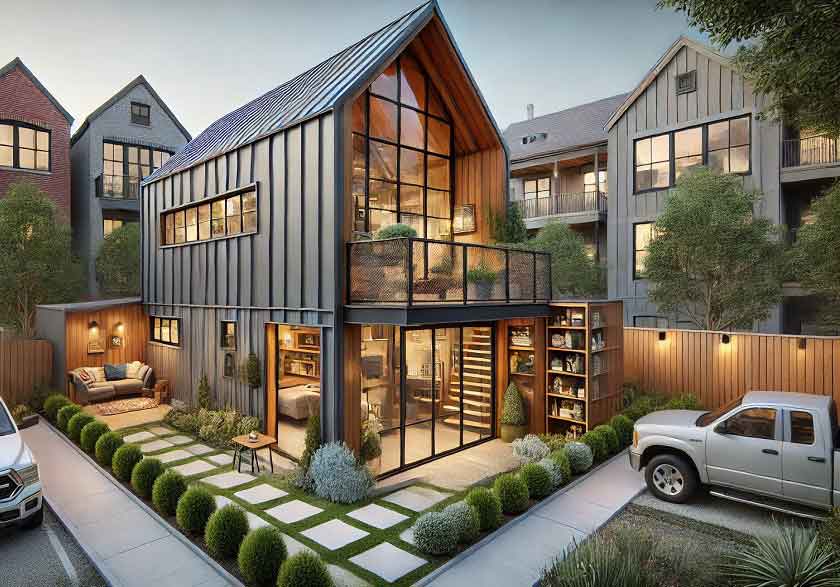
The barndominium trend has exploded across the housing market, and for good reason. These steel-framed structures—originally built as workshop spaces with attached living quarters—have evolved into full-time homes that catch the eye and spark a practical question for anyone dreaming of building: will this actually save money?
The short answer is yes, but the long answer comes with enough caveats to fill a construction manual. Understanding where those savings appear and where they vanish is the difference between a smart financial move and disaster.
Breaking Down the Base Construction Numbers
Let’s start with what the raw data actually shows. A basic traditional stick-built home in the United States averages between $150 and $250 per square foot for standard mid-range finishes. That number climbs fast with site complications, custom features, or regional labor shortages. Barndominiums, by contrast, often fall between $80 and $160 per square foot for the complete package.
That gap looks enormous on paper. A 2,000 square foot traditional house might run $400,000 on the conservative end. The same sized barndominium could come in at $240,000. But those numbers assume apples-to-apples comparisons, which rarely exist in real construction projects.
The shell of a barndominium—the steel frame, roof, and exterior walls—runs significantly cheaper than wood framing. Steel prices fluctuate but generally offer better consistency than dimensional lumber, which saw insane volatility in recent years. A prefabricated barndominium kit might cost $30,000 to $50,000 for the shell, whereas the lumber package alone for a traditional house of similar size could hit $40,000 to $70,000 before a single nail gets driven.
Where Traditional Houses Bleed Money
Conventional construction bleeds cash in places most owners never see. Foundation requirements for two-story stick framing often demand deeper footings and more engineered solutions than a barndominium’s slab-on-grade approach. Those foundation walls need waterproofing, drainage systems, and sometimes insulation upgrades. Each trade brings separate crews with separate schedules and separate invoices.
Framing a traditional house requires carpenters, lots of them. They cut, assemble, and erect walls piece by piece. Interior load-bearing walls add complexity and cost. Roof trusses for complex hip and valley designs multiply labor hours. Every corner of a traditional house represents hours of skilled labor that simply doesn’t exist in a barndominium’s post-frame construction.
Then comes the exterior finishing. Siding, sheathing, house wrap, trim—layers upon layers. Barndominiums typically use steel panels that go up in sheets. One crew, one material, done. That difference alone can save $10,000 to $20,000 on a medium-sized home.
The Hidden Expenses Barndominium Sellers Don’t Mention
Here is where the barndominium dream runs into reality. That $80 per square foot figure assumes open floor plans with minimal interior walls. But most people still want bedrooms, bathrooms, closets, and hallways. Every interior wall framed in a barndominium eats into the savings because those walls aren’t any cheaper to build than in a traditional house.
Insulation presents another major cost difference. A traditional house with 2×6 wall cavities can use standard fiberglass batts at reasonable prices. A barndominium’s steel frame and metal skin create thermal bridging issues that require continuous insulation or spray foam to prevent condensation problems. Spray foam runs three to four times more expensive than fiberglass. Skimping here invites moisture damage, rust, and mold that will destroy the investment entirely.
Plumbing and electrical routing also cost more in barndominiums. Running utilities through a slab means saw-cutting concrete or planning everything perfectly before the pour. Mistakes get expensive fast. Traditional houses with crawl spaces or basements offer easy access for changes and repairs. The barndominium’s concrete slab hides everything, which sounds clean until a pipe bursts.
Location and Land Considerations
Building costs never exist in a vacuum. Local codes and zoning laws play enormous roles in the final price tag. Some rural counties welcome barndominiums with open arms and minimal restrictions. Others require engineered foundation plans, specific wind load certifications, or fire sprinkler systems that erase any potential savings.
Urban and suburban areas often prohibit barndominiums entirely through subdivision covenants or zoning that requires pitched roofs, brick exteriors, or specific architectural styles. Fighting those restrictions costs legal fees and time, two things that destroy construction budgets.
Land preparation costs hit both building types equally. Site grading, well drilling, septic installation, driveway construction, and utility connections don’t care what sits on top of the foundation. A bad access road or rocky soil will cost just as much for a barndominium as for a traditional house.
The Finish Line Paradox
Here is the counterintuitive truth that catches most people off guard. A cheap barndominium and an expensive barndominium start from the same steel shell. The difference comes entirely from interior finishes. Luxury vinyl plank flooring, quartz countertops, custom cabinets, tile showers, and stainless appliances cost the same regardless of what walls surround them.
Many barndominium owners end up spending comparable money to traditional homes because they want nice things inside. The savings from the construction method get reinvested into better finishes. That’s not a bad thing, but it means the final cost per square foot often lands much closer to traditional construction than the early numbers suggest.
Maintenance and Long-Term Costs
Steel roofs last forty to seventy years. Asphalt shingles manage twenty to thirty. Barndominiums win the roof replacement game by a landslide. The steel exterior panels also resist fire, insects, and rot in ways that wood siding never can. Those advantages add real value over decades of ownership.
However, barndominiums face their own maintenance challenges. The steel panels need occasional pressure washing and touch-up painting where scratches occur. The foam insulation behind those panels makes future wall modifications difficult and messy. Adding a new window or exterior outlet becomes a demolition project rather than a simple cut-and-frame job.
Traditional houses offer easier modification paths. Adding onto a stick-built home involves matching existing construction methods. Adding onto a barndominium means cutting into steel panels and matching them perfectly, which requires specialized tools and skills that local handymen don’t typically carry.
The Financing and Resale Reality
This section alone eliminates barndominiums as an option for many buyers. Traditional mortgages come easily for stick-built homes. Banks understand the construction process, the appraisals, and the resale market. Barndominiums fall into a gray area that many lenders avoid.
Some banks classify barndominiums as agricultural structures regardless of the living space inside. Others require larger down payments, typically twenty to thirty percent compared to the five percent possible for conventional homes. Interest rates often run higher due to perceived risk. These financing costs add real money to the project that never appears in the per-square-foot calculations.
Resale value presents another unknown. A traditional house in a good neighborhood will always find buyers. A barndominium appeals to a specific buyer who wants that particular lifestyle. That smaller pool can mean longer selling times and lower offers. Some barndominiums appreciate nicely, especially in rural areas where land values rise. Others struggle to compete with conventional homes in more established markets.
The Verdict on Total Costs
A barndominium genuinely costs less to build than a traditional house when comparing similar square footage and similar finish levels. The savings typically range from ten to twenty percent, not the fifty percent that clickbait headlines suggest. That ten to twenty percent represents real money, potentially $40,000 to $80,000 on a 2,000 square foot home.
Those savings come with tradeoffs. Financing difficulties, resale uncertainties, modification challenges, and specific maintenance requirements accompany every dollar saved. Traditional houses cost more but offer flexibility, easier mortgages, and broader buyer appeal.
For someone building on rural land with cash or a construction loan, barndominiums make excellent financial sense. The open floor plans, high ceilings, and workshop space appeal to specific lifestyles. For someone building in a suburban subdivision who needs a standard mortgage, traditional construction remains the practical choice despite the higher price tag.
The cheapest option of all might surprise no one: buying an existing traditional house. Existing homes almost always cost less per square foot than new construction of any type. Barndominiums compete in the new construction market, where every method carries premium pricing compared to existing inventory.
Building any new home costs serious money. Barndominiums reduce some of that cost without eliminating it entirely. The smart approach runs the real numbers for a specific property, calls local lenders for financing details, and compares those results to buying an existing home. That clear-eyed comparison reveals the true answer for any particular situation, which beats any general rule about which building method wins the cost battle.