
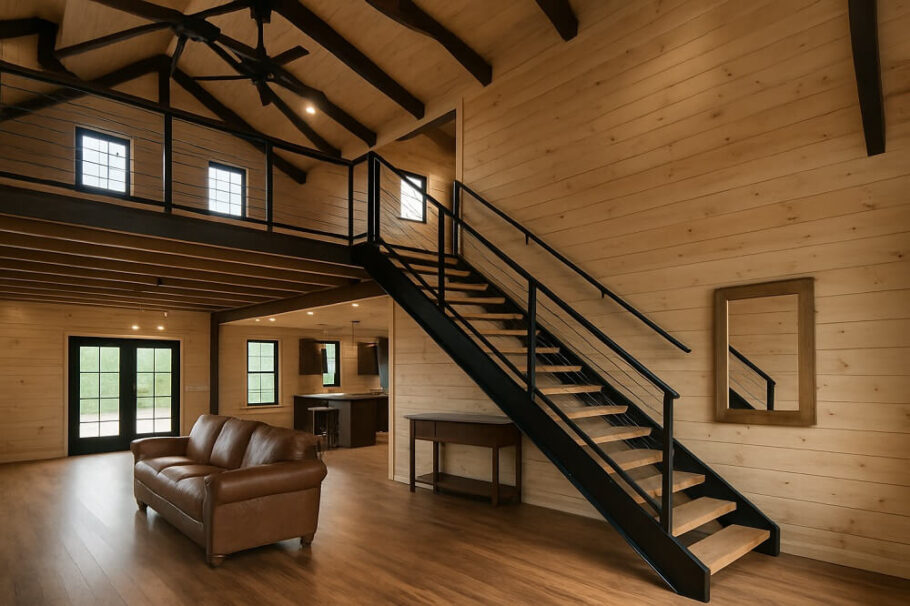
In barndominium design, staircases are far more than a functional link between floors. They play a critical role in how the structure feels, flows, and functions. Because barndominiums often feature open floor plans, tall ceilings, exposed structural elements, and mixed materials, the staircase frequently becomes a focal architectural feature rather than something hidden away.
A well-designed barndominium staircase balances safety, building code requirements, space efficiency, and visual impact. Whether the staircase is a simple straight run tucked against a wall or a dramatic floating centerpiece rising through an open great room, thoughtful design choices can significantly elevate the overall character of the home.
This guide explores barndominium staircase design from every angle, including layout options, material choices, structural considerations, safety requirements, and design trends. If you’re planning a loft, second story, or mezzanine in your barndominium, the staircase deserves just as much attention as the floor plan itself.
Why Staircase Design Matters in Barndominiums
Barndominiums differ from conventional homes in both form and construction. Many feature steel frames, post-frame systems, or hybrid metal-and-wood structures. Interior spaces are often wide open, with fewer walls and longer sightlines. Because of this openness, staircases are rarely hidden in hallways or enclosed stairwells.
Instead, staircases are usually visible from main living spaces, kitchens, or entry areas. This makes them a major visual element that can either complement the barndominium’s design or feel awkward and out of place if poorly planned.
Beyond aesthetics, staircases influence how efficiently space is used. A bulky staircase can disrupt traffic flow or consume valuable square footage, while a well-integrated design can double as storage, seating, or a visual divider between spaces.
Common Staircase Layouts for Barndominiums
Choosing the right staircase layout depends on available space, ceiling height, structural system, and how the upper level will be used.
Straight Staircases
Straight staircases are one of the most common and cost-effective options for barndominiums. They consist of a single uninterrupted run from one level to the next.
This layout works well in barndominiums with long, narrow footprints or when the staircase can be placed along an exterior or interior wall. Straight staircases are easy to build, simple to frame, and generally less expensive than more complex designs.
However, they require more linear space than other layouts. In open-plan barndominiums, designers often enhance straight staircases with bold materials, open risers, or custom railings to avoid a plain or utilitarian appearance.
L-Shaped Staircases
L-shaped staircases include a landing that creates a 90-degree turn. This design offers a good balance between space efficiency and visual interest.
In barndominiums, L-shaped stairs work particularly well when transitioning from a main living area to a loft or second floor. The landing can also improve safety by reducing fall distance and providing a resting point.
From a design perspective, L-shaped staircases allow for creative railing designs and can be positioned to frame views or define zones within an open floor plan.
U-Shaped Staircases
U-shaped staircases, also called switchback stairs, make two turns with a landing in between. They are more compact than straight stairs and provide a strong architectural presence.
This layout is ideal for barndominiums with limited floor space but ample ceiling height. U-shaped staircases can be placed near the center of the home or tucked into corners while still feeling intentional and well-integrated.
Structurally, U-shaped stairs often feel more solid and substantial, which pairs well with the industrial or rustic character common in barndominium interiors.
Spiral Staircases
Spiral staircases are a space-saving solution often used to access lofts or secondary spaces rather than primary living levels.
In barndominiums, spiral stairs can be visually striking, especially when constructed from steel, reclaimed wood, or a combination of materials. They are particularly useful in smaller builds, guest suites, or workshop lofts.
However, spiral staircases can be less comfortable to use daily and may not meet building code requirements as the primary staircase in many jurisdictions. They are best used as secondary stairs or accent features.
Materials That Define Barndominium Staircases
Material selection is one of the most impactful decisions in staircase design. Barndominiums lend themselves to bold, honest materials that showcase structure and craftsmanship.
Steel Staircases
Steel staircases align naturally with metal-framed barndominiums. They offer exceptional strength, slim profiles, and a modern industrial aesthetic.
Steel can be used for stringers, treads, railings, or the entire staircase structure. Powder-coated finishes, raw steel patina, or blackened steel treatments are all popular choices.
One advantage of steel staircases is their ability to span longer distances with fewer supports, making them ideal for open-concept interiors.
Wood Staircases
Wood brings warmth and balance to barndominium interiors dominated by metal, concrete, and glass. Many homeowners choose wood treads paired with steel stringers for a blended industrial-rustic look.
Popular wood options include oak, maple, hickory, and reclaimed barn wood. The choice of wood species and finish can dramatically influence whether the staircase feels modern, farmhouse-inspired, or traditional.
Wood staircases also offer acoustic benefits, helping soften sound in large, open spaces.
Concrete Staircases
Concrete staircases are less common but highly effective in modern or minimalist barndominium designs. They are durable, fire-resistant, and visually striking when paired with steel railings or glass panels.
Concrete stairs work best in slab-on-grade barndominiums or when planned early in the structural design. While more expensive to construct, they provide unmatched longevity and a strong architectural statement.
Open vs Closed Riser Staircases
Riser design affects both appearance and functionality.
Open Riser Staircases
Open riser staircases have gaps between treads, allowing light to pass through. This creates an airy, modern look that enhances the openness of barndominium interiors.
They work particularly well in spaces with tall ceilings, large windows, and minimalist design themes. Open risers visually reduce the staircase’s mass, making it feel lighter and less intrusive.
However, open risers must meet specific building code requirements for gap size and safety, especially in homes with children or pets.
Closed Riser Staircases
Closed riser staircases are more traditional and provide a solid, enclosed look. They offer better sound control and a greater sense of privacy between levels.
In barndominiums, closed risers can be used to incorporate storage drawers, shelving, or built-in cabinetry beneath the stairs, maximizing functionality.
Staircase Railings and Guardrails
Railings are both a safety requirement and a major design opportunity.
Metal Railings
Metal railings, including horizontal steel bars or cable systems, are extremely popular in barndominiums. They complement steel framing and provide a clean, contemporary appearance.
Cable railings are especially effective for preserving views and maintaining openness while meeting safety standards.
Wood Railings
Wood railings pair well with farmhouse, rustic, or traditional barndominium designs. They can be simple and understated or highly decorative, depending on the desired aesthetic.
Wood railings also feel warmer to the touch and can be easier to customize with unique profiles and finishes.
Glass Railings
Glass railings create a sleek, high-end look and allow maximum light flow. They are ideal for modern barndominiums with scenic views or dramatic interior architecture.
While more expensive, glass railings can make a staircase nearly invisible, allowing other design elements to take center stage.
Safety, Code, and Structural Considerations
Staircase design must comply with local building codes, which typically regulate tread depth, riser height, handrail placement, headroom clearance, and guardrail height.
In barndominiums with steel frames, coordination between the structural engineer and staircase designer is critical. Staircases may need to tie into steel beams, mezzanine decks, or concrete slabs, and load paths must be carefully planned.
Fire safety is another consideration, particularly in open staircases that connect multiple levels. Material choices and placement can influence how fire and smoke move through the home.
Staircases as Architectural Features
One of the greatest advantages of barndominium design is the freedom to make bold architectural statements. Staircases can serve as sculptural elements, room dividers, or visual anchors within large open spaces.
Floating staircases with concealed supports, dramatic switchback designs, or staircases integrated with bookshelves and storage walls are all popular approaches.
Lighting also plays a major role. Integrated LED tread lighting, under-stair accent lights, or statement pendants above stair landings can enhance both safety and atmosphere.
Designing for Future Flexibility
As barndominiums are often built with long-term adaptability in mind, staircase design should consider future needs. Wider treads, sturdy handrails, and gentle riser heights improve accessibility and comfort over time.
Some homeowners plan for future stair lifts or alternative access routes, especially when building a forever home. Thoughtful planning at the design stage can avoid costly modifications later.
Final Thoughts on Barndominium Staircase Design
Barndominium staircase design is a careful balance of engineering, aesthetics, and everyday usability. Because staircases are so visible and frequently used, they deserve the same level of attention as kitchens, living spaces, and exterior elevations.
Whether your barndominium leans industrial, modern, rustic, or farmhouse-inspired, the right staircase design can unify materials, enhance spatial flow, and become a defining feature of the home. By considering layout, materials, safety, and long-term flexibility, you can create a staircase that is not only functional but truly integral to the overall design.