
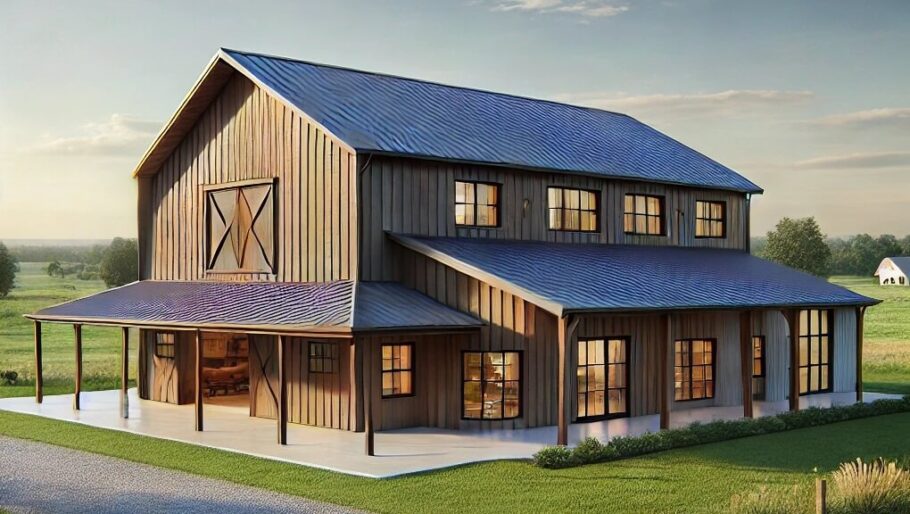
Choosing the right roofing for a barndo isn’t quite the same as picking shingles for a traditional suburban colonial. You have a unique structure that blends residential living with the bones of an agricultural building. Your roof has to perform a high-wire act: it needs to be tough enough to withstand the elements for half a century, yet attractive enough to make your home feel like, well, a home.
It’s the intersection of durability and aesthetics. Get it right, and you have a stunning, low-maintenance home that stands tall against the weather. Get it wrong, and you might be looking at leaks, high energy bills, or a rusted-out eyesore in a decade.
Let’s dive deep into the world of barndominium roofing. We’ll explore the heavy hitters in the material world, weigh their pros and cons, and help you figure out which one fits your dream barndo like a glove.
The Reigning Champion: Standing Seam Metal Roofs
If you’ve done any research at all, you know that metal roofing is the default choice for barndominiums. It’s practically in the name. But within the metal roofing category, there is a clear winner for those prioritizing longevity and a clean look: the standing seam metal roof.
What is it?
Unlike the older style of corrugated metal panels that are screwed directly through the face (exposed fastener panels), a standing seam roof uses vertical panels that interlock with hidden clips. The panels run from the ridge of the roof to the eaves, and the seams—where two panels connect—rise vertically above the plane of the roof. These seams are then mechanically seamed or snapped together. The fasteners are hidden underneath, clamped by those clips, which also allow the metal to expand and contract with temperature changes.
The Durability Factor
This is where the standing seam truly shines. Because there are no exposed screws on the surface, you’ve eliminated the single most common point of failure in metal roofing. Exposed fastener roofs rely on rubber washers under the screw heads to keep water out. Over time, the sun bakes those washers, they dry out and crack, and suddenly you have a leak. Standing seam has no such vulnerability.
The hidden clip system is another durability win. Metal expands and contracts as the sun beats down on it and as it cools at night. If the panels are locked down too tight, they can warp, oil-can, or even tear the fasteners out of the decking. Because standing seam panels “float” on these clips, they can move freely, ensuring the roof remains watertight and sleek for 50 years or more. Many manufacturers offer warranties of 40+ years, which is essentially a lifetime for most homeowners.
The Aesthetic Appeal
Aesthetically, a standing seam roof provides clean, continuous lines that run vertically. This draws the eye up and down, which can make your barndominium look taller and more substantial. It’s the roof you see on high-end, modern farmhouses and upscale barn conversions. It offers a crisp, architectural look that immediately elevates a barndominium from “pole barn” to “custom home.” You can choose from a vast array of colors, from classic galvanized silver and charcoal gray to bolder hues like evergreen or navy.
Cost Consideration
There’s no way around it: standing seam is the premium option. It costs more than other types of roofing due to the materials, the complex clips, and the specialized labor required to install it. It’s an investment, but for many barndo owners, the peace of mind and the aesthetic payoff are worth every penny.
The Budget-Friendly Workhorse: Exposed Fastener (Corrugated) Metal Panels
If standing seam is the luxury sedan, exposed fastener metal panels are the reliable pickup truck. They’ve been a staple of agricultural and industrial buildings for over a century, and they still have a solid place in the barndominium world, especially for those on a stricter budget.
What is it?
These are your classic metal panels—often ribbed or corrugated for strength—that are laid down and screwed directly through the face and into the roof deck or purlins below. The screws have a rubber or neoprene washer to seal the hole.
The Durability Factor
Don’t let the “budget” label fool you; a properly installed exposed fastener roof can be incredibly durable. The steel itself is tough, resistant to impact, fire, and rot. It handles heavy snow loads and high winds well.
However, the longevity is tied directly to those screws. As mentioned, the washer seals are the weak link. In hot, sunny climates, they may only last 10-15 years before they start to crack. This means the roof requires ongoing maintenance. A responsible homeowner will need to walk the roof (safely, of course) every few years, check for compromised screws, and replace them. You can also have a crew come out and re-seat all the screws with new ones, but that’s a labor cost. Furthermore, because the panels are screwed down tight, they don’t handle thermal expansion as gracefully, which can sometimes lead to minor warping or “oil-canning” over very long periods.
The Aesthetic Appeal
This is subjective. The classic ribbed or corrugated look is the very definition of rustic, agricultural charm. For a barndominium that aims for a true “converted barn” feel, it’s perfect. It looks honest and utilitarian. However, it doesn’t have the sleek, refined look of a standing seam roof. If your barndo is in a suburban setting or you’re going for a more polished, contemporary farmhouse aesthetic, the visible screw lines every couple of feet might detract from the clean look you’re after.
The Verdict
It’s a fantastic option for a workshop, a garage, or a barndominium where the budget is a primary concern, or where the rustic look is precisely what you want. Just go into it knowing that you’re signing up for a bit more maintenance down the road.
Stepping Away from Steel: Architectural Shingles
Here’s where we break the “barndominium = metal” mold. There is absolutely no rule that says you must have a metal roof. Many barndo owners, particularly those in traditional neighborhoods or those who simply prefer the look, opt for high-quality architectural asphalt shingles.
What is it?
Forget the thin, three-tab shingles of yesteryear. Modern architectural shingles (also called laminate or dimensional shingles) are thicker, heavier, and more durable. They are constructed with a fiberglass mat base coated with waterproof asphalt and ceramic granules. The “laminate” part means they have two or more layers of material bonded together, which creates a textured, three-dimensional look that can mimic the appearance of wood shake or slate.
The Durability Factor
A high-end architectural shingle is a serious roofing material. Many come with wind warranties of 110 mph or more and impact resistance ratings that can withstand hail. A well-vented, properly installed shingle roof can easily last 25-30 years.
They are also forgiving. Unlike metal, which can dent, shingles absorb light impacts. They provide a solid, traditional barrier against the elements. However, they are not invincible. In extremely hot climates, the heat can accelerate granule loss and aging. In very cold climates, ice dams can be a concern if the attic isn’t properly insulated and ventilated. But for most of the country, they are a proven, reliable performer.
The Aesthetic Appeal
This is the primary reason many people choose shingles for their barndominium. If you want your barndo to blend seamlessly into a neighborhood of traditional homes, a shingle roof is the way to do it. It softens the industrial lines of the building and gives it a familiar, residential character. The range of colors and styles is vast. You can get shingles that look like they’re made of wood, slate, or even a subtle, uniform color that ties into the rest of the home’s exterior. For a barndominium that is more “home” than “barn,” architectural shingles are a perfect choice.
The Rustic Showstopper: Metal Shingles and Shake
What if you love the durability of metal but want the look of wood or slate? Enter metal shingles and shake. This is where roofing technology meets high design.
What is it?
These are individual metal panels, usually made of steel or aluminum, that are stamped to look exactly like traditional cedar shakes, slate tiles, or clay tiles. They are installed in an overlapping pattern, just like their natural counterparts.
The Durability Factor
This category combines the best of both worlds. You get the Class A fire rating, impact resistance, and incredible longevity of metal—often 50 years or more—with zero of the maintenance required for real wood (which must be treated against rot, insects, and fire) or real slate (which is heavy and brittle). They are lightweight, so they don’t require the heavy structural reinforcement that real slate or tile would demand. They handle wind, rain, and snow superbly.
The Aesthetic Appeal
This is the premium look. A barndominium roofed with metal shake has a stunning, hand-crafted appearance. It has texture, depth, and a richness that flat panels simply can’t match. It’s ideal for a barndo that aspires to look like a rustic lodge or a high-end country estate. You get that gorgeous, rugged wood look without worrying about it rotting away in a decade. It’s a bold choice that makes a statement.
The Cost
This is a significant investment, often rivaling or exceeding the cost of a standing seam roof. The manufacturing process for these stamped tiles is more complex, and installation is more labor-intensive than laying down large panels. But for the homeowner who wants that “wow” factor that will last a lifetime, it’s often money well spent.
Beyond the Material: Critical Roofing Considerations
Choosing the material is the big decision, but a few other factors will make or break your roof’s performance.
Insulation and the Thermal Break
This is arguably the most critical detail for a metal roof on a barndominium. In the summer, an uninsulated metal roof can turn your home into an oven. In the winter, it can be a source of massive heat loss. More importantly, in mixed climates, warm, moist interior air can hit the cold underside of the metal deck and condense, leading to dripping water (sweating) and potential mold growth.
You must have a proper insulation plan. This often involves using a “thermal break”—a layer of material that separates the metal from the structure. This can be rigid foam insulation boards installed over the purlins before the metal is attached, or a system using insulated metal panels. For shingle roofs, traditional attic insulation with baffles for ventilation is the standard, effective approach.
Building Codes and Weather
Never assume. Before you fall in love with a color or a material, check your local building codes. If you live in an area prone to wildfires, a Class A fire-rated metal roof might be mandatory. In hurricane zones, the wind uplift rating of your chosen roofing system is non-negotiable. In heavy snow country, the roof pitch and structural capacity are paramount. Your roofer and builder should be well-versed in local requirements, but it’s good to be an informed client.
Making the Final Choice
So, how do you decide? It helps to ask yourself a few strategic questions.
- What is your budget? This will quickly narrow the field. Exposed fastener metal is the low-cost metal leader. Architectural shingles are a mid-range standard. Standing seam and metal shakes are the premium options.
- What is your non-negotiable aesthetic? Do you dream of sleek, modern lines (standing seam)? Do you want rustic, rural charm (exposed fastener)? Or do you want to completely camouflage the barndo into a traditional neighborhood (architectural shingles)? Let your vision guide you.
- How long do you plan to stay? If this is your “forever home,” investing in a 50-year standing seam or metal shake roof makes perfect sense. If you might sell in 10-15 years, a high-quality shingle roof offers excellent curb appeal at a lower cost, and the next owner can decide about the next roof.
- Where do you live? Your climate is a huge factor. In the hot, sunny South, the thermal movement and UV resistance of a standing seam system are huge advantages. In a temperate climate, a shingle roof might be perfectly adequate and more cost-effective.
Ultimately, the “right” roof for your barndominium is the one that makes you smile every time you pull into the driveway, while quietly doing its job of protecting everything underneath it. It’s a marriage of form and function. Whether you choose the industrial elegance of standing seam, the honest utility of corrugated panels, the familiar comfort of shingles, or the rustic grandeur of metal shake, you are building a home that is uniquely yours. Choose wisely, and that roof will shelter your stories for decades to come.