
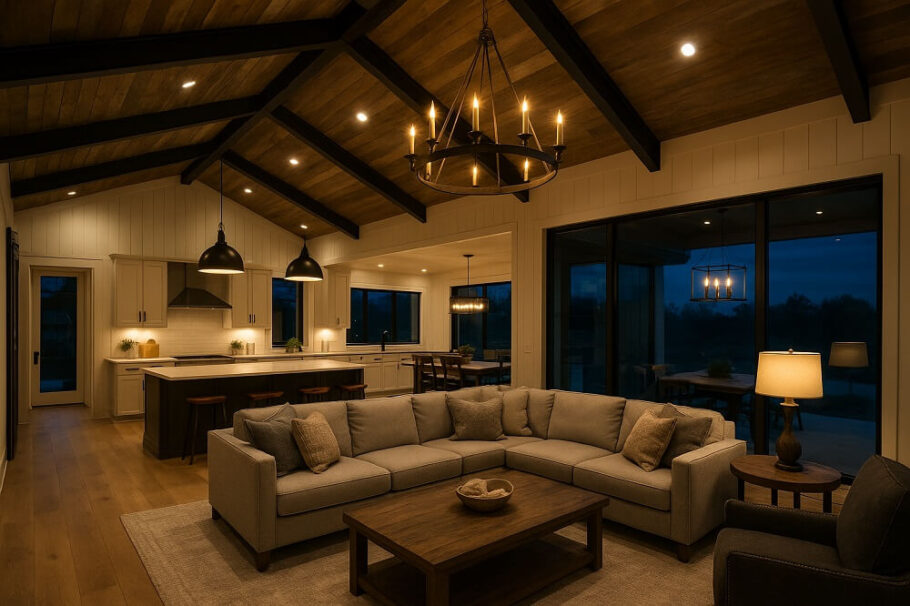
The barndominium presents a unique architectural challenge. Expansive, open-concept layouts that celebrate volume and raw materials require a lighting strategy that does more than simply illuminate. In a space where living, dining, and cooking often merge under one soaring ceiling, light must define zones, enhance texture, and adapt to daily rhythms—all without cluttering the visual openness that defines the style.
The Role of Light in Open-Concept Living
Without interior walls to separate functions, light becomes the primary tool for carving out distinct spaces. A well-designed lighting plan in a barndominium does not just brighten; it orchestrates. The goal is to avoid the “warehouse” effect—that flat, overlit sensation that drains warmth from metal-clad interiors. The solution lies in layering: ambient, task, and accent lighting working in concert to create depth and interest.
The Case for Industrial Pendants
Industrial pendants are the workhorses of barndominium lighting. Their raw, utilitarian aesthetic resonates with the building’s agricultural roots, but their function goes far beyond style. A row of oversized metal pendants hung over a kitchen island or dining table anchors that zone in the vastness of the open floor plan. The key is scale. In a space with 20-foot ceilings, a tiny pendant gets lost. Instead, choose fixtures with large diameters or dramatic lengths that visually reach down into the living space. The material matters too: weathered galvanized steel, matte black iron, or aged copper adds patina and richness.
Harnessing Natural Light with Skylights and Clerestory Windows
The best light is the one that costs nothing. Barndominiums, with their vast roof spans, are ideal candidates for skylights and clerestory windows. These aren’t mere architectural afterthoughts—they are strategic tools for combating the interior gloom that can plague deep, metal-walled structures. South-facing skylights flood the interior with consistent, warm light throughout the day, reducing the need for artificial illumination. The soft, diffused light from above minimizes harsh shadows on work surfaces and living areas.
More Than Just Ceilings: The Importance of Wall Washing
Volume is a barndominium’s greatest asset and its greatest lighting challenge. Ceiling-mounted fixtures often fail to illuminate vertical surfaces, leaving the perimeter of the space in murky shadow. This is where wall-washing techniques transform the environment. Recessed adjustable fixtures or track lighting aimed at exposed brick, wood-clad feature walls, or shiplap bring texture to life. The interplay of light and shadow across these surfaces adds the warmth and character that a barndominium requires to feel like a home rather than an airplane hangar.
Integrating Track Lighting for Flexibility
In spaces where furniture arrangements might shift, track lighting offers a practical solution. A sleek, low-profile track system running the length of the main living area allows the repositioning of individual light heads to accommodate changes in layout. The modern, minimalist tracks blend seamlessly with industrial aesthetics and provide pinpoint accent lighting for art or architectural details.
The Zone-Defining Power of Floor and Table Lamps
Hardwired fixtures provide the structure, but portable lamps inject the soul. In an open-concept barndominium, a well-placed arc floor lamp over a reading chair or a collection of sculptural table lamps on a credenza signals “this is a conversation area.” These sources of lower, warmer light offer a counterpoint to the potentially harsh overhead industrial fixtures, adding layers of intimacy to the vast space.
Task Lighting for Functionality
Kitchens and workspaces demand focused, shadow-free illumination. Under-cabinet lighting is non-negotiable in the barndominium kitchen. Strip lights mounted beneath upper cabinets banish countertop shadows, making food preparation safer and more pleasant. Similarly, a dedicated task light over a desk or hobby area ensures that functional zones are equipped for their purpose without compromising the overall lighting ambiance.
Dimming Controls for Ambiance
Perhaps the most critical element of barndominium lighting is the ability to control it. A grand, open space with all lights blazing at full intensity can feel like a surgical theater. Installing dimmer switches on all overhead and task lighting provides the flexibility to transition from the bright, clear light needed for daytime cleaning to the soft, subdued glow required for an evening of relaxation.
Avoiding Common Lighting Pitfalls
Over-reliance on recessed can lights is a common error in large structures. While necessary for general illumination, a ceiling full of pot lights creates a uniform, uninspiring glow that flattens the space. Pairing these downlights with statement pendants and accent lighting provides contrast and visual hierarchy. Equally important is the selection of the right color temperature. Warmer tones (2700K to 3000K) are almost always preferable to the sterile cool whites (4000K and above) that make metal and concrete feel cold and institutional.
The goal of barndominium lighting design is not to showcase the fixtures, but to showcase the life within. Each light source—whether a rugged pendant, a band of natural light from a skylight, or the warm glow of a table lamp—plays a part in making the vast, open floor plan feel welcoming, functional, and deeply personal. The result is a space that honors its industrial roots while providing a comfortable, modern place to live.