
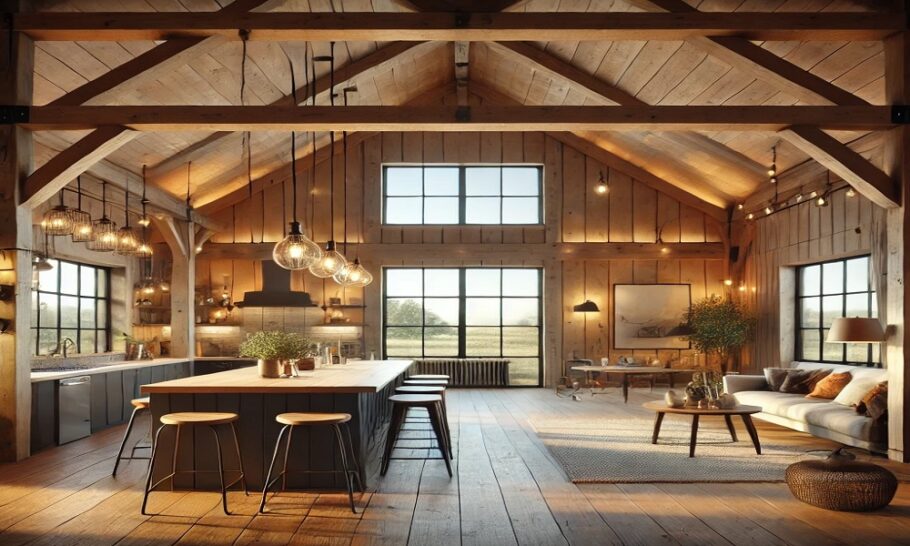
Barndominiums are known for their wide-open layouts, soaring ceilings, and industrial charm. While that spaciousness is one of their biggest selling points, it can also become a design challenge. Without careful planning, large, open interiors can feel empty, inefficient, or difficult to organize. The secret to a truly functional and beautiful barndominium lies in smart interior design techniques that maximize every square foot while maintaining the open, airy feel people love.
In this guide, we’ll explore practical and creative ways to maximize space in your barndominium interior, turning large, open areas into well-organized, comfortable, and visually appealing living environments.
Embrace the Open-Concept Layout with Purpose
Open floor plans are the foundation of most barndominium interiors. While the lack of walls creates a sense of freedom and light, it also requires intentional structure to prevent the space from feeling chaotic.
Start by defining zones rather than rooms. Use furniture placement to create visual boundaries, such as positioning a sofa to separate the living room from the dining area or using a kitchen island as a divider between cooking and social spaces. Large area rugs are another effective tool for visually anchoring different zones without closing them off. Lighting can also help define areas, such as pendant lights over the kitchen island and softer, ambient lighting in the living space.
The goal is to maintain openness while giving each functional area its own identity.
Use Vertical Space to Its Full Potential
One of the most powerful space-maximizing advantages of a barndominium is the vertical height. High ceilings aren’t just visually impressive; they are incredibly useful.
Installing tall cabinetry that reaches the ceiling helps eliminate wasted space and provides extra storage. Open shelving can be used both for storage and display, drawing the eye upward and making the space feel larger. Consider adding loft areas above bedrooms, offices, or living rooms. These lofts can be used as guest rooms, home offices, reading nooks, or extra storage.
Vertical space can also be enhanced with tall windows, floor-to-ceiling curtains, and vertical wall paneling to emphasize height and openness.
Choose Multifunctional Furniture
In a space meant to be flexible and efficient, multifunctional furniture is a game changer. Instead of traditional single-use pieces, opt for furniture that serves multiple purposes.
Sofa beds, daybeds, and pull-out couches are excellent for turning living areas into guest rooms. Storage ottomans provide hidden storage while doubling as seating or footrests. Dining tables with built-in storage or expandable leaves help adapt the space for daily use or special occasions.
Wall-mounted desks that fold away and Murphy beds are particularly useful in smaller barndominiums or studio-style designs, allowing rooms to transform based on your needs throughout the day.
Create Smart Storage Solutions
Maximizing space isn’t only about layout; it’s also about reducing clutter through smart storage. Custom built-ins are ideal for barndominiums because they can be tailored to fit unconventional wall heights and layouts.
Under-stair storage is one of the most underutilized opportunities in barndominium design. Drawers, cabinets, and open shelves built into staircases can store everything from shoes to cleaning supplies. Window seats with hidden storage compartments add functionality without taking up extra space.
Closets should be designed with efficiency in mind. Adjustable shelving, double hanging rods, pull-out baskets, and shoe racks help maximize every inch of closet space. Walk-in pantries with vertical shelving make kitchens far more functional without expanding their footprint.
Use Light and Color to Expand the Feel of Space
Colors and lighting have a powerful psychological impact on how big a space feels. Lighter color palettes tend to make spaces feel more open and expansive. Soft whites, warm beiges, light grays, and pale earth tones reflect light and visually enlarge the room.
Large windows and glass doors should be a design priority whenever possible. Natural light makes interiors feel larger, healthier, and more inviting. Avoid heavy, dark curtains that block light; instead, opt for sheer or light-filtering fabrics.
Layered lighting also plays a major role in maximizing perceived space. Combine recessed ceiling lights, wall sconces, floor lamps, and task lighting to eliminate dark corners and create depth throughout the interior.
Design the Kitchen for Efficiency and Flow
The kitchen is often the heart of a barndominium, and its design can significantly impact how spacious the entire home feels. An efficient kitchen layout improves movement and reduces wasted space.
Large kitchen islands can serve multiple functions, acting as prep space, dining tables, storage units, and social hubs. Use deep drawers instead of lower cabinets for easier access and better organization. Pull-out pantry systems make narrow spaces highly functional.
Open shelving instead of upper cabinets can make the kitchen feel lighter and less crowded. However, balance is important, as too many open shelves can feel visually cluttered.
Use Sliding Doors Instead of Swing Doors
Traditional swing doors take up valuable floor space due to the clearance they require. Sliding doors are a smart alternative that helps maximize usable square footage.
Barn-style sliding doors are particularly fitting for barndominium aesthetics. They work well for bedrooms, bathrooms, home offices, and pantries. Pocket doors that slide inside the wall are another excellent option, especially for bathrooms and closets where privacy is required without sacrificing floor space.
Incorporate Built-In Seating and Workspaces
Built-in furniture saves space and creates a streamlined look. Window benches, breakfast nooks, and built-in desks eliminate the need for bulky, standalone furniture.
A built-in breakfast nook, for example, can turn an awkward corner into a cozy and functional dining area. Wall-mounted desks with shelving above them are ideal for creating compact home offices without dedicating an entire room.
These custom features make the interior feel intentional, organized, and visually cohesive.
Keep the Layout Flexible and Adaptable
One of the biggest advantages of a barndominium is adaptability. Your interior should be designed to evolve with your needs.
Use modular furniture that can be rearranged easily. Rolling kitchen islands, movable shelving units, and lightweight furniture allow you to reconfigure your space without major renovations. Room dividers, curtains, and folding screens can temporarily divide spaces when privacy is needed and then be removed to restore openness.
This flexibility is especially valuable for growing families, home-based businesses, or multi-generational living arrangements.
Design Bedrooms to Feel Spacious and Calm
Bedrooms in barndominiums often benefit from the same open, airy feeling as the main living areas. Platform beds with built-in drawers reduce the need for bulky dressers. Floating nightstands and wall-mounted lighting free up floor space and create a cleaner look.
Closets can be integrated into the bedroom design using sliding doors or open wardrobe systems. Mirrors are also extremely effective in making bedrooms feel larger and brighter.
Minimalism works particularly well in barndominium bedrooms. Keeping decor simple and intentional helps preserve the feeling of spaciousness.
Turn Unused Corners into Functional Zones
Large, open interiors often leave awkward or underused corners. These spaces are valuable opportunities.
A small reading nook with a chair and built-in bookshelf can transform an empty corner into a cozy retreat. A compact workstation can fit beneath a staircase or beside a window. Even narrow hallways can be turned into functional areas with slim console tables, floating shelves, or gallery walls.
Every corner can serve a purpose when designed thoughtfully.
Balance Industrial Elements with Warmth
Many barndominiums feature metal, concrete, and exposed structural elements. While these materials contribute to the overall character, too much industrial design can make the space feel cold and overwhelming.
Balancing these elements with warm wood tones, textured fabrics, plants, and soft lighting helps create a more comfortable environment. Rugs, curtains, throw pillows, and upholstered furniture soften the acoustics and visually warm up large, open spaces.
A well-balanced interior feels spacious but not sterile.
Storage Above and Below: Don’t Waste Hidden Spaces
Maximizing space also means looking beyond the obvious. Space above cabinets, under beds, beneath furniture, and even above doors can be used creatively.
Overhead storage racks in utility rooms or garages add functionality without affecting the main living spaces. Under-bed storage drawers or rolling containers make use of space that would otherwise be wasted.
Built-in shelving above door frames can be used for books, décor, or seasonal storage, especially in high-ceiling barndominiums.
Conclusion: A Spacious Home That Works for You
Maximizing space in a barndominium interior is about more than just fitting everything in. It’s about creating a home that feels open, organized, and adaptable to your lifestyle. By using vertical space, multifunctional furniture, smart storage, strategic lighting, and thoughtful layouts, you can transform even the most expansive barndominium into a highly efficient and comfortable living space.
The beauty of barndominium living lies in its flexibility. With the right design strategies, your interior can be both spacious and highly functional, offering the perfect balance between freedom, comfort, and smart living.