
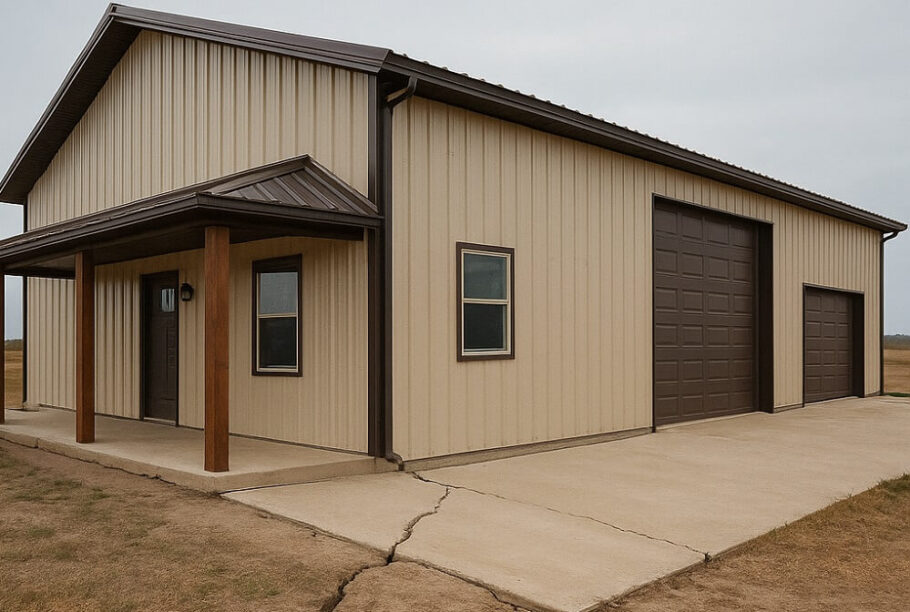
Foundation settlement is one of the most serious structural issues a barndominium owner can face. Because barndominiums often rely on post-frame or slab-on-grade construction over large, open floor plans, even small shifts in the foundation can create noticeable damage throughout the building. If ignored, settlement can undermine your home’s stability, increase repair costs, and compromise safety. The good news: most foundation settlement problems can be fixed—especially when caught early.
This comprehensive guide covers what foundation settlement looks like, why it happens, early warning signs, and the best repair strategies available for modern barndominiums. Whether you’re building, maintaining, or living in a barndo, understanding these risks will help protect your investment for the long term.
What Is Foundation Settlement?
Foundation settlement occurs when the soil beneath your barndominium shifts, compresses, or loses its load-bearing capacity, causing the structure to sink or move unevenly. Some settlement is normal during the first 1–2 years after construction as the soil compresses naturally under the weight of the building. However, differential settlement, where one part of the foundation sinks faster than another, is the real threat.
Barndominiums often experience this due to:
- Large-span metal structures transferring significant loads to specific points
- Heavy slab foundations covering wide areas
- Post-frame columns resting on isolated footings
- Soil movement due to climate or drainage issues
If not corrected, differential settlement can distort your barndo’s framing, crack walls, damage doors and windows, and even threaten structural integrity.
Common Causes of Foundation Settlement in Barndominiums
Barndominiums are built differently from traditional homes, meaning the root causes of settlement can vary. Here are the most frequent contributors:
- Poor Soil Conditions
Some soils simply don’t hold weight well. Expansive clay soils shrink during dry seasons and swell during wet seasons. This constant movement pushes and pulls at the foundation.
Loose, sandy, or improperly compacted soil can compress easily, causing the structure to sink.
- Inadequate Site Preparation
Proper site prep includes soil compaction, grading, and creating a stable, uniform building pad. If the contractor did not:
- Compact the soil properly
- Remove organic material (roots, topsoil)
- Install gravel layers under the slab
- Ensure uniform moisture content
…your foundation may settle unevenly.
- Drainage Problems
Water is the number one enemy of foundations. Poor drainage saturates supporting soil, reducing its strength. Common drainage issues include:
- Gutters that dump water near the structure
- Downspouts too short
- Standing water around the perimeter
- Sloped terrain directing water toward the home
- Broken or clogged French drains
Over time, water erosion or repeated cycles of swelling and shrinking destabilize the foundation.
- Heavy Interior Loads
Barndominiums frequently house:
- Workshops
- Large mechanical rooms
- Heavy kitchen islands or concrete countertops
- Oversized furniture
- Storage lofts
If loads were not properly accounted for during design, certain areas may sink faster.
- Frost Heave in Cold Regions
In colder climates, water under the foundation can freeze, expand, and push the slab upward. When the ice melts, the soil collapses, creating voids that lead to settlement.
- Plumbing Leaks Beneath the Slab
Hidden leaks wash away soil slowly over months or years. This is a silent but extremely destructive cause of foundation failure.
Early Warning Signs of Foundation Settlement
The sooner you detect settlement, the easier and cheaper it is to fix. Here are the most important warning signs barndominium owners should watch for.
- Cracks in Walls, Floors, or Ceilings
Look for:
- Diagonal cracks at door or window corners
- Stair-step cracks in masonry
- Horizontal cracks in drywall
- Cracked concrete floors
Not all cracks indicate foundation issues, but cracks that widen over time are red flags.
- Doors and Windows Sticking
If your doors:
- Stick at the top
- Won’t latch properly
- Drag on the floor
…or your windows jam or won’t stay open, shifting framing is likely caused by settlement.
- Sloping or Uneven Floors
Noticeable sloping or “soft spots” on your floor usually means the slab or support footings are sinking.
A simple marble test—placing a marble on the floor to see if it rolls—can reveal subtle slope issues.
- Gaps Around Doors, Windows, or Exterior Trim
Look for growing gaps:
- Between window frames and siding
- At the top of doors
- Where walls meet the ceiling
These separation points signal structural movement.
- Bending or Bowing Metal Panels
Metal barndominium siding or roofing can warp if the underlying frame shifts. If panels appear uneven or misaligned, the foundation may be moving.
- Popping, Creasing, or Humming Noises in the Structure
Barndominiums often make noise due to temperature changes, but unusual creaking during dry or wet periods can indicate structural stress from settling.
- Visible Foundation Cracks
Hairline cracks are normal; large or widening cracks are not. Pay attention to:
- Vertical cracks wider than 1/8 inch
- Horizontal cracks
- Cracks that leak water
- Cracks extending from corners of the slab
- Soil Separation Around the Foundation
If dirt pulls away from the slab during dry seasons, moisture imbalance may be causing uneven settling.
How to Diagnose Foundation Settlement
Before beginning repairs, a proper diagnosis is essential. The following steps help identify the severity:
- Professional Structural Assessment
A structural engineer or foundation repair specialist assesses:
- Soil condition
- Frame alignment
- Crack patterns
- Load distribution
- Footing integrity
This prevents misdiagnosis and unnecessary repairs.
- Laser Level or Elevation Survey
A specialist uses precision leveling tools to map floor elevations. This reveals how much the slab has sunk and where.
- Soil Testing
Geotechnical analysis determines:
- Soil type
- Load-bearing capacity
- Moisture content
This influences the repair strategy.
- Infrared or Camera Plumbing Inspection
If plumbing leaks might be contributing, leak detection tools identify underground pipe issues without major demolition.
Best Fixes for Barndominium Foundation Settlement
Foundation settlement is fixable—but the right solution depends on severity, soil conditions, and foundation type (slab-on-grade or post-frame). Here are the most effective modern repair methods.
- Helical Piers
Helical piers are steel shafts with screw-like plates mechanically driven into stable soil. They are ideal for barndominiums because:
- They provide immediate load-bearing support
- Can be installed quickly
- Work well in weak or expansive soils
- Don’t require large excavation
Once installed, the piers lift and stabilize the structure by transferring weight to deeper, stable soil layers.
Best for: Moderate to severe settlement in slab or post-frame foundations.
- Push Piers
Push piers (steel resistance piers) use the structure’s weight to drive the piers deep into load-bearing strata. Then the home is hydraulically lifted.
Best for: Heavy barndominiums with significant sinking.
- Polyurethane Foam Injection (Slab Lifting)
Also called “slabjacking,” this process injects high-density foam beneath the slab. The foam expands, fills voids, and lifts the slab back to its original position.
Advantages:
- Minimal disruption
- Quick curing (minutes)
- Long-term stability
Great for: Concrete slab barndos with voids caused by erosion or plumbing leaks.
- Mudjacking
Mudjacking uses a slurry of cement, sand, and water pumped beneath the slab.
While effective, it is heavier than foam and can sometimes worsen settlement on weak soils. Foam injection is usually more reliable for modern barndominiums.
- Installing French Drains or Regrading the Site
If water is the cause, correcting drainage is essential. Methods include:
- Adding French drains
- Extending downspouts
- Regrading soil away from the structure
- Installing gutters if none exist
These prevent future settlement after structural repair.
- Underpinning Post-Frame Columns
Post-frame barndominiums rely on vertical columns that may rest on small footings. If these settle:
- Excavation around the post occurs
- A new footing or pier is installed
- The post is lifted and reset
This restores stability to the frame.
- Plumbing Leak Repairs
If leak-induced soil erosion is responsible, repairs include:
- Spot repair of broken pipes
- Rerouting water lines
- Replacing drains beneath the slab
This must be done before lifting the slab.
Preventing Future Foundation Settlement
You can greatly reduce the risk of settlement by taking proactive steps:
- Maintain Proper Drainage
- Grade soil to slope 5% away from the structure
- Keep gutters clean
- Ensure downspouts discharge at least 10 feet away
- Install French drains if needed
- Monitor Soil Moisture
In clay-heavy soils, the key is consistency. Moisture extremes cause soil to expand or shrink dramatically.
- Seal Cracks Early
Minor cracks allow water in, which worsens soil movement. Sealing them prevents escalation.
- Inspect Annually
Check for:
- New cracks
- Door misalignment
- Gaps in trim
- Changes in floor slope
Early detection saves thousands.
- Control Interior Loads
Ensure heavy machinery or appliances are supported properly to avoid localized sinking.
Conclusion
Barndominium foundation settlement is a serious issue—but it is manageable with early detection and the right repair strategy. Understanding the warning signs, addressing drainage and soil issues, and choosing the correct stabilization method will help protect your barndominium’s long-term durability and value. Whether you’re living in a slab-on-grade barndo or a post-frame structure, proactive care and professional evaluation can prevent minor settlement from becoming a major structural problem.
If you’re noticing cracks, sticking doors, or uneven floors in your barndominium, don’t ignore them. Foundation issues rarely fix themselves. With proper diagnosis and modern repair techniques like helical piers and foam injection, your barndominium can be stabilized and restored for decades of safe living.