
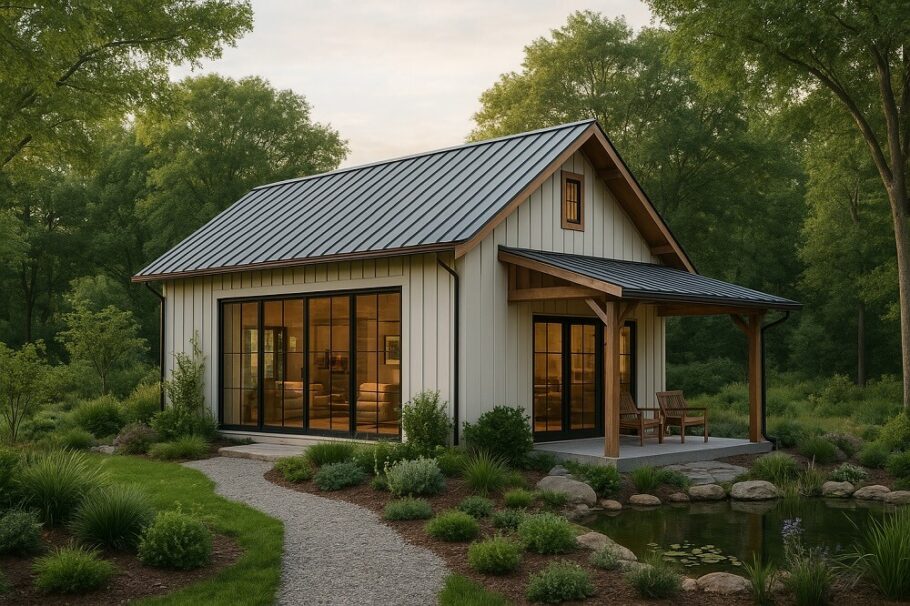
Barndominiums have always been about efficiency. They borrow structural logic from agricultural and industrial buildings and apply it to residential living. The result is a structure that can span wide distances, handle heavy loads, and adapt to evolving needs. But as barndominium design matures, homeowners and designers are looking beyond simple metal panels and exposed trusses. They want smarter assemblies—systems that do more than one job at a time.
One of the most underused yet powerful systems in modern barndominium construction is composite metal decking. When designed correctly, it becomes a structural roof deck, a concrete formwork platform, and the finished ceiling surface all at once. That single move can reduce labor, shorten construction time, and create a striking industrial aesthetic that feels intentional rather than improvised.
This article explores how composite metal decking works, why it makes sense for barndominiums, and how to design it properly so it performs structurally while looking refined inside the home.
Understanding Composite Metal Decking
Composite metal decking is typically a cold-formed steel panel with ribs or flutes designed to interlock with concrete. Unlike simple corrugated sheets used only for roofing, composite decks are engineered with embossments and rib geometry that create a mechanical bond between the steel and the concrete slab poured above it.
In traditional commercial construction, composite decking is used in multi-story buildings. The steel deck spans between beams and acts as permanent formwork. Concrete is poured on top, and once cured, the steel and concrete act together structurally as a composite slab.
In a barndominium context, that same principle can be adapted for roof assemblies or intermediate mezzanine floors. The steel deck:
- Spans between steel beams or open-web joists
- Serves as the formwork for a structural concrete topping
- Remains in place permanently
- Acts as the finished ceiling surface below
This multi-functional role is where the real value lies.
Why Composite Decking Makes Sense in a Barndominium
Barndominiums typically rely on structural steel frames or rigid frames with wide column spacing. These frames are ideal for accommodating long-span decking systems. Instead of installing secondary purlins and separate ceiling systems, a composite deck can span beam-to-beam, eliminating layers of redundant construction.
There are four primary reasons this system aligns well with barndominium design philosophy.
First, structural efficiency. The composite action between steel and concrete increases load-carrying capacity without excessive thickness. This allows longer spans with fewer intermediate supports, preserving the open-concept interior that barndominium owners love.
Second, speed of construction. Once the deck is placed and fastened, it becomes a safe working platform. Reinforcement and concrete placement follow quickly. There is no need to erect and strip traditional plywood formwork.
Third, fire resistance and mass. A concrete-topped composite deck adds thermal mass and improves fire performance compared to thin metal roofing alone. For homeowners concerned about wildfire zones or high-heat climates, that added protection is significant.
Fourth, aesthetics. When left exposed and properly detailed, the underside of a composite deck delivers a clean, industrial ceiling that pairs beautifully with steel columns, polished concrete floors, and modern lighting.
Structural Design Considerations
Designing a composite roof deck for a barndominium is not a matter of selecting a random profile and pouring concrete. It requires coordination between structural engineer, architect, and builder.
Span and Load Calculations
The first step is determining the required span between primary beams. Composite decks are available in various rib depths—typically 1.5″, 2″, or 3″ profiles for structural applications. Deeper profiles allow longer spans and greater load capacity.
Loads to consider include:
- Dead load (self-weight of deck and concrete)
- Live load (maintenance or roof access loads)
- Snow loads where applicable
- Mechanical equipment loads
- Wind uplift forces
For roof assemblies, uplift resistance is particularly important in open rural environments where barndominiums are often located. Proper fastening patterns and edge detailing are critical.
Composite Action
Composite action depends on mechanical interlock and often shear connectors. In floor systems, welded shear studs are commonly attached to steel beams to ensure composite behavior between beam and slab.
For roof decks in residential-scale barndominiums, engineers may specify:
- Shear studs on beams
- Mechanical fasteners with specific spacing
- Reinforcement mesh or rebar within the concrete topping
The goal is to ensure the steel deck and concrete slab act together structurally rather than independently.
Concrete Topping Thickness
Concrete topping thickness typically ranges from 2″ to 4″ above the top of the deck ribs. Thickness is determined by structural requirements, fire rating goals, and acoustic performance.
In residential applications, lighter-weight concrete mixes may be used to reduce overall load on the primary frame.
Designing the Deck as the Final Ceiling
The moment you decide the underside of the deck will remain exposed, the design conversation changes. This is no longer a hidden structure. It is architecture.
Profile Selection
The rib pattern and spacing directly affect the visual rhythm of the ceiling. Narrow ribs create a finer texture; deeper, widely spaced ribs create a bold industrial look.
Architects often mock up sections to evaluate how light will interact with the profile. When sunlight enters through clerestory windows or large glazing systems, rib shadows become part of the interior design.
Finish Options
Composite decks are usually galvanized for corrosion resistance. However, if the underside will remain exposed, consider:
- Factory-applied white or light-colored coatings to enhance brightness
- Clear protective coatings for a raw steel look
- Matte black for a dramatic industrial aesthetic
In humid or coastal environments, higher-grade coatings may be necessary to prevent corrosion staining on the visible ceiling.
Fastener Strategy
Fasteners are typically visible from below. Aligning fastener rows and maintaining consistent spacing makes a dramatic difference in appearance.
A chaotic fastening pattern can undermine an otherwise clean industrial aesthetic. A deliberate, grid-based fastening layout reinforces the structural logic of the space.
Integration with Insulation and Waterproofing
One of the most common questions is how insulation fits into a composite roof deck system.
There are two primary approaches.
Insulation Above the Concrete
In many cases, insulation is placed above the concrete slab as part of a protected roof membrane assembly. Layers typically include:
- Vapor barrier
- Rigid insulation boards
- Waterproof membrane
- Protective cover or roofing material
This approach keeps the structural deck and concrete mass inside the thermal envelope, improving energy performance.
Insulation Below the Deck
If the design requires exposed ribs but improved acoustic performance, acoustic insulation panels can be installed between secondary framing members below the deck. However, this partially defeats the purpose of exposing the deck aesthetically.
For hot climates, keeping insulation above the structural slab is often the most thermally efficient solution.
Acoustic Performance
Concrete-topped composite decks have more mass than lightweight metal roofing, which improves sound attenuation. Rain noise, a common concern in metal buildings, is significantly reduced.
However, the exposed steel surface can reflect interior sound. In large open spaces, this may create echo. Designers often introduce:
- Fabric-wrapped acoustic wall panels
- Wood slat ceiling inserts between lighting zones
- Area rugs and soft furnishings
These elements balance the industrial ceiling with residential comfort.
Fire Resistance and Safety
Concrete inherently improves fire resistance. Depending on thickness and reinforcement, composite slabs can achieve meaningful fire ratings without additional layers.
For barndominiums located in wildfire-prone regions, this added protection can be a deciding factor. Steel and concrete assemblies are non-combustible, reducing vulnerability compared to traditional wood-framed roof structures.
Additionally, the concrete layer protects the steel deck from direct flame exposure, improving overall structural resilience.
Construction Sequence in Practice
A typical installation sequence looks like this:
- Erect primary steel frame
- Install beams and joists
- Place and fasten composite deck panels
- Install shear studs if required
- Place reinforcement mesh or rebar
- Pour and finish concrete topping
- Cure concrete
- Install roofing assembly above
Once the deck panels are secured, they provide an immediate working platform. That alone can reduce temporary scaffolding and improve jobsite safety.
In rural barndominium builds where labor availability may be limited, this efficiency matters.
Cost Considerations
At first glance, composite decking may appear more expensive than simple metal roofing. But evaluating cost properly requires looking at the entire assembly.
When you factor in:
- Eliminated plywood formwork
- Reduced labor for stripping forms
- No separate drywall ceiling
- Faster construction timeline
- Improved structural capacity
The cost comparison becomes more balanced.
For homeowners building high-end barndominiums with exposed steel, polished concrete floors, and minimalist interiors, composite decking often fits the design language better than layered traditional assemblies.
Aesthetic Synergy with Modern Barndominiums
Barndominiums have evolved beyond purely rustic styles. Many now lean toward contemporary industrial minimalism—clean lines, steel accents, expansive glazing.
An exposed composite deck ceiling reinforces that identity. When paired with:
- Black steel frames
- Linear LED lighting strips running parallel to deck ribs
- Large sliding glass walls
- Smooth concrete floors
The result feels cohesive rather than improvised.
The structure becomes the architecture.
Common Mistakes to Avoid
While the system is powerful, there are pitfalls.
One is underestimating coordination between trades. Mechanical penetrations must be planned carefully. Cutting deck ribs after concrete placement compromises structural integrity.
Another is ignoring moisture control. Vapor barriers and membrane detailing must be precise to prevent long-term condensation issues.
A third mistake is overlooking deflection limits. Even if a deck meets strength requirements, excessive deflection can cause cracking in concrete toppings or roofing membranes.
Close collaboration between engineer and contractor prevents these issues.
Is Composite Metal Decking Right for Every Barndominium?
Not necessarily. For small, simple builds with conventional trusses and standard insulation strategies, traditional roofing may be more economical.
However, for larger spans, mezzanine levels, rooftop terraces, or high-end custom designs, composite decking offers advantages that align perfectly with the barndominium ethos—efficiency, durability, and structural honesty.
If your goal is to create a building where every layer serves multiple purposes, this system deserves serious consideration.
The Bigger Picture: Designing with Intent
Barndominiums began as pragmatic structures—fast to build, durable, adaptable. Composite metal decking continues that tradition but refines it.
Instead of layering separate structural, formwork, and ceiling systems, it merges them. It transforms what would normally be hidden infrastructure into a defining architectural feature.
In the end, the success of a barndominium isn’t just measured in square footage or cost per square foot. It’s measured in how intelligently its systems work together.
Composite metal decking embodies that intelligence. It allows a roof deck to carry loads, form concrete, resist fire, dampen sound, and define the interior character—all at once.
That kind of structural multitasking is exactly what modern barndominium design should strive for.