
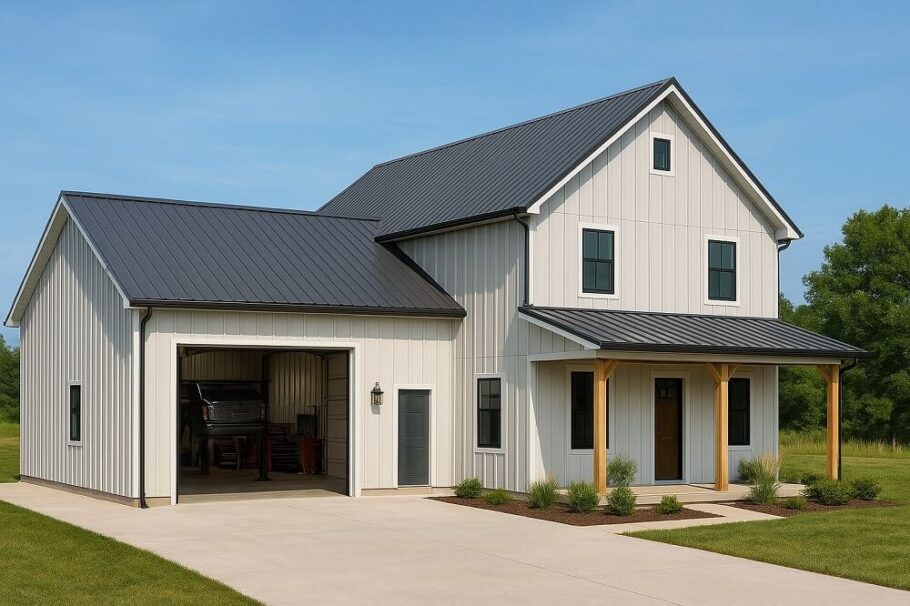
The barndominium craze isn’t slowing down, and for good reason. These steel-and-siding hybrids offer wide-open floor plans, remarkable durability, and square footage that traditional stick-built homes can’t touch for the same money. But here’s the trap that catches most first-time barndo builders: treating every line item like it matters equally. Some construction choices will haunt a homeowner for decades. Others barely matter six months after move-in.
Knowing the difference separates a smartly finished barndominium from a money pit dressed up in pretty siding. This prioritization list cuts through the noise and points straight at what deserves premium dollars and what can ship from the clearance aisle.
The Foundation Slab – Splurge
Nothing ruins a barndominium faster than a cracked, settling, or poorly graded concrete slab. The entire structure rests on this single element, and cutting corners here invites catastrophe. A proper foundation means 4,000 PSI concrete minimum, six inches of compacted gravel base, vapor barrier, rebar on 18-inch centers, and thickened edges at all load-bearing points. Many barndo builders try to save by thinning the slab to four inches or skipping fibermesh reinforcement. That decision almost always leads to cracking within two years, especially in areas with freeze-thaw cycles or expansive clay soils.
The splurge should include a turned-down monolithic slab with deep frost footings where local codes require. Add in radiant floor tubing even if the budget doesn’t stretch to the boiler system yet. That tubing costs pennies during the pour but thousands to retrofit later. Same goes for extra floor drains in shop areas and conduit sleeves for future plumbing changes. A slab done right the first time costs maybe fifteen percent more than the bare-minimum pour. That fifteen percent buys decades of stability.
Windows and Doors – Splurge
Barndominiums have earned a reputation for leaking air like a screen door on a submarine, mostly because builders grab whatever windows the local lumberyard has in stock. Big barn doors and oversized sliders look fantastic but perform terribly without proper engineering. Splurge on commercial-grade sliding door hardware, thermally broken aluminum frames for any large openings, and double-pane low-E glass with argon fill. The difference between a $400 window and a $900 window in a barndo is measurable on every monthly energy bill.
Pay special attention to the overhead garage doors if the living space shares air with the shop area. Insulated steel doors with weather seals and thermal breaks cost double the uninsulated versions but cut heat loss by an enormous margin. The same logic applies to entry doors – steel or fiberglass with foam cores outperform cheap wood doors in every metric that matters.
Spray Foam Insulation – Splurge (Mostly)
Here’s where the advice gets nuanced. Closed-cell spray foam on the roof deck and wall cavities transforms a barndominium from a metal shed into a proper home. No other insulation method seals the hundreds of small gaps where steel panels meet framing members. Fiberglass batts stuffed between posts leave massive thermal bypasses. Blown-in cellulose settles over time and creates cold spots. Spray foam bonds to everything and creates an air barrier that also blocks moisture.
But spray the entire building at two inches of closed cell? That gets expensive fast. A smarter splurge applies two inches of closed cell to the roof deck and the lower four feet of wall cavities, then finishes the upper walls with open-cell foam or flash-and-batt with rock wool. This hybrid approach captures most of the air-sealing benefits while shaving thousands off the insulation line item. Skip spray foam entirely in non-conditioned shop areas – blown-in fiberglass or batts work fine there.
Interior Framing and Drywall – Save
A barndominium does not need commercial-grade steel studs or five-eighths drywall on every interior surface. Standard twenty-gauge steel studs or basic SPF lumber works perfectly for non-load-bearing walls. Half-inch drywall hangs just fine on sixteen-inch centers. The obsession with heavy-gauge interior framing comes from YouTube builds that look impressive but waste money.
Where to save without regret: basic drywall mudding with a level two finish in shop areas and closets, standard corner beads instead of bullnose, and avoiding drywall on ceiling sections that will eventually get metal paneling or wood planks. Many builders also save significantly by handling drywall hanging themselves and hiring out only the finishing. The material cost for drywall is low – the labor markup is where the bleeding happens.
Flooring Choices – Mixed
Concrete polishing or staining deserves splurge status in shop areas and main living spaces that see heavy traffic. A properly polished concrete floor costs similar to mid-range vinyl plank but lasts forever with basic maintenance. No water damage, no scratching from dogs or boots, no replacement ever needed.
But pouring a separate topping slab over the structural slab just for polishing? That’s wasteful. Save by specifying a power-troweled finish on the structural slab that can accept direct polishing. Add integral color or a simple densifier and call it done.
For bedrooms and quieter living areas, luxury vinyl plank in the mid-price range performs identically to the expensive stuff. The difference between $3 per square foot and $6 per square foot LVP is usually marketing and a thicker wear layer that residential use never tests. Stick with the lower end from a reputable brand. Real hardwood and tile belong in wet areas or as small accent zones, not covering entire floors.
Cabinetry and Countertops – Save on Boxes, Splurge on Tops
The cabinet industry runs on a simple scam: upselling plywood boxes over particle board for double the price. In a climate-controlled barndominium, high-density particle board with quality thermofoil or melamine faces holds up perfectly. The boxes sit hidden behind doors and see no direct abuse. Save the money on cabinet carcasses.
But countertops deserve a different conversation. Laminate counters in a barndo workshop? Fine. Laminate in the kitchen? A mistake. Splurge on quartz or solid surface throughout the kitchen and bathrooms. These materials resist stains, don’t require sealing, and survive the inevitable dropped cast iron pan. Butcher block island tops look charming but require constant maintenance – hard pass.
The smart move combines RTA (ready-to-assemble) cabinet boxes from a discount supplier with custom doors and drawer fronts from a local millwork shop. Total cost lands well below custom cabinets, and nobody ever opens the box to check the particle board.
Roofing and Gutters – Splurge
A barndominium’s metal roof covers everything underneath. Standing seam metal roofs with hidden fasteners cost significantly more than exposed fastener panels but eliminate the most common failure point – rubber washers that crack and leak after a decade. The upgrade from screw-down panels to standing seam adds maybe thirty percent but doubles the roof’s usable life.
Gutters on a barndominium are not optional, despite what some budget builders claim. Metal roofs shed water violently, and without gutters, that water erodes the surrounding grade and splashes mud up onto the siding. Splurge on seamless aluminum gutters with six-inch downspouts and leaf guards on any section near trees. The cheap sectional gutters from big box stores leak at every joint and clog constantly. Six-inch gutters move water better than standard five-inch and require less cleaning.
Lighting Fixtures – Save
Here’s where personal taste collides with budget reality. The home centers and lighting showrooms charge enormous markups on decorative fixtures. A $300 dining room chandelier often contains $40 worth of parts. Save by buying basic builder-grade junction boxes everywhere during construction, then sourcing fixtures from online liquidators, commercial surplus outlets, or even Facebook Marketplace.
The one exception requires spending on LED tape lighting under cabinets and in coves. Cheap tape lights flicker, change color temperature as they age, and fail within two years. Pay for name-brand tape light from a electrical supply house, not the mystery rolls on Amazon. But decorative hanging fixtures? Buy the cheap ones and swap them out later when the budget recovers.
Plumbing Fixtures – Split Decision
Valves, supply lines, and drainage pipes demand splurge pricing. Brass quarter-turn shutoff valves instead of multi-turn gate valves. Uponor or Viega PEX-A instead of the cheap crimp-ring PEX. Cast iron drain lines in the slab instead of PVC, which transmits every flushing sound throughout the building. These hidden components make the difference between a barndominium that needs repairs every few years and one that runs silently for decades.
But faucets, showerheads, and decorative trim? Save aggressively. A $50 faucet from a big box store and a $300 designer faucet share identical internal cartridges and flow rates. The difference is metal thickness and finish quality, and in a residential setting with average water quality, both last about the same number of years. Buy the cheap one, install it correctly, and replace it three times before matching the designer price tag.
Heating and Cooling Equipment – Splurge
Barndominiums challenge HVAC systems like few other buildings. High ceilings, large open spaces, and metal construction create temperature swings and humidity problems. A builder-grade single-speed air conditioner will run constantly, fail to control humidity, and leave hot and cold spots everywhere.
Spend on a two-stage or variable-speed heat pump with a matched air handler. Add a whole-home dehumidifier if the climate has any humidity at all. Install multiple zones with remote sensors. Mini-split systems work well for shop areas but struggle in open living spaces with bedrooms branching off. The upfront difference between basic equipment and premium equipment might run four or five thousand dollars. The comfort difference is incalculable.
One place to save on HVAC: ductwork. Flexible insulated ducts perform almost as well as rigid metal when installed correctly and sealed with mastic. Rigid metal looks impressive in photos but offers marginal real-world improvement in a residential barndominium.
Final Thoughts on the Barndominium Budget
Every construction dollar spent on a barndominium either adds long-term value or just satisfies a momentary want. The splurge items on this list – foundation, windows, insulation, roofing, hidden plumbing, and premium HVAC – protect the structure and the people inside it. The save items – interior finishes, decorative lighting, cabinet boxes, cheap faucets – affect appearance without compromising performance.
The worst mistake in barndominium building isn’t buying something cheap. It’s buying something expensive that doesn’t matter while skipping something critical that does. A smart builder spends where the building meets the ground and the sky, and saves where the paint meets the drywall. That prioritization turns a steel building into a real home without turning the bank account into a cautionary tale.