
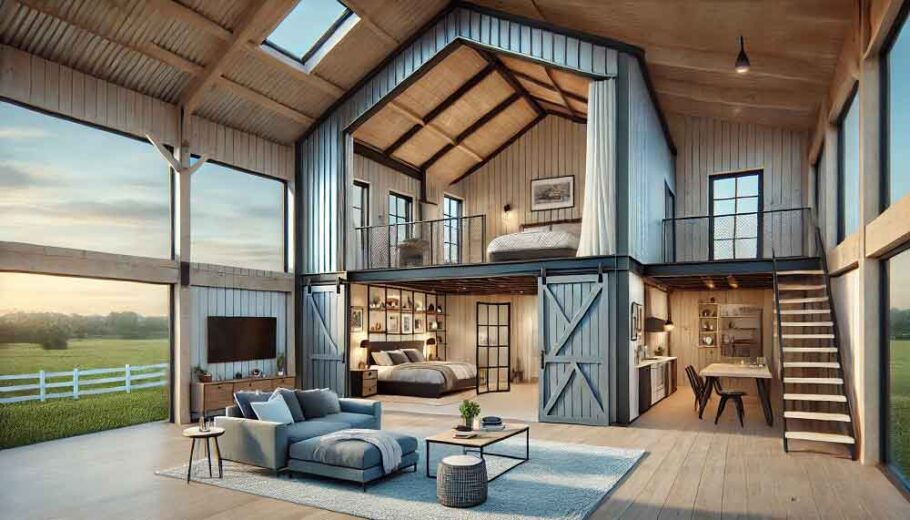
A simple yes or no cannot be given as an answer. Wild variations in fire codes exist depending on where you live, how the structure is classified, and the specific choices made during design and construction. What has been learned over years spent writing about alternative housing and talking with builders, fire marshals, and homeowners is that a barndominium can absolutely be brought up to—or even beyond—fire safety standards, but only if sprinkler systems and escape routes are approached with the same care that would be given to any custom home. Let’s break down what that actually looks like in practice.
The Fire Code Landscape: It’s All About Classification
One of the first things barndominium owners are caught off guard by is the fact that no single “barndominium code” can be consulted. Instead, local building codes—typically the International Residential Code (IRC) for single-family homes or the International Building Code (IBC) for structures that blur the line between residential and agricultural use—must be relied upon.
Here’s where it gets tricky. Many barndominiums are started as post-frame metal buildings, which historically were designed for agriculture or storage. If your structure is classified by the local building department as an “agricultural building,” the fire code requirements may be surprisingly lenient. But the moment sleeping quarters, a kitchen, and full-time living space are added, a reclassification as a dwelling will be required by most jurisdictions. At that point, the same fire safety standards as any conventional home must be met—sometimes with additional scrutiny because of the unique materials and layout of the building.
It has been learned from conversations with builders that the most common pitfall is the assumption that because the shell is metal and “non-combustible,” the fire risk is automatically lower. A dangerous misconception is held there. The interior finishes, insulation, framing, and furnishings are all combustible. And in many barndominiums, the wide-open floor plans and high ceilings can actually allow a fire to grow faster and spread more unpredictably than in a traditional home where rooms are compartmentalized.
Sprinkler Systems: Not Just for Commercial Buildings
When “fire sprinkler system” is heard, a warehouse or a high-rise office building is often pictured by people. But residential fire sprinklers have become increasingly common in custom homes, and for barndominiums, they can be considered the single most effective measure by which code requirements can be satisfied while your family is genuinely protected.
Do You Need a Sprinkler System?
In many areas, residential sprinklers are not mandated by the IRC for one- and two-family homes unless specific amendments have been adopted by the local jurisdiction. However, barndominiums are often found in gray areas. If certain square footage thresholds are exceeded by your building, if a rural area without a municipal fire hydrant within a prescribed distance is where it is located, or if a commercial shop space attached to the living quarters is included, a sprinkler system may be required by the fire marshal as a condition of approval.
This has been seen playing out in rural counties where long response times are faced by volunteer fire departments. In those cases, a sprinkler system being required isn’t about bureaucracy—it’s a pragmatic trade-off. Without a nearby hydrant and with limited firefighting resources, a sprinkler system becomes the primary line of defense.
Types of Systems That Work
If sprinklers are decided upon—whether by requirement or by choice—two general paths can be taken.
Wet pipe systems are the most common. Water is held in the pipes under pressure, so when a sprinkler head is activated by heat, water is discharged immediately. Reliability and relative simplicity are offered by them. In a barndominium, these can be run through the attic space or behind finished ceilings, though freeze protection must be accounted for if any piping is run in unconditioned areas.
Dry pipe systems are worth considering if parts of your barndominium—like a shop area or an uninsulated breezeway—aren’t heated. Pressurized air or nitrogen is held in these pipes instead of water; when a sprinkler is opened, the air is released and water is allowed to flow in. More complexity and higher cost are involved, but the risk of frozen pipes bursting in unheated spaces is eliminated.
There’s also a growing trend toward residential fire sprinkler systems that have been designed specifically for homes. Smaller piping (often CPVC) is used by these, and integration with the domestic water supply is performed. They are far less intrusive than commercial systems and can be designed to blend into the aesthetics of a barndominium—recessed heads in ceilings, for instance.
Cost and Installation Realities
Let’s talk numbers, because cost is added by sprinklers. For a typical barndominium, $2 to $4 per square foot might be added by a residential sprinkler system, sometimes more depending on water supply requirements. If a well is being used, a storage tank and a dedicated fire pump may be required to ensure adequate flow and pressure—the price can be pushed higher by that.
But homeowners being able to recoup that expense in insurance savings has been seen. Significant discounts for homes with full sprinkler coverage are offered by many insurers. More importantly, something that smoke alarms alone can’t give is given by sprinklers: active suppression of a fire while evacuation is taking place, often with the fire being kept contained to the room of origin. In a barndominium with an open-concept layout, that containment is critical.
Escape Routes: Designing for Reality
Even with sprinklers, a well-planned means of egress is non-negotiable. Specific requirements for escape and rescue windows, door sizes, and hallway clearances are spelled out by the IRC, but barndominiums present unique challenges.
The Bedroom Egress Rule
At least one emergency escape and rescue opening must be provided for every sleeping room. That’s typically a window or a door by which minimum size requirements are met: a net clear opening of at least 5.7 square feet (with a minimum height and width of 24 inches and 20 inches, respectively) and a sill height no more than 44 inches above the floor.
In a traditional home, this is straightforward. In a barndominium, builders have been seen struggling with these requirements for a few reasons. First, if sliding barn doors are used for bedroom entrances—a popular aesthetic—those don’t count as egress unless they open to the exterior. Second, if bedrooms are located on a mezzanine level or a loft without direct exterior access, it must be ensured that the window or door on that level meets the criteria. Third, many barndominium designs feature clerestory windows or fixed glass panels that look beautiful but can’t be used for escape.
Homeowners are always advised to map out their escape routes before framing begins. Walk through your floor plan and ask: if a fire blocked the main hallway, could every sleeping occupant get out through a window? Is that window low enough to be reached? Is it large enough to be crawled through? These aren’t abstract questions—they’re the difference between a compliant build and a dangerous one.
The Open-Plan Problem
One of the most celebrated features of barndominiums is the massive, unobstructed living area that combines kitchen, dining, and lounge space under soaring ceilings. It’s a spectacular way to live, but from a fire safety perspective, a “smoke and fire path” is created that can compromise escape routes quickly.
In a conventional home with hallways and doors, smoke and heat are somewhat channeled. In an open barndominium, a fire starting in the kitchen can rapidly fill the entire main volume with smoke, making it impossible to see or breathe. That’s why having multiple, widely separated exits is so important. If the front door is near the kitchen, a rear door or a large egress window in a bedroom on the opposite end of the structure is also needed.
Barndominiums with second-story lofts that rely on a single interior staircase have also been seen. That is allowed, but realism about whether everyone can use that staircase in an emergency must be maintained. If the staircase is open to the main living area (which it often is, to preserve the open feel), smoke from a first-floor fire can rise up the stairwell and cut off the only exit from the loft. In those cases, a second means of egress—like a balcony with an exterior stair—can be a lifesaver.
Where Metal Construction Helps and Hurts
There’s a common belief that steel-framed barndominiums are inherently safer in a fire because steel doesn’t burn. That’s true as far as it goes, but steel has its own vulnerabilities. When extreme heat from a fire is applied to steel, structural strength is lost and warping or collapse can occur. So while the steel frame won’t ignite, it can fail earlier than a heavy timber frame if it’s not properly protected.
The more immediate concern is the insulation and interior finishes. Many barndominiums use spray foam insulation, which is combustible unless a specific fire-retardant formulation is used. Others use fiberglass batts with vapor barriers. If the interior is finished with OSB, plywood, or tongue-and-groove wood on the walls and ceilings—which is very common for that rustic look—a large fuel load is essentially created. That’s not a reason to avoid those finishes, but it is a reason to be deliberate about fire suppression and detection.
Builders who incorporate fire-blocking strategies even in open floor plans—using dense-packed insulation, sealing penetrations, and installing sprinkler heads in critical areas—have been worked with. These small details make a massive difference in how a fire behaves.
Working With Your Local Authority
If only one thing is taken away from this post, let it be this: your local building department and fire marshal should be engaged before you break ground. Barndominiums still exist in a bit of a regulatory gray area in many counties, and what passed for one inspector might not pass for another.
Situations have been seen where a prefab barndominium kit was bought by a homeowner, erected, and then it was discovered that the fire marshal required sprinklers, a second egress door, and a fire-rated wall separating the shop from the living space—all things that could have been incorporated from the start if they’d been known. Retrofitting a sprinkler system into a finished barndominium is an expensive, invasive ordeal. Installing it during the rough-in phase adds cost but saves immense hassle.
Be upfront about how the space will be used. If welding or flammable materials in the shop area are planned to be stored, a fire-rated assembly separating that area will be wanted by the fire marshal. If overnight guests will be hosted in a loft, egress requirements will need to be met there, too. Transparency early on prevents surprises later.
Beyond Code: Creating a Safer Home
Meeting fire code is the legal minimum. But when barndominium owners who’ve thought deeply about this are talked with, it is often found that they go beyond what’s required. Interconnected smoke alarms with strobes for the workshop area (where machinery noise might drown out a standard alarm) are installed. Fire extinguishers are kept in the shop, kitchen, and near each bedroom. A fire escape plan is drawn up with their family and practiced—something that’s especially important when a non-traditional layout is present.
Attention to your water supply is also recommended. Even if a sprinkler system isn’t required, having a large water storage tank with a fire hose connection can be a game-changer in a rural setting. It won’t automatically extinguish a fire like sprinklers will, but it gives you and your local fire department a fighting chance.
The Bottom Line
So, are barndominiums up to fire code? They can be—provided they are treated as the custom dwellings they are. The barndominium’s unique character doesn’t exempt it from the fundamental principles of fire safety; it simply asks that those principles be applied thoughtfully.
Sprinkler systems aren’t just about ticking a code box. They’re about gaining precious minutes—time for your family to get out, time for the fire department to arrive, and sometimes time for the structure itself to be saved. Escape routes aren’t just about meeting window size requirements. They’re about ensuring that no matter where a fire starts, a clear, accessible path to safety is available.
If you’re in the planning stages of a barndominium, looking at fire safety not as an obstacle but as an integral part of the design is encouraged. Work with a builder who has experience with post-frame residential construction. A pre-construction meeting with your local fire marshal should be asked for. And if the budget allows, those sprinklers should be installed—even if they aren’t required.
At the end of the day, the beauty of a barndominium is that a home tailored to your life gets to be built. A home that’s beautiful, functional, and built with safety in mind? That’s a legacy worth investing in.