
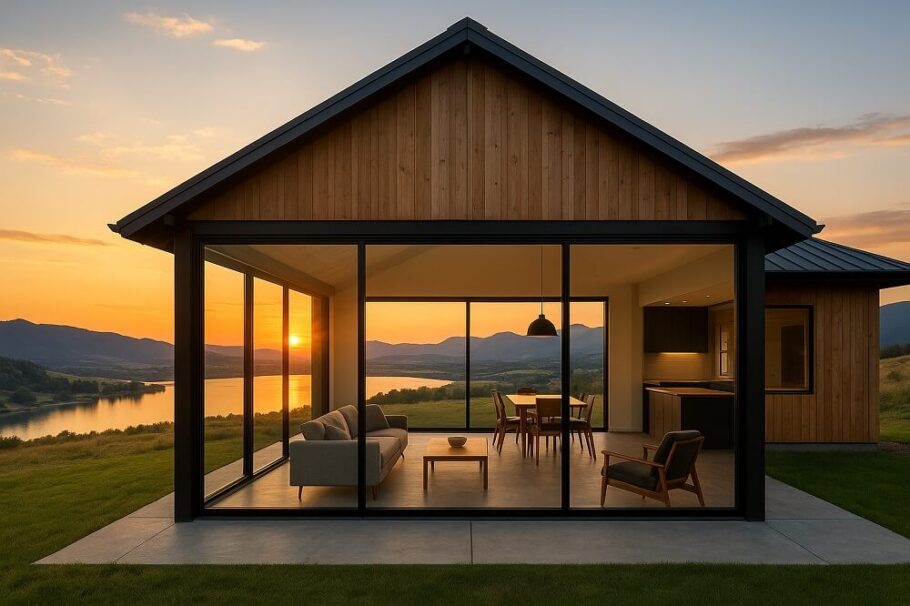
Barndominiums represent a unique intersection of residential comfort and utilitarian durability. The combination of living quarters and workshop space under a single, often metal-clad roof offers freedom and functionality. However, when these structures are built in coastal zones or active agricultural areas, they face a relentless enemy: corrosion. The very environment that makes these locations desirable—ocean breezes or expansive farmland—carries agents that actively dismantle metal.
Designing for longevity in these environments requires a fundamental shift from standard construction practices to corrosion engineering. It is not enough to simply choose “metal” and hope for the best. The specification process must address both the exterior envelope and the structural components buried in the earth.
The Chemistry of the Threat
To specify the correct materials, the specific corrosive agents must be identified. In coastal areas, the primary threat is chloride. Salt spray carried by wind settles on surfaces, and when combined with moisture, it breaks down the passive oxide layer that protects metals like steel and aluminum. The result is rapid pitting and structural degradation.
Agricultural environments present a different chemical cocktail. Ammonia, hydrogen sulfide, and agricultural fertilizers are highly corrosive. These agents are often concentrated in dust or humidity, creating an electrolytic environment that attacks metal components. Furthermore, agricultural operations often involve dissimilar metals—such as steel fasteners on aluminum panels—which can lead to galvanic corrosion if not properly isolated.
Specifying Protective Coatings
The first line of defense is the coating system. For a barndominium, the exterior cladding and structural steel require a barrier that prevents moisture and oxygen from reaching the substrate.
- Surface Preparation
The longevity of any coating is determined by the surface profile. In corrosion engineering, the standard for steel preparation is typically SSPC-SP 6 (Commercial Blast Cleaning) or SSPC-SP 10 (Near-White Blast Cleaning). For coastal environments, near-white blast cleaning is preferable. This removes mill scale, rust, and existing contaminants, creating an anchor profile that allows the coating to mechanically bond to the steel. Skipping this step in favor of a simple solvent wipe is a recipe for premature failure. - Coating Systems for Atmospheric Exposure
For the exterior metal panels and structural beams, a multi-coat system is standard practice.
- Epoxy Primers: High-solids epoxies provide an excellent barrier against moisture and chlorides. They adhere well to blasted steel and are resistant to the alkaline conditions often found in agricultural concrete floors.
- Polyurethane Topcoats: While epoxies are tough, they chalk and fade under UV radiation. A polyurethane topcoat is essential for color retention and gloss, but it also adds an additional layer of chemical resistance. In agricultural settings, polyurethane offers better resistance to ammonia and fertilizer runoff than epoxy alone.
- Zinc-Rich Primers: For areas prone to mechanical damage or where galvanic protection is needed, a zinc-rich primer acts as a sacrificial layer. If the topcoat is scratched, the zinc will corrode preferentially to protect the steel beneath.
- Coating for Immersed or Buried Conditions
The portion of the structure that meets the ground is the most vulnerable. Coatings for below-grade steel must be specifically designed for immersion or soil contact. Standard paints are insufficient. High-build epoxy coatings, often augmented with a fiberglass wrap for mechanical protection, are required to withstand the pressure and chemical attack of soil.
The Role of Sacrificial Anodes
Coatings are not impervious. Over time, chips, scratches, and installation damage expose bare steel. This is where cathodic protection via sacrificial anodes becomes critical.
Sacrificial anodes work on the principle of galvanic corrosion. By connecting a metal that is more active (anodic) to the steel (cathodic), the anode will corrode instead of the steel. The steel structure essentially becomes the cathode of a battery, protected by the sacrificing metal.
- Galvanic Anodes for Buried Components
Barndominiums often utilize helical piles, ground screws, or steel columns embedded in concrete. In coastal or agricultural soils, these buried components are at high risk.
- Magnesium Anodes: Magnesium is highly active and is the preferred choice for soil resistivity in the range of 1,000 to 5,000 ohm-cm. It provides a strong driving voltage to protect steel in high-resistivity soils.
- Zinc Anodes: Zinc is suitable for lower resistivity soils (below 1,000 ohm-cm) and is often used in marine environments where it is non-toxic to aquatic life. Zinc anodes are also less prone to passivation than magnesium in certain soil conditions.
- Anodes for Water Systems and Tanks
If the barndominium utilizes a metal water storage tank, particularly for agricultural use, internal anodes are necessary. Water heaters and storage tanks rely on anodes to protect the interior lining. Hexagonal or cylindrical anodes are installed through the top of the tank. These require periodic inspection; once the anode is consumed, the tank itself becomes the anode and will begin to corrode. - Sizing and Placement
The specification of anodes is a mathematical calculation based on surface area, coating quality, and current requirement. In a barndominium context, anodes are typically attached to the buried steel piles or the rebar cage within the concrete foundation. The anodes must be placed in a conductive backfill—such as bentonite clay or gypsum—to ensure proper current flow. Without a conductive medium, the anode cannot “breathe” and the circuit is broken.
Fasteners and Dissimilar Metals
In the rush to construct the shell, fasteners are often overlooked. In a coastal or agricultural barndominium, every screw, bolt, and bracket matters.
- Electrolytic Separation: When aluminum panels are fastened to steel purlins, a dielectric barrier is required. This prevents galvanic corrosion where the two metals meet. EPDM washers or nylon bushings are standard.
- Material Selection: Hot-dip galvanized or stainless steel fasteners (Grade 316 for coastal, 304 for agricultural) are the only acceptable options. Electroplated or “bright” zinc fasteners will fail in less than five years in a salt-heavy environment.
A Maintenance and Inspection Protocol
Corrosion engineering does not end at the drawing board. A specification is a living document that requires validation in the field.
- Visual Inspections: Annual inspections should focus on the “splash zone” (the bottom 12 inches of the exterior walls) and any areas where water pools.
- Anode Depletion: For buried anodes, a test station should be installed during construction. This allows a technician to measure the potential of the steel structure against a reference electrode. If the voltage reading indicates the anode is depleted, it must be replaced.
- Coating Repair: Touch-up kits containing the same zinc-rich primer and polyurethane topcoat should be kept on-site. Any scratch or gouge that exposes bare metal should be repaired immediately. In coastal areas, a delay of even a few months can allow pitting to begin.
Conclusion
Building a barndominium in a coastal or agricultural zone is an investment in a lifestyle. Protecting that investment requires a technical approach to materials. By combining high-performance coating systems with a properly designed cathodic protection plan using sacrificial anodes, the structure can resist the chemical assault of salt and soil. The goal is not just to build a barn, but to engineer a structure that will stand on the landscape for decades, unaffected by the very elements that define its location.