
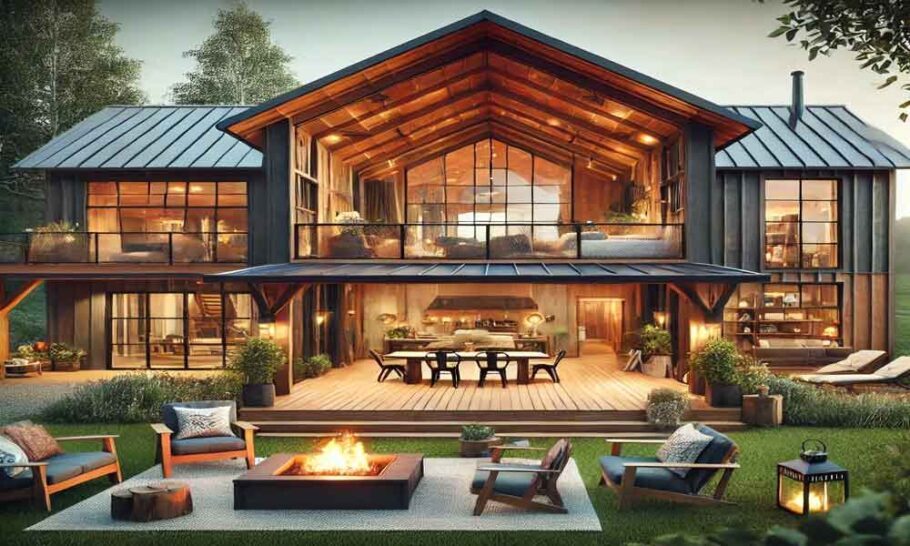
The heart of a barndominium beats in its vast, open-concept living space. With soaring ceilings, exposed structural beams, and expansive windows, these converted agricultural buildings present a unique architectural challenge: how to heat a cavernous area effectively without sacrificing the signature aesthetic. The answer, more often than not, lies in a carefully chosen fireplace. This is not merely a heat source; it is the gravitational center of the home, an architectural anchor that defines the entire floor plan.
The Authentic Appeal of Cast Iron Wood Stoves
For the purist, nothing captures the spirit of a barndominium like a cast iron wood stove. This is the workhorse of the countryside, a nod to the building’s agricultural roots that offers a tangible, sensory experience. The visual appeal is undeniable. Picture a classic Jøtul or a rugged Vermont Castings model perched on a bluestone hearth, its glass door glowing orange against the dark steel of the surrounding corrugated metal walls.
The heat produced by these stoves is intense and direct, radiating warmth that cuts through the chill of a high-ceilinged room far more effectively than forced air. The process itself—splitting, stacking, and feeding the fire—ties the owner to the land, creating a routine that feels authentic to the rural setting. However, this choice demands a commitment to maintenance, from cleaning the flue to managing ash and sourcing seasoned wood.
The Minimalist Efficiency of Linear Gas Fireplaces
At the other end of the spectrum lies the modern linear gas fireplace. This is the minimalist’s salvation, a sleek insertion that transforms the fireplace from a focal point into an architectural feature. These units are typically long and low, often stretching six to ten feet in width, mirroring the horizontal lines of the barndominium’s structure. Installed flush with the wall or mounted on a raised plinth, they can be filled with modern glass beads, smooth river stones, or even ceramic logs that offer a realistic flame pattern without the particulate matter.
The beauty of a gas fireplace in a large space is control. Most units come with a remote thermostat and variable flame settings, allowing for a consistent heat output that is easily regulated. This is ideal for the 4,000-square-foot great room where a wood stove might struggle to push heat into the far corners. With a direct vent system, these fireplaces do not consume the room’s oxygen or draw in cold drafts, ensuring the interior stays cozy even when the wind howls outside.
Masonry and Hybrid Heating Solutions
Between these extremes lies a rich middle ground of hybrid designs. The masonry fireplace, finished in floor-to-ceiling stone or brick, is an architectural statement that bridges the rustic and the refined. In a barndominium, this often takes the form of a large, open hearth with a traditional wood-burning firebox.
Leveraging Thermal Mass for Stable Temperatures
The mass of the stone or brick absorbs heat during a fire and slowly radiates it back into the room for hours after the flames die down, a phenomenon known as thermal mass. This is particularly effective in a large space because it stabilizes the temperature, preventing the rapid cooling that plagues thinner metal stoves. For those who want the ambiance of a roaring fire without the constant feeding, a gas log set can be inserted into this traditional masonry shell, offering the best of both worlds: the grand visual scale and the convenience of a flip-switch ignition.
Ventless Flexibility with Ethanol Fireplaces
Another compelling option gaining traction is the ethanol fireplace. While not a primary heat source for a sprawling barndominium, it serves a specific aesthetic function. Ventless and requiring no chimney or gas line, ethanol units offer immense flexibility in placement.
An ethanol burner can be recessed into a custom-built concrete bench, suspended from the ceiling as a linear fire pod, or even mounted on a central island, effectively zonal heating a specific seating area within the larger floor plan. The flames are clean and bright, producing no smoke or soot. They are the ultimate choice for the design-forward owner who prioritizes clean lines and the ability to reconfigure the space, though it is vital to note that they do not offer the brute heating power of wood or gas.
Surround Materials and the Art of Scale
When selecting a fireplace for a barndominium, the conversation must extend beyond the unit itself to the surrounding materials. The trend is moving away from standard drywall surrounds toward durable, textured surfaces that echo the industrial origins of the building. Consider a steel plate cladding with a patina finish that matches the structural columns. Reclaimed barn wood, sanded and sealed, can be used to frame a modern gas insert, creating a stark contrast between the rough-hewn planks and the polished glass of the firebox. For a more contemporary look, large-format porcelain slabs or polished concrete surround the fireplace, extending the sleek industrial feel of the polished concrete floors.
Proportion in Soaring Spaces
The scale is paramount. In a home with 20-foot ceilings, a standard 42-inch fireplace risks looking like a postage stamp. The firebox itself must be proportionally large, but the surrounding mantle and surround often need to be oversized to carry the visual weight of the room. A massive, hand-hewn wooden beam acting as a mantle, suspended from the ceiling via steel rods, can tie a linear gas fireplace into the barn’s structural rhythm. Alternatively, extending the stone veneer all the way to the ceiling creates a monolithic pillar that naturally divides the open floor plan while drawing the eye upwards.
Managing Airflow and Heat Distribution
Finally, the practicalities of airflow must be addressed. In a large, open space, heat rises and tends to collect at the ceiling. This is where a fireplace with a high-efficiency blower system or a heat-circulating design becomes invaluable. Many modern wood stoves and gas inserts include fans that push heated air out into the room, rather than allowing it to pool near the roof.
The Role of Ceiling Fans
For cathedral ceilings, installing a ceiling fan set to reverse (pushing warm air down) in conjunction with the fireplace ensures that the heat is distributed evenly, keeping the floor level comfortable and the occupants warm. This simple mechanical pairing can dramatically increase the effective heating radius of any fireplace, making a single unit viable for an entire great room.
Choosing the Soul of the Home
Ultimately, the best fireplace for a barndominium is one that acknowledges the unique physics of the space. It must be a piece of sculpture that visually grounds the soaring volume, but it must also be a piece of engineering that efficiently defeats the inherent inefficiency of a vast, open room. Whether it is the crackling authenticity of a wood stove or the silent, clean heat of a modern linear gas unit, the chosen fireplace defines the soul of the home, providing a warm gathering point that makes the cavernous space feel intimate and livable.