
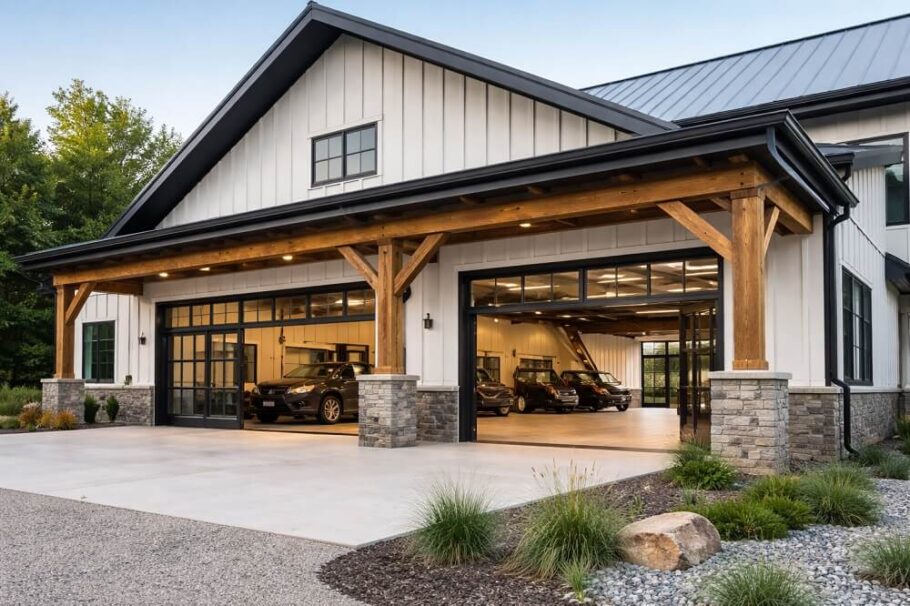
The modern barndominium has evolved far beyond its agricultural roots. What was once a straightforward steel building with living quarters has transformed into a sophisticated architectural statement, and nowhere is this more evident than in the exterior material palette. The mixed-material approach—thoughtfully combining metal, stone, wood, and stucco—has become the hallmark of truly exceptional barndominium design, creating façades that are as visually compelling as they are functionally superior.
The Anatomy of a Mixed-Material Exterior
Understanding why these four materials work so well together requires looking at their inherent characteristics. Metal offers sleek lines and industrial authenticity. Stone grounds the structure with permanence and organic texture. Wood introduces warmth and natural variation. Stucco provides smooth, monolithic surfaces that give the eye a place to rest. When orchestrated correctly, this quartet creates a visual rhythm that no single-material exterior can match.
The true genius of the mixed-material approach lies in the contrast between rough and smooth, matte and reflective, horizontal and vertical lines. A barndominium clad entirely in metal can feel cold and utilitarian. Add a stone base and wood accents, and suddenly it becomes welcoming. Introduce stucco panels to break up long expanses, and the massing becomes more human-scaled and approachable.
Metal: The Backbone of Barndominium Design
Standing seam metal roofing and wall panels remain the foundation of most barndominium exteriors, and for good reason. Beyond the obvious durability and low maintenance, metal provides that essential agricultural nod that defines the style. The key to successful metal integration lies in color selection and panel orientation.
Dark charcoal or weathered zinc finishes create dramatic backdrops for lighter materials, while standing seam vertical panels draw the eye upward, emphasizing the height that makes these structures so impressive. Horizontal ribbed panels can break up tall walls and create visual interest, particularly when used in combination with other materials.
Stone: The Anchor of Authenticity
Nothing says permanence quite like natural stone. Whether used as a full wainscot, wrapped around foundation walls, or applied as accent columns at entry points, stone grounds the barndominium in its rural context. The textured, irregular nature of stone provides the perfect counterpoint to the precision of metal panels and the smoothness of stucco.
Fieldstone, river rock, or split-face limestone each impart different characters. The most successful applications use stone in a way that feels authentic to the region, avoiding the temptation to overuse it. Stone works best when it appears to support the structure above, wrapping corners and anchoring the building to the ground. A stone chimney emerging through the metal roofline creates an especially powerful architectural moment.
Wood: The Warmth Factor
Wood introduces the human element. It softens the industrial edge of metal and tempers the weight of stone. The current trend favors reclaimed barn wood, cedar, or thermally modified wood, often finished with translucent stains that allow the grain to show through. Placement matters enormously. Wood appears most effectively as gable-end accents, entryway cladding, or as horizontal bands that visually separate stories.
The relationship between wood and metal deserves special attention. A deep overhang with wood soffits creates shadow lines that animate the façade throughout the day. Wood posts supporting metal-roofed porches establish a pleasing hierarchy of materials that feels both intentional and inevitable. The natural aging process of wood, developing a silver patina over time, adds another layer of depth that manufactured materials simply cannot replicate.
Stucco: The Smooth Operator
Stucco serves as the visual glue that ties everything together. Its smooth, continuous surfaces provide relief from the textural intensity of stone and the linear patterns of metal and wood. Applied as large wall planes between structural elements, stucco allows the other materials to shine without competition.
Color selection for stucco requires careful consideration. Warm earth tones complement the natural hues of wood and stone. Cool grays create sophisticated backdrops for darker metal finishes. The integral color of stucco, rather than painted finishes, ensures longevity and reduces maintenance. Texture matters as well, with sand or aggregate finishes adding subtle dimension without overwhelming the overall composition.
The Art of Material Distribution
Creating a truly dynamic exterior depends entirely on how these materials are distributed across the building’s mass. The 60-30-10 rule provides a useful starting point: one material should dominate (often metal at 60%), a secondary material covers significant portions (stone or stucco at 30%), and accent materials provide the finishing touches (wood at 10%).
Vertical distribution follows predictable but effective patterns. Stone typically occupies the lowest portion, establishing a solid base. Stucco or metal fills the middle zones. Wood accents appear at upper levels, drawing the eye upward. This natural progression from heavy to light, from rough to smooth, feels instinctively right.
Practical Considerations Beyond Aesthetics
The mixed-material approach isn’t just about looking good. Each material performs specific functions that enhance the building’s overall performance. Metal reflects solar radiation, reducing cooling costs. Stone provides thermal mass, moderating temperature swings. Wood offers natural insulation properties. Stucco creates an effective weather barrier when properly installed.
Detailing the transitions between materials requires serious attention. Proper flashing at intersections prevents water infiltration. Expansion joints accommodate different rates of thermal movement. The most beautiful mixed-material façade will fail without correct installation practices and appropriate material selection for the climate zone.
Regional Adaptations
Successful mixed-material exteriors respect their surroundings. Southwestern barndominiums might feature warm stucco tones and sandstone accents that echo the desert landscape. Pacific Northwest versions often incorporate cedar and mossy stone that blend with forest settings. Midwestern designs might use limestone and darker metal that reference the region’s agricultural heritage.
The material palette should feel like it belongs to the place it inhabits. Importing materials from distant regions often results in façades that feel disconnected from their environment. Local stone, regionally available wood species, and metal colors that complement the surrounding landscape create the most harmonious results.
Avoiding Common Pitfalls
The mixed-material approach offers tremendous potential, but missteps are common. Too many materials competing for attention create visual chaos. Insufficient contrast between adjacent materials results in a muddy, indistinct appearance. Poor proportioning can make the building feel disjointed rather than unified.
The most successful exteriors establish clear material hierarchies. One material clearly dominates, while others serve supporting roles. Transitions between materials occur at logical architectural breaks—corners, changes in plane, or structural divisions. The overall composition reads clearly from a distance while rewarding closer inspection with material richness and detail.
The Future of Barndominium Exteriors
The mixed-material trend shows no signs of slowing down. New products emerge regularly that mimic natural materials with improved durability and lower maintenance requirements. Manufactured stone veneers, engineered wood products, and advanced metal coatings expand the possibilities while addressing practical concerns about cost and performance.
What remains constant is the fundamental principle that material variety creates visual interest. The barndominium that successfully combines metal, stone, wood, and stucco tells a story of authenticity, craftsmanship, and thoughtful design. It acknowledges the agricultural heritage while embracing contemporary aesthetics, resulting in a home that feels both timeless and entirely current.
A well-executed mixed-material exterior transforms the barndominium from a simple building into a landmark. It becomes the kind of place that draws compliments from passersby, photographs beautifully in any light, and provides its owners with genuine pride of place. The combination works because it mirrors what the eye naturally seeks—variety, contrast, and harmony in equal measure.