
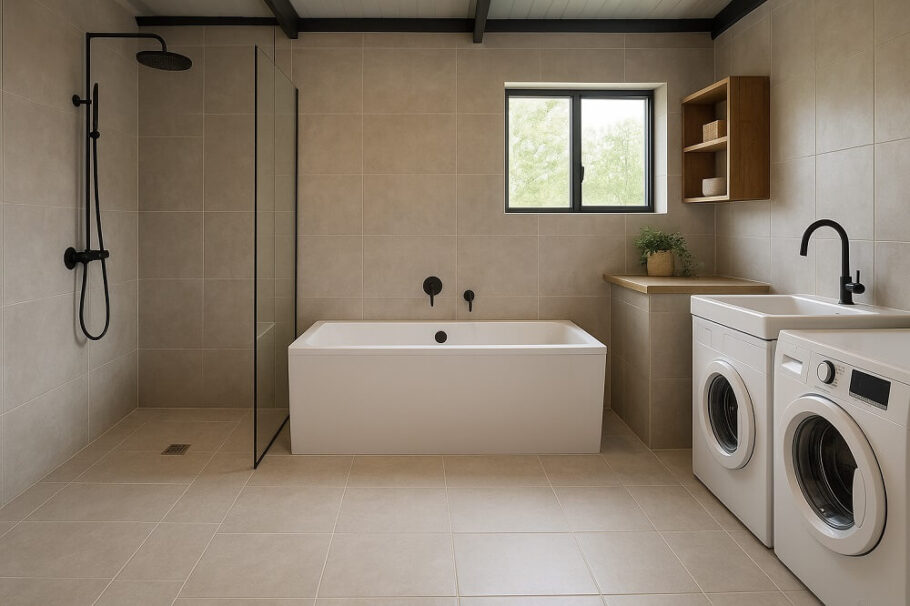
Walk into any barndominium bathroom these days, and something unexpected is happening. The traditional separation between shower, bathtub, and utility areas is dissolving. In its place? A single, fully tiled space that handles everything from morning rinses to muddy boot cleanups. The barndominium wet room isn’t just a trend borrowed from European bathrooms—it’s a practical response to how people actually live in these massive metal buildings turned dream homes.
What Exactly Makes a Wet Room Different
Most bathrooms compartmentalize water. Shower behind glass doors. Tub surrounded by drywall. Utility sink tucked into a laundry corner. A wet room throws out those barriers entirely. The entire floor slopes toward one or more drains. Every wall gets proper waterproofing. The toilet might sit in its own little alcove, but everything else—showerhead, soaking tub, even a dog wash station—shares the same waterproof footprint.
For barndominiums, this approach makes exceptional sense. These structures already embrace open floor plans and industrial practicality. A wet room extends that same thinking into the bathroom. No shower doors to clean. No fiberglass tub surrounds cracking at the seams. No worrying about water damage where the shower meets the drywall.
The Shower Zone Within the Wet Room
In a well-designed barndominium wet room, the shower doesn’t disappear—it just loses its cage. A rainfall head mounted from the ceiling defines one area. A handheld wand on a vertical slide bar adds flexibility. Maybe a wall-mounted shower seat folds down when needed. The key is directing water without containing it behind glass.
Floor slope matters tremendously here. The entire room needs pitch toward the drain, but the shower zone typically gets the steepest grade. Some designs use a subtle curb or a slight change in tile pattern to suggest where the shower begins and ends. Others let the ceiling fixture do all the defining work.
Niches become essential in this setup. Without a shower enclosure, there’s no convenient shelf for shampoo bottles. Recessed tile niches built into the walls solve this cleanly. Position them at arm level near the showerhead, and suddenly everything has a home without cluttering the floor.
The Bathtub as a Wet Room Resident
Here’s where things get interesting. A freestanding tub sitting in the middle of a wet room looks absolutely intentional when done right. The tub becomes a sculptural element—a deep soaking vessel surrounded by floor that can get as wet as anyone wants.
Drain placement around the tub requires forethought. Water splashes out during baths. Kids getting in and out drip everywhere. A wet room design accommodates this by ensuring no puddles form around the tub’s base. Some installers run an additional linear drain behind the tub. Others rely on the overall floor slope carrying everything toward the main drain.
Built-in tubs work just as well. Tiling up and around a drop-in tub creates a seamless look where the tub appears to grow right out of the wet room floor. No caulk lines to fail. No inaccessible spaces where mold hides. Just continuous waterproof surface from wall to tub to floor.
Utility Functions That Belong in a Wet Room
This is the part that separates a barndominium wet room from a fancy suburban bathroom. Utility means real work. Think of a dog washing station built into one corner. A handheld sprayer with extra-long hose and a low threshold so a seventy-pound Labrador can walk right in. After a rainy day romp through the pasture, that dog goes straight from the mudroom into the wet room for a rinse before the rest of the house gets touched.
Boot washing counts too. A floor drain positioned near the entrance from the garage or mudroom means dirty work boots get sprayed down right there. Some barndominium owners install a simple wall-mounted basin at waist height specifically for cleaning muck off equipment. No hauling muddy things through the kitchen to reach the laundry sink.
Mop stations belong here as well. A designated spigot for filling buckets, a hook for hanging wet mops, and floor drainage that handles whatever sloshes over. The wet room becomes the home’s heavy-duty cleaning hub without sacrificing the luxury of a nice bathroom.
Materials That Survive Real Life
Tile choices in a barndominium wet room need to handle more than just aesthetics. Porcelain tile dominates this application for good reason. It absorbs almost no water, stands up to cleaning chemicals, and comes in slip-resistant finishes that actually work when wet.
Large format tiles on the floor mean fewer grout lines to maintain. But large tiles need nearly perfect substrate flatness, or they’ll crack underfoot. Smaller mosaic tiles on the floor conform better to the slopes required for drainage, though they demand more grout maintenance. A common compromise uses mosaics on the floor and large slabs on the walls.
Grout selection matters as much as the tile itself. Epoxy grout resists staining and never needs sealing. The tradeoff? Harder to install and more expensive. But in a space where shampoo, pet shampoo, and floor cleaner all mix together, epoxy pays for itself in reduced maintenance alone.
Lighting and Ventilation Done Right
A fully tiled wet room holds moisture differently than a standard bathroom. The ventilation strategy needs to account for the entire space getting wet, not just the shower corner. An oversized exhaust fan—properly sized for cubic footage—prevents the humidity from drifting into the rest of the barndominium.
Lighting placement requires similar thought. Recessed lights in the ceiling work fine, but they cast shadows on your face when standing beneath a showerhead. Wall-mounted sconces positioned at mirror height provide better task lighting for shaving or makeup application. Just make sure every fixture carries a proper wet location rating. Even lights mounted high on the wall see moisture in this space.
Consider a linear LED strip tucked into a ceiling cove or above the mirror. The indirect light softens the industrial feel of all that tile and waterproofing.
Drainage as the Foundation of Success
Everything else in a wet room fails if the drainage fails. The floor must slope consistently toward the drain with no low spots where water collects. A standard slope of one-quarter inch per foot works for most of the floor, but the shower zone can handle a steeper pitch.
Linear drains along one edge of the room have become popular in barndominium wet rooms. They accept tile on both sides, disappear into the floor visually, and handle high water volume better than point drains. Positioning a linear drain at the threshold where the wet room meets the dry bathroom area creates a natural water barrier without a curb.
Point drains still work fine, especially in smaller wet rooms. Just avoid placing them directly under a showerhead or tub filler. The constant stream creates mineral buildup and makes cleaning the drain cover a hassle.
Storage That Stays Dry
Wet rooms demand smarter storage solutions because cabinets on the floor would wick up moisture and fail. Wall-mounted vanities with legs or floating shelves keep everything above the wet zone. Sealed medicine cabinets recessed into the tile work well. Open shelving made from teak or other rot-resistant woods adds warmth without trapping moisture.
Towel storage needs distance from the main splash zones. Heated towel rails mounted on the wall opposite the shower work beautifully. The heat helps dry towels and adds a small amount of warmth to the room.
The Cost Reality
A barndominium wet room costs more upfront than a standard bathroom. The waterproofing requirements alone add several thousand dollars. Schluter Kerdi board, liquid-applied membranes, or sheet membranes all carry material and labor costs that exceed basic cement board and tile.
But the long-term math looks different. No shower door to replace when the seals fail. No caulk to reapply annually. No worrying about water sneaking through cracks and rotting subfloor. For barndominium owners who plan to stay put for decades, the wet room pays for itself in avoided repairs.
Who This Actually Works For
This isn’t for every barndominium. Retirees who want a simple bathroom with a walk-in shower probably don’t need a full wet room. Families with young kids? Absolutely. The ability to bathe children in the tub while standing right there in the same wet space changes the whole routine. Pets get rinsed without drama. Mud season stops being a source of marital tension.
Barndominiums on working farms or rural properties benefit most. The transition from outdoor work to indoor living happens right in that wet room. Boots, coveralls, dogs, kids—everything gets cleaned in one waterproof space before moving into the finished part of the home.
Getting the Details Right
The best barndominium wet rooms feel intentional, not accidental. A slight recess in the ceiling over the shower area defines that zone. A different tile pattern on the floor suggests separate areas without physical barriers. The tub sits on a slightly raised platform of tile, marking it as a distinct destination within the larger wet space.
Hardware choices matter more here than in conventional bathrooms. Everything gets wet regularly. Solid brass fixtures with ceramic cartridges last longer than plated plastic. Wall-mounted faucets over the tub keep the deck clear and reduce cleaning headaches. Handheld sprayers with metal hose connections survive years of daily use.
The Bottom Line on Barndominium Wet Rooms
Combining shower, tub, and utility in one tiled space isn’t about following a trend. It’s about recognizing that bathrooms in barndominiums serve a broader purpose than just getting clean. They’re transition zones between outdoor work and indoor living. They handle pets, muddy gear, and messy kids alongside morning routines and evening soaks.
The wet room approach acknowledges this reality head-on. No pretending that water stays neatly contained. No fragile barriers that fail after five years. Just durable, thoughtful design that makes the hardest-working room in the barndominium work even harder. For anyone planning a new build or a major renovation, the question isn’t whether to consider a wet room. The question is why anyone still builds bathrooms any other way.